The Algorithmic Electorate: AI, Political Influence, and the Future of Democracy
An in-depth analysis of the democratic and ethical implications of using AI in political campaigns, from microtargeting and deepfakes to the erosion of public trust and potential regulatory solutions.
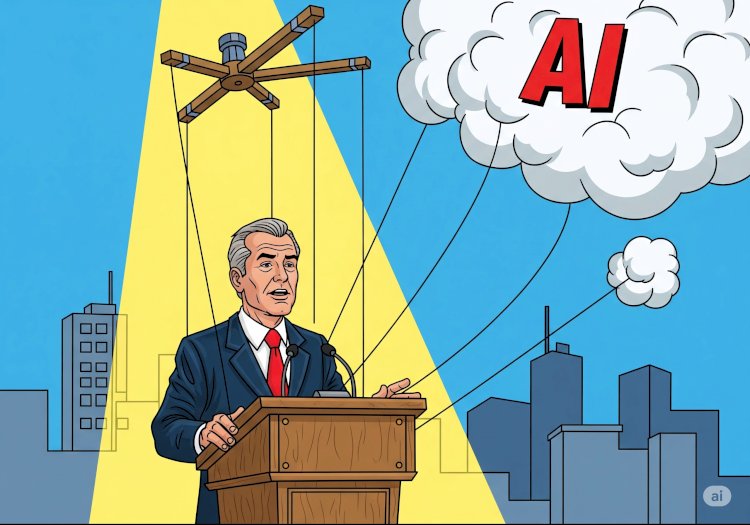
Table of Contents
-
Defining AI in Political Communication
-
Mechanisms of Influence and Manipulation
-
Ethical Implications for Autonomy and Consent
-
Democratic Integrity and Trust in Institutions
-
Regulatory and Policy Responses
In the modern political arena, the battle for hearts and minds is no longer fought solely on debate stages or through televised advertisements. A new, more subtle, and profoundly powerful force has entered the fray: Artificial Intelligence. This technological revolution is reshaping the very architecture of political campaigns, transforming how citizens receive information, form opinions, and ultimately, cast their votes.
This article seeks to systematically investigate the democratic and ethical implications of this new reality. We will dissect how AI is being deployed in political campaigns, explore the psychological mechanisms it leverages, and analyze the profound consequences for individual autonomy and the structural integrity of democratic institutions. Finally, we will survey the nascent landscape of regulatory responses aimed at mitigating the risks without stifling innovation. In this article, we will explore this topic through the following key areas:
1. Defining AI in Political Communication
When discussing Artificial Intelligence in the context of political campaigns, it is crucial to move beyond science-fiction imagery of sentient machines. In practice, political AI refers to a suite of computational tools, primarily driven by machine learning, designed to analyze vast quantities of data to identify patterns, make predictions, and automate tasks.
The cornerstone of AI in modern campaigning is voter profiling and microtargeting. Campaigns begin by aggregating massive datasets from a variety of sources. This includes publicly available voter files (containing party registration, voting history), commercial data from brokers (detailing consumer habits, income levels, magazine subscriptions), and, most potently, online data (social media activity, Browse history, group memberships). An AI model, specifically a machine learning algorithm, is then trained on this data to create highly granular voter profiles. It moves beyond traditional demographic buckets like "women over 50" and creates sophisticated segments such as "suburban parents who are fiscally conservative but environmentally conscious" or "young, first-time voters concerned about student loan debt."
The process of creating these profiles is what machine learning excels at. By analyzing millions of data points, the AI can identify non-obvious correlations that a human analyst might miss. For instance, it might discover that a preference for a certain brand of car, combined with specific online reading habits, is a strong predictor of being an undecided voter in a key electoral district. Once these micro-segments are identified, the campaign can then deploy tailored messaging.
Furthermore, the rise of generative AI, exemplified by models like GPT-4 and DALL-E, has supercharged content creation.
2. Mechanisms of Influence and Manipulation
The power of AI in politics lies not just in its ability to target individuals, but in the sophisticated methods it employs to influence their behavior. These mechanisms exist on a spectrum, from benign persuasion to ethically fraught manipulation. While persuasion might involve presenting a logical argument tailored to a voter's known interests, manipulation seeks to exploit cognitive biases and psychological vulnerabilities, often without the individual's conscious awareness.
A primary mechanism is psychographic targeting, a more advanced form of the microtargeting described earlier. Pioneered in the commercial sector and notoriously utilized by firms like Cambridge Analytica, this technique uses data to infer personality traits based on models like the OCEAN framework (Openness, Conscientiousness, Extraversion, Agreeableness, Neuroticism). For example, an algorithm might identify a group of voters as high in neuroticism and thus more susceptible to fear-based messaging. A campaign could then target this group with ads that emphasize threats like rising crime or economic instability. Conversely, a group identified as high in agreeableness might receive messages focused on community, unity, and cooperation. This is not about appealing to a voter's rational mind; it is about triggering a desired emotional response by reverse-engineering their personality from their digital footprint.
Another powerful mechanism is dynamic content and behavioral optimization. AI systems can run thousands of ad variations simultaneously, continuously monitoring which combination of headlines, images, colors, and calls to action generates the most clicks, shares, or donations.
The most overt form of manipulation comes from AI-generated disinformation. This includes "deepfakes" - hyper-realistic video or audio clips that can depict a political candidate saying or doing something they never did.
The Escalation of AI Influence in Political Campaigns
3. Ethical Implications for Autonomy and Consent
The deployment of these powerful AI mechanisms raises profound ethical questions that strike at the heart of democratic principles, particularly concerning individual autonomy, informed consent, and transparency.
Autonomy, in an ethical sense, is the capacity of an individual to make rational, uncoerced decisions based on their own values and beliefs.
This challenge is deeply intertwined with the principle of informed consent. In most other domains, from medical ethics to financial contracts, the use of an individual's personal information to influence them requires their explicit and informed consent. In the world of political AI, this standard is virtually non-existent. Voters have not consented to have their online behaviors, purchasing habits, and inferred psychological traits collected, aggregated, and used to build a profile for political targeting. The complex and opaque data brokerage ecosystem makes it impossible for an average citizen to track where their data goes or how it is used. The "consent" given by clicking "agree" on a lengthy and unreadable terms-of-service agreement for a social media platform does not meet any meaningful ethical standard of being "informed" when it comes to its political ramifications.
Finally, the entire enterprise is shrouded by a lack of algorithmic transparency. Often, the machine learning models used for targeting are "black boxes." Their internal logic is so complex that even the data scientists who build them cannot fully explain why the algorithm chose to target a specific individual with a specific message. This opacity makes accountability impossible. If an algorithm disproportionately targets vulnerable populations with misleading ads, who is responsible? The campaign? The tech platform that ran the ads? The data broker who supplied the information? Without transparency, there can be no oversight, no public scrutiny, and no recourse for those who have been manipulated.
4. Democratic Integrity and Trust in Institutions
Moving from the individual to the systemic level, the widespread use of AI-driven influence campaigns poses a grave threat to the integrity of the democratic process and the public's trust in core institutions.
One of the most significant impacts is the erosion of the shared public square. Historically, democracy has relied on a common space for debate, where citizens are exposed to a range of arguments and ideas.
This fragmentation directly fuels political polarization. AI models, particularly those on social media platforms, are often optimized for user engagement.
This toxic environment critically undermines public trust.
Finally, these dynamics converge to threaten electoral fairness. The ability to deploy sophisticated AI tools effectively becomes a new form of political capital. Well-funded campaigns and special interest groups can afford the best data, the most advanced algorithms, and the most extensive ad buys, creating an "algorithmic arms race." This can create a significant imbalance, giving an unfair advantage to those with the deepest pockets and the most data, rather than those with the soundest policies or the most compelling vision for society.
5. Regulatory and Policy Responses
As the challenges posed by AI in politics become increasingly apparent, governments and civil society organizations around the world are beginning to grapple with how to regulate this new frontier. The central challenge is to craft policies that protect democratic values and individual rights without stifling free expression or technological innovation. The approaches being considered and implemented vary, but they generally revolve around the core principles of transparency, data protection, and accountability.
The European Union has taken the most comprehensive approach. Its landmark AI Act establishes a risk-based framework, classifying AI systems that manipulate human behavior to circumvent their free will as posing an "unacceptable risk," which could lead to them being banned.
In contrast, the United States has a more fragmented and hesitant regulatory landscape.
Beyond specific legislation, a range of policy solutions are being debated. Enhanced transparency requirements are a common demand, including forcing platforms to maintain publicly accessible ad libraries that detail not just the ad's content, but the precise targeting parameters used.
Conclusion
The integration of Artificial Intelligence into political campaigning represents a paradigm shift with profound and dual-edged consequences.
The path forward requires a deliberate and multi-faceted response. The stark contrast between the comprehensive regulatory frameworks emerging in the European Union and the more hesitant, piecemeal approach in the United States highlights a global divergence in addressing the issue. Yet, the core imperatives remain the same everywhere: we must demand greater transparency from campaigns and technology platforms, strengthen data privacy protections to limit the fuel for manipulative algorithms, and hold malicious actors accountable for spreading disinformation. Simultaneously, fostering a resilient and critically-minded citizenry through education is paramount.
Ultimately, the challenge of AI in politics is not merely a technological one; it is a civic one. It forces us to reaffirm our commitment to the core values of autonomy, reasoned debate, and shared truth. Ensuring that technological innovation aligns with these values is the defining task for policymakers, technologists, and citizens alike in the algorithmic age.
What's Your Reaction?