The Role of Renewable Energy Microgrids in Enhancing Community Resilience During Natural Disasters
The increasing frequency and intensity of natural disasters, fueled by climate change and other factors, cast a long shadow over communities worldwide. Beyond the immediate physical destruction, these events often sever the lifelines of modern society, none more critical than the power grid. When the lights go out, the challenges multiply, hindering rescue efforts, shuttering essential services, and delaying recovery. Yet, amidst this vulnerability, a powerful solution is emerging: renewable energy microgrids. These localized energy systems offer a beacon of hope, promising not just power but enhanced resilience when communities need it most. This exploration delves into the vital question: How exactly do renewable energy microgrids contribute to strengthening community resilience in the face of natural disasters?
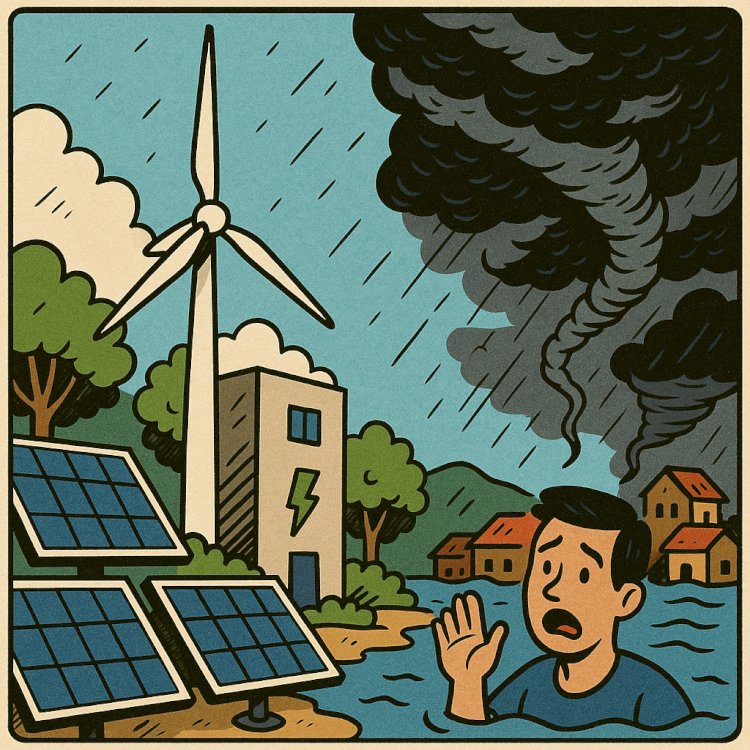
We will examine the technology itself, contrast it with the frailties of traditional power systems, analyze its performance during crises, explore its profound community impacts, and consider the path forward for broader adoption.
Understanding Renewable Energy Microgrids: Islands of Power in a Sea of Need
At its core, a microgrid is a self-contained, localized energy system designed to operate either connected to the traditional utility grid or independently in "island mode." What distinguishes the focus here is the integration of renewable energy sources. Imagine a small-scale power ecosystem serving a defined area – perhaps a neighbourhood, a hospital complex, a business park, or even an entire remote village.
Key Components: These systems typically comprise several integrated elements:
- Local Generation: This is where renewables play the starring role. Solar panels (photovoltaics) are a common foundation, often complemented by wind turbines where feasible, or sometimes other sources like small-scale hydro or biomass generators. The key is harnessing locally available, sustainable resources.
- Energy Storage: Renewables like solar and wind are inherently variable. Battery storage systems (often large lithium-ion banks) are crucial components. They store excess energy generated during peak production times (like sunny afternoons) and discharge it when generation is low (at night or on cloudy days) or demand is high. This ensures a stable and continuous power supply.
- Control Systems: Sophisticated controllers are the brain of the microgrid. They manage energy flow, balance supply and demand, optimize storage use, and crucially, determine when to connect to or disconnect from the main utility grid. This smart management ensures efficiency and reliability.
- Defined Loads: Microgrids serve specific, designated electricity consumers (loads) within their boundaries. This could range from critical infrastructure like hospitals and emergency shelters to residential clusters or commercial facilities.
The Power of Independence: The defining characteristic relevant to disaster resilience is the microgrid's ability to "island." When a major storm, earthquake, or other event causes widespread outages on the main grid, the microgrid controller can automatically disconnect. Using its local generation and stored energy, it continues to power the facilities within its boundary, creating an island of electricity amidst a potentially widespread blackout. This reliance on local, often renewable, resources provides a fundamental layer of energy security that centralized systems struggle to match.
The Fragility of Centralized Power: Natural Disasters and Grid Vulnerabilities
Our traditional power grid, often referred to as the macrogrid, is a marvel of engineering – a vast, interconnected network spanning hundreds or thousands of miles. Typically built around large, centralized power plants (coal, natural gas, nuclear, large hydro), it transmits electricity over long distances via high-voltage lines, eventually stepping down the voltage for distribution to homes and businesses. However, this very interconnectedness and centralization create significant vulnerabilities, particularly during natural disasters.
Single Points of Failure: The hub-and-spoke model means that damage to a major power plant, a critical transmission substation, or long stretches of power lines can trigger cascading failures, plunging vast areas into darkness.
- Hurricanes and High Winds: Can topple transmission towers and distribution poles over wide regions. Saltwater storm surges can inundate substations, causing catastrophic equipment failure.
- Earthquakes: Can damage power plants, substations, and underground cables, severing connections.
- Floods: Can submerge critical infrastructure, leading to shorts and long-term damage.
- Wildfires: Can burn wooden poles and damage lines and equipment, often forcing pre-emptive shutdowns in fire-prone areas, affecting even regions not directly burning.
- Ice Storms: Can encase lines and equipment in heavy ice, leading to snapped lines and collapsing structures.
The Domino Effect: When one part of this intricate system fails, it can overload other parts, leading to protective shutdowns that spread the outage far beyond the initially impacted zone. Restoring power becomes a monumental task, requiring crews to navigate damaged areas, assess widespread destruction, and repair complex infrastructure, often taking days, weeks, or even longer. During this time, the lack of electricity cripples communication systems, halts water purification and pumping, spoils food and medicine, closes businesses, and severely hampers emergency response and recovery operations. The vulnerability of the centralized grid translates directly into the vulnerability of the communities it serves.
Proven Performance: Microgrids Weathering the Storm
The theoretical benefits of microgrids in disaster scenarios are increasingly being validated by real-world performance. While still not ubiquitous, documented cases highlight their capacity to provide critical power continuity when the main grid falters.
Imagine a coastal town battered by a hurricane. As the macrogrid collapses under the assault of wind and water, the local hospital, powered by its own solar-plus-storage microgrid, remains operational. Lights stay on, vital medical equipment functions, and communication lines remain open, allowing it to serve as a critical care hub for the injured and displaced. Similarly, designated community shelters equipped with microgrids can offer safe havens with light, heating/cooling, and charging capabilities for residents forced from their homes.
Analysis of events like Hurricane Sandy on the US East Coast, Hurricane Maria in Puerto Rico, and various wildfires and storms globally has shown instances where university campuses, military bases, industrial facilities, and community centers with microgrids successfully islanded themselves. They maintained power for their designated loads, sometimes for extended periods, demonstrating a resilience starkly contrasting with the surrounding blackouts. These successes aren't just about convenience; they are about enabling life-saving services, maintaining critical communication links for first responders, and providing a focal point for community support and coordination during the immediate aftermath of a disaster. The ability to keep essential services running locally, independent of widespread grid failure, is perhaps the most compelling argument for microgrid deployment in disaster-prone regions.
Beyond Kilowatts: The Community and Economic Impacts of Resilient Energy
The value proposition of renewable microgrids extends far beyond simply keeping the lights on during an emergency. Their presence yields profound social and economic benefits that ripple through a community, both during a crisis and in the long run.
Enhanced Social Cohesion and Safety: During a disaster, powered community centers or shelters become vital hubs. They provide not only physical safety but also a place for information sharing, coordination of aid, and mutual support. Knowing that critical facilities like clinics, police stations, and fire departments have reliable power fosters a sense of security and order in chaotic times. This energy independence can empower communities, reducing reliance on potentially slow external aid and fostering local self-sufficiency.
Economic Resilience and Faster Recovery: Power outages inflict significant economic damage. Businesses close, leading to lost revenue and wages. Food and medical supplies spoil. Manufacturing processes halt. Microgrids, particularly those serving commercial districts or industrial parks, can mitigate these losses significantly. By enabling businesses to maintain partial or full operations, they preserve jobs, protect inventory, and speed up the overall economic recovery of the area once the disaster passes. Furthermore, the reduced duration and frequency of outages translate into lower recovery costs for businesses and households alike. Investing in microgrid infrastructure can be viewed as an investment in economic stability.
Everyday Benefits and Sustainability: While disaster resilience is a key driver, renewable microgrids offer benefits year-round. They can help reduce electricity costs for the facilities they serve by optimizing energy use and potentially selling excess power back to the grid. They contribute to local and global environmental goals by prioritizing clean energy sources, reducing greenhouse gas emissions, and improving local air quality compared to reliance on fossil-fuel backup generators. This dual benefit – enhancing daily operations while providing critical resilience – strengthens the case for their adoption.
Navigating the Path Forward: Challenges and Future Outlook for Microgrids
Despite their proven potential and growing track record, the widespread adoption of renewable microgrids for community resilience faces several significant hurdles. Understanding these challenges is crucial for charting a course toward a more resilient energy future.
Technical and Integration Hurdles: Integrating microgrids seamlessly with the existing macrogrid requires sophisticated control systems and standardized communication protocols. Ensuring interoperability, managing two-way power flows, and guaranteeing safety during islanding and reconnection are complex engineering challenges. Furthermore, optimizing the mix of generation (solar, wind, etc.) and appropriately sizing battery storage for specific community needs requires careful planning and technical expertise. Cybersecurity also emerges as a critical concern, as interconnected smart grids could become targets.
Regulatory and Policy Barriers: Existing energy regulations were largely designed for the old model of centralized power generation. Policies governing microgrid ownership, operation, interconnection standards, and the ability to sell excess power back to the grid (or to neighbours within the microgrid) can be complex, inconsistent across jurisdictions, or simply lacking. Streamlining permitting processes and creating supportive regulatory frameworks that recognize the value of resilience and distributed generation are essential for accelerating deployment.
Financial Considerations: Microgrids, particularly those incorporating substantial battery storage, involve significant upfront capital investment. While lifecycle costs can be competitive, especially when factoring in the avoided costs of outages, securing initial financing can be a barrier for municipalities, communities, or businesses. Developing innovative financing models, leveraging public-private partnerships, and incorporating the societal value of resilience into cost-benefit analyses are needed to overcome this financial challenge.
Future Trends and Opportunities: Despite these challenges, the outlook is optimistic. The cost of solar panels and battery storage continues to decline. Control systems are becoming smarter and more adaptive. There is growing recognition among policymakers and utilities of the need for enhanced grid resilience. We can anticipate advancements in long-duration energy storage, improved forecasting for renewable generation, and the integration of microgrids with other smart city technologies (like electric vehicle charging). Supportive policies, technological innovation, and a growing understanding of their value proposition will likely drive significant growth in microgrid deployment, paving the way for communities that are not just powered, but truly resilient.
Conclusion: Powering Resilience, One Community at a Time
The narrative of energy is shifting. The vulnerability of our traditional, centralized power grids in the face of increasingly severe natural disasters is undeniable. Renewable energy microgrids represent more than just a technological alternative; they embody a strategic shift towards localized, resilient, and sustainable power. By providing the ability to maintain essential services during widespread outages, they safeguard lives, support community cohesion, mitigate economic losses, and accelerate recovery.
While technical, regulatory, and financial challenges remain, the evidence of their effectiveness is mounting, and the momentum for their adoption is building. Investing in renewable microgrids is an investment in community self-sufficiency, a tangible step towards building municipalities capable of weathering the storms ahead. They offer a pathway to a future where communities are not merely victims of disaster but are empowered, through resilient energy, to endure and recover stronger. The journey requires collaboration, innovation, and supportive policy, but the promise of truly resilient, renewably powered communities makes it a journey worth undertaking.
What's Your Reaction?