The Flappy Bird Phenomenon: Why It Disappeared and Re-Emerged 10 Years Later
In the ever-evolving world of mobile gaming, viral sensations can emerge from the most unexpected corners. Few games exemplify this phenomenon as dramatically as Flappy Bird. A seemingly simple mobile game developed by a solo Vietnamese creator, Flappy Bird took the world by storm in 2013, only to be abruptly removed from app stores by its own creator at the peak of its popularity. Now, a decade later, Flappy Bird is making headlines again with a controversial resurrection. This is the story of Flappy Bird – a tale of meteoric rise, sudden fall, and a perplexing rebirth that continues to fascinate the gaming world.
The Unlikely Rise of a Viral Sensation
In the early 2010s, the mobile gaming landscape was dominated by visually rich and complex games like Angry Birds, Candy Crush, and Clash of Clans. Vietnamese game developer Nguyễn Hà Đông, known as Dong Nguyen, had a different vision. He aimed to create something simpler, something instantly accessible for busy, on-the-go individuals. Inspired by the "easy to learn, hard to master" design philosophy of Atari founder Nolan Bushnell, Nguyen embarked on creating a game that prioritized simplicity and challenge.
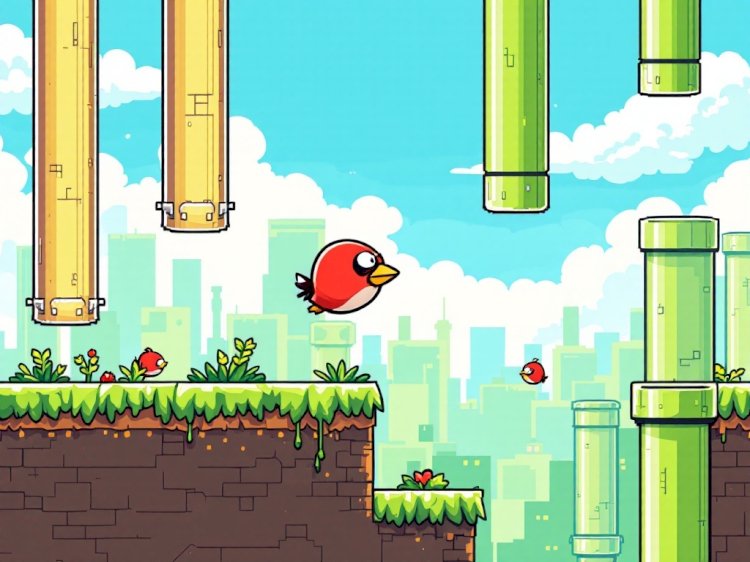
The concept for Flappy Bird was remarkably straightforward: players tap the screen to keep a pixelated bird, affectionately named Faby by some fans, airborne, navigating a treacherous landscape of green pipes reminiscent of the Super Mario Bros. games. The gameplay was intentionally minimalistic, with 8-bit graphics evoking a sense of nostalgia for classic Nintendo games. Nguyen developed the game in a mere two to three days, even utilizing bird graphics he had created for a previous, unreleased project. Originally named "Flap Flap," the game was renamed "Flappy Bird" to avoid trademark issues and officially launched on the Apple App Store on May 24, 2013.
Initially, Flappy Bird's release was met with little fanfare. It existed quietly in the app store, garnering only a modest number of downloads. However, in November 2013, something shifted. The game's simple yet brutally difficult gameplay began to resonate with players. Word-of-mouth spread like wildfire, and Flappy Bird experienced an unprecedented surge in popularity.
By early 2014, Flappy Bird had exploded into a global phenomenon. It soared to the top of app store charts, becoming the most downloaded free game on both iOS and Android. News outlets and YouTube personalities were captivated by its addictive nature and challenging gameplay. Reports surfaced that Nguyen was earning a staggering $50,000 a day – or $1 billion VND (Vietnamese Dong) daily – from in-game advertising revenue. Flappy Bird had become a cultural phenomenon, a testament to the unpredictable nature of viral content in the digital age.
The Shocking Disappearance at the Peak
Despite its phenomenal success, Flappy Bird was not without its critics. Many players found the game frustratingly difficult, bordering on rage-inducing. Its addictive nature also drew concern, with some critics labeling it as overly manipulative and time-wasting. However, the most significant pressure came not from external criticism, but from the game's creator himself.
Dong Nguyen, a quiet and introverted individual, was overwhelmed by the game's sudden and intense popularity. The relentless media attention and the disruption to his "simple life" became unbearable. Furthermore, accusations of plagiarism regarding the game's graphics and mechanics began to surface, adding to the pressure. While Nguyen denied these accusations, the negativity contributed to his growing unease.
In a move that shocked the gaming world, Nguyen announced on Twitter on February 9, 2014, that he would remove Flappy Bird from app stores. He stated that the game had become too addictive and was negatively impacting his life. Just 22 hours later, Flappy Bird was gone, pulled from both the App Store and Google Play, leaving millions of bewildered and disappointed players in its wake.
The removal of Flappy Bird only amplified its legend. Phones with Flappy Bird installed became coveted items, with some reportedly being sold for exorbitant prices on eBay. A flood of clone games appeared, attempting to capitalize on Flappy Bird's formula, but none managed to capture the same viral magic. The game's abrupt disappearance cemented its place in internet history, transforming it from a viral game into an unforgettable digital myth.
A Decade Later: Resurrection and Web3 Controversy
For a decade, Flappy Bird remained dormant, a nostalgic memory in the fast-paced world of mobile games. Then, in September 2024, news broke of its return. A team calling itself the Flappy Bird Foundation announced a new Flappy Bird game, promising to revive the beloved, albeit frustrating, gameplay for a new generation.
However, this resurrection was not without its own set of controversies. The new Flappy Bird was revealed to be based on blockchain technology and NFTs (non-fungible tokens). This immediately sparked backlash from many in the gaming community, who viewed the integration of NFTs as a cynical attempt to monetize nostalgia and exploit the Flappy Bird name for cryptocurrency gains.
Further complicating matters, Dong Nguyen himself publicly distanced himself from the new project. He stated that he had no involvement with the Flappy Bird Foundation and expressed his disapproval of cryptocurrency and NFTs in gaming. This raised questions about the legitimacy and motivations behind the revival.
Cybersecurity researchers also raised concerns, suggesting that the new Flappy Bird might be linked to cryptocurrency scams. Reports indicated that the Flappy Bird Foundation had acquired the trademark after it was deemed abandoned, leading to speculation that the revival was primarily a Web3 pump-and-dump scheme leveraging the game's recognizable brand.
Despite the controversy, the new Flappy Bird did launch, offering a "Web3 option" and a "Flap-a-TON" event that allowed players to mint "Flappy tokens" on the Telegram Open Network (TON) blockchain. However, the game's return has been met with skepticism and a far cry from the organic, widespread enthusiasm that greeted the original Flappy Bird.
Lessons from a Flying Fable
The story of Flappy Bird offers several valuable lessons about the nature of viral success, game design, and the evolving landscape of the digital world:
- Simplicity Can Be Powerful: Flappy Bird's success was rooted in its simplicity. In a market saturated with complex games, its easy-to-learn, hard-to-master gameplay proved to be a refreshing and addictive formula.
- Creativity and Originality: While accusations of plagiarism surfaced, Flappy Bird's core concept and unique level of difficulty were undeniably original and captured the zeitgeist of the mobile gaming moment.
- The Unpredictability of Virality: Flappy Bird's initial slow start and sudden explosion in popularity highlight the unpredictable nature of viral content. There is no guaranteed formula for creating a viral sensation.
- The Burden of Viral Fame: Dong Nguyen's experience underscores the personal toll that viral fame can take. The intense media attention and pressure can be overwhelming, especially for individuals unprepared for such scrutiny.
- The Evolving Gaming Landscape: The Flappy Bird resurrection and its integration of blockchain technology reflect the ongoing evolution of the gaming industry and the increasing experimentation with Web3 elements, even amidst controversy.
Conclusion: A Lingering Legacy
Flappy Bird remains a unique and cautionary tale in the history of mobile gaming. Its brief but incandescent lifespan left an indelible mark, demonstrating the power of simple ideas to capture global attention and the complex consequences of viral success. While the new Flappy Bird revival attempts to capitalize on the original's legacy, it faces a very different landscape and a more skeptical audience. Whether this resurrected Flappy Bird will soar to new heights or simply remain a footnote in the game's already fascinating history remains to be seen. However, the original Flappy Bird's story will continue to be analyzed and discussed as a prime example of the unpredictable, and sometimes overwhelming, nature of digital virality in the 21st century.
What's Your Reaction?