Battle of Kursk 1943: The Titanic Clash That Turned the Tide on the Eastern Front
The summer of 1943 witnessed one of the most colossal and decisive military engagements in human history: the Battle of Kursk. This titanic clash on the Eastern Front of World War II not only involved millions of soldiers and thousands of tanks but also marked a definitive turning point in the brutal conflict between Nazi Germany and the Soviet Union. Often dubbed the largest tank battle in history, Kursk was more than just a military confrontation; it was a struggle for strategic dominance that would dictate the course of the war in the East and significantly influence the final outcome of World War II.
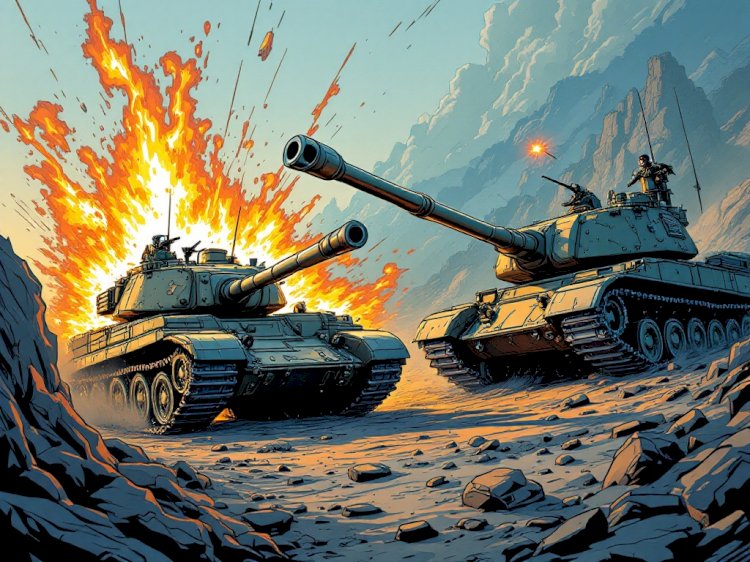
This blog post delves into the intricate details of the Battle of Kursk, analyzing its historical context, the strategic objectives of both sides, the key engagements, and its profound legacy. By exploring the events leading up to the battle, the intense fighting, and the aftermath, we can understand why Kursk is considered a watershed moment that irrevocably shifted the momentum of World War II in favor of the Allied forces.
Setting the Stage: Context and Background to the Kursk Salient
To fully grasp the magnitude of the Battle of Kursk, it's crucial to understand the preceding events that shaped the Eastern Front in 1943. Following the catastrophic German defeat at Stalingrad in early 1943, the strategic initiative on the Eastern Front began to slip from the grasp of the Wehrmacht. Despite the monumental losses at Stalingrad, the Eastern Front remained a cauldron of conflict.
Strategic Situation in 1943: A Frontline in Flux
By the spring of 1943, the Eastern Front had stabilized into a complex and sprawling frontline. A massive bulge, known as the Kursk salient, jutted into the German lines, presenting both an opportunity and a threat to both sides. This salient, approximately 150 miles wide and 100 miles deep, became the focal point for the impending summer campaigns. Both the German and Soviet commands recognized the strategic importance of this area. For the Germans, eliminating the Kursk salient could potentially restore their strategic initiative and disrupt Soviet offensive capabilities. For the Soviets, holding the salient and then launching a counteroffensive was crucial to continuing their westward advance and ultimately defeating Nazi Germany.
Operation Citadel: Germany's Last Great Offensive in the East
Driven by a desire to regain the initiative and deliver a decisive blow to the Red Army, Adolf Hitler and the German High Command conceived Operation Citadel. This ambitious plan aimed to encircle and annihilate the large Soviet forces within the Kursk salient through a pincer movement. The attack was to be spearheaded by two powerful German army groups: Army Group Center attacking from the north and Army Group South attacking from the south. The intention was to meet near Kursk, trapping and destroying the Soviet forces within the pocket.
Germany poured its best resources into Operation Citadel, including newly developed tanks like the Panther and Tiger, and formidable Ferdinand tank destroyers. The offensive was seen as crucial to restoring German prestige and halting the Soviet advance. However, the German military was still recovering from the immense losses at Stalingrad, and Operation Citadel represented a gamble – a final, desperate attempt to regain the upper hand on the Eastern Front.
Soviet Fortification: Preparing a Fortress of Defense
Unbeknownst to the Germans, Soviet intelligence, particularly through the "Lucy" spy ring, had gained advance knowledge of Operation Citadel. This intelligence coup provided the Red Army with invaluable time to prepare an elaborate and deeply layered defense. Under the guidance of key figures like Marshal Georgy Zhukov, the Soviets adopted a strategy of defense in depth, designed to absorb the initial German onslaught and then transition to a powerful counteroffensive.
The Soviet preparations were nothing short of monumental. They transformed the Kursk salient into a fortress, constructing an unprecedented network of defensive lines. These defenses were not merely a single line of trenches but rather multiple belts of fortifications extending hundreds of kilometers in depth. They included:
- Extensive Minefields: Millions of anti-tank and anti-personnel mines were laid, creating deadly obstacles for advancing German armor and infantry.
- Anti-Tank Ditches and Obstacles: Deep trenches and tank obstacles were dug to channel German armor into killing zones.
- Fortified Positions: Networks of trenches, bunkers, and artillery emplacements were constructed, providing strong defensive positions for Soviet infantry and artillery.
- Anti-Tank Artillery: Massive concentrations of anti-tank guns of various calibers were deployed to engage German tanks at all ranges.
- Mobile Reserves: Powerful tank and mechanized corps were held in reserve, ready to counterattack and exploit breakthroughs.
This meticulous and extensive defensive preparation was a cornerstone of the Soviet strategy at Kursk. The Red Army was not simply waiting to be attacked; they were actively shaping the battlefield to maximize German losses and set the stage for their own offensive.
Clash of Titans: The Battle Unfolds at Kursk
Operation Citadel commenced on July 5, 1943, with German forces launching their offensive from both the north and south of the Kursk salient. The battle unfolded in a series of intense and brutal engagements, characterized by fierce resistance, massive armored clashes, and staggering losses on both sides.
Northern Front: The Grueling Advance of the German 9th Army
In the north, the German 9th Army, under the command of General Walter Model, faced particularly formidable Soviet defenses. Model's forces, including some of the newest Panther tanks, encountered dense minefields, anti-tank fire, and determined Soviet infantry from the outset. The advance of the 9th Army was slow and costly, measured in yards rather than miles. Soviet forces, deeply entrenched and supported by artillery, stubbornly resisted every German attempt to break through.
Key features of the fighting in the northern sector included:
- Heavy reliance on artillery: The Soviets used massive artillery barrages to disrupt German attacks and inflict heavy casualties.
- Defense in depth effectiveness: The multiple layers of Soviet defenses proved highly effective in slowing down and attriting the German advance.
- Stubborn Soviet resistance: Soviet soldiers, motivated and well-prepared, fought tenaciously, refusing to yield ground easily.
Despite relentless efforts and heavy losses, the German 9th Army failed to achieve a major breakthrough in the north. Their advance was eventually halted after penetrating only a fraction of the Soviet defensive depth.
Southern Front: Initial German Success and the Drive Towards Prokhorovka
In the south, the German attack, spearheaded by Army Group South under Field Marshal Erich von Manstein, initially achieved greater success. Manstein's forces, including the 4th Panzer Army and Army Detachment Kempf, managed to penetrate deeper into Soviet lines than their northern counterparts. They encountered fierce resistance but were able to exploit some weaknesses in the forward Soviet defenses.
The southern front was characterized by:
- Faster initial German progress: Manstein's forces made more significant territorial gains in the early days of the offensive.
- Intense armored clashes: The southern sector witnessed some of the most intense tank battles of the entire battle, as German panzer divisions clashed with Soviet armored formations.
- The drive towards Prokhorovka: The German 4th Panzer Army aimed to break through to the town of Prokhorovka, a key objective in their southern pincer.
However, even in the south, the German advance was far from easy. Soviet reserves were committed to reinforce the defenses, and the pace of the German offensive gradually slowed as they encountered increasingly strong resistance.
The Defense in Depth: A Soviet Masterstroke
The Soviet strategy of defense in depth proved to be a decisive factor in blunting the German offensive. By constructing multiple defensive belts, the Red Army was able to:
- Absorb the German удар: The initial German attacks were met by forward defensive lines, designed to slow down and weaken the enemy advance.
- Attrition of German forces: As the Germans penetrated deeper, they encountered successive layers of defenses, each inflicting further casualties and material losses.
- Preservation of Soviet reserves: The defense in depth allowed the Soviets to conserve their main forces, holding them back for counterattacks once the German offensive had culminated.
- Creating killing zones: The carefully planned defenses channeled German armor into pre-sighted artillery and anti-tank gun positions, maximizing Soviet firepower.
This sophisticated defensive system, combined with the unwavering determination of Soviet troops, played a crucial role in grinding down the German offensive and preventing a decisive breakthrough.
Prokhorovka: The Tank Battle of Unprecedented Scale
The climax of the Battle of Kursk, and arguably the largest tank battle in history, occurred near the small town of Prokhorovka on July 12, 1943. Here, the German 4th Panzer Army clashed head-on with the Soviet 5th Guards Tank Army in a massive armored engagement.
The Battle of Prokhorovka was characterized by:
- Massive scale: Hundreds of tanks from both sides were involved in a chaotic and brutal melee. Estimates vary, but some suggest over 1,500 tanks and assault guns participated in the overall Prokhorovka area engagements on this day.
- Close-quarters combat: The battlefield was relatively constricted, leading to intense close-range fighting where tank crews battled at point-blank distances.
- Heavy losses on both sides: Both the Wehrmacht and the Red Army suffered immense tank losses at Prokhorovka. While debates continue about the exact figures and tactical victory, it is clear that neither side achieved a decisive breakthrough.
- Symbolic significance: Prokhorovka became a symbol of the Battle of Kursk and the immense scale of armored warfare on the Eastern Front.
While the tactical outcome of Prokhorovka remains debated, strategically, it marked the culmination of the German offensive. The heavy losses sustained by German armored formations, particularly in the south, coupled with the failure to achieve a decisive breakthrough, signaled the failure of Operation Citadel.
Turning the Tide: Soviet Counteroffensives and the Strategic Shift
Even as the Battle of Prokhorovka raged, the strategic tide was already turning against the Germans. The immense losses sustained in the offensive, combined with the resilience of Soviet defenses, forced the German command to recognize the futility of continuing Operation Citadel. On July 13, 1943, Hitler officially called off the offensive. The Red Army, having successfully blunted the German удар, was poised to launch its own powerful counteroffensives.
Operation Kutuzov: Crushing the German Northern Flank
On July 12, the same day as the Battle of Prokhorovka, the Soviets launched Operation Kutuzov, a massive counteroffensive against the German 2nd Panzer and 9th Armies north of Kursk. This offensive aimed to exploit the weakened German forces in the northern sector and drive them back.
Operation Kutuzov was characterized by:
- Overwhelming Soviet numerical superiority: The Red Army amassed a massive force, outnumbering the Germans in men, tanks, and artillery.
- Broad front attack: The Soviet offensive was launched across a wide front, making it difficult for the Germans to concentrate their defenses.
- Rapid Soviet advance: The weakened and exhausted German forces in the north were unable to withstand the Soviet onslaught. The Red Army quickly broke through German lines and began a rapid advance westward.
Operation Kutuzov was a resounding success for the Soviets. It shattered the German 9th Army and forced a general German retreat from the northern sector of the Kursk salient.
Operation Rumyantsev: Liberating Belgorod and Kharkov in the South
Following the success of Operation Kutuzov, the Red Army launched a second major counteroffensive in the south on August 3, 1943, codenamed Operation Rumyantsev. This offensive targeted the remaining German forces in the southern sector, aiming to liberate the strategically important cities of Belgorod and Kharkov.
Operation Rumyantsev was marked by:
- Exploitation of German weakness: The offensive targeted the German forces already weakened by Operation Citadel and the fighting around Prokhorovka.
- Mobile warfare: Soviet armored and mechanized formations played a key role in the offensive, conducting deep penetrations and outflanking German positions.
- Liberation of key cities: Soviet forces successfully recaptured Belgorod and Kharkov, dealing a further blow to German morale and strategic position.
Operation Rumyantsev completed the Soviet counteroffensive phase at Kursk, driving the German forces far back from their initial lines and securing a decisive Soviet victory.
Legacy of Kursk: A Turning Point in World War II
The Battle of Kursk had profound and far-reaching consequences, solidifying its place as a pivotal turning point in World War II. Its significance extends beyond the immediate military outcomes, impacting the strategic, psychological, and operational landscape of the war.
Military and Strategic Outcomes: Soviet Dominance on the Eastern Front
The most immediate and obvious consequence of Kursk was the decisive military defeat of the Wehrmacht. Operation Citadel, intended to regain the strategic initiative, ended in abject failure. The German army suffered catastrophic losses in men and materiel, particularly in its panzer divisions, which were never fully reconstituted to their pre-Kursk strength.
The Battle of Kursk resulted in:
- Irreversible loss of German strategic initiative: After Kursk, Germany was no longer capable of launching large-scale offensives on the Eastern Front. The strategic initiative passed firmly to the Soviet Union, which would maintain it for the remainder of the war.
- Weakening of German armored forces: The destruction of a significant portion of Germany's tank forces at Kursk severely hampered their ability to conduct offensive operations and effectively defend against Soviet offensives.
- Strengthening of the Red Army: Despite also suffering heavy losses, the Soviet Union was able to replace its losses more readily than Germany, thanks to its larger population and industrial base. The Red Army emerged from Kursk stronger and more confident than ever.
Psychological Impact: Shifting Momentum and Morale
Beyond the tangible military losses, the Battle of Kursk had a significant psychological impact on both sides. For the Germans, Kursk shattered any remaining illusions of regaining victory on the Eastern Front. The defeat exposed the limitations of their military machine and the growing strength of the Soviet Union. German morale plummeted, and the sense of invincibility that had characterized the early years of the war was irrevocably broken.
For the Soviets, Kursk was a monumental victory that validated their resilience and fighting prowess. It boosted morale throughout the Red Army and the Soviet population, demonstrating that they could not only withstand the German onslaught but also decisively defeat it. Kursk instilled a sense of confidence and momentum that would propel the Soviet war effort forward.
Lessons Learned: Impact on Modern Warfare
The Battle of Kursk also provided valuable lessons for military strategists and had a lasting impact on the development of modern warfare. Key takeaways from Kursk include:
- The importance of defense in depth: The Soviet success at Kursk highlighted the effectiveness of well-prepared, layered defenses in countering armored offensives. This concept remains relevant in modern military doctrine.
- The power of combined arms warfare: Kursk demonstrated the importance of integrating infantry, tanks, artillery, and air power into a cohesive fighting force. The successful Soviet defense and counteroffensives were based on effective combined arms tactics.
- The significance of logistics and reserves: The ability of the Soviet Union to sustain heavy losses and rapidly replenish its forces, while Germany struggled to do so, underscored the critical importance of logistics and strategic reserves in modern warfare.
- The limitations of offensive power against prepared defenses: Kursk showed that even the most powerful offensive forces could be blunted and defeated by a determined and well-entrenched defender.
Conclusion: Kursk - A Decisive Turning Point
The Battle of Kursk in 1943 stands as a monumental and decisive clash in the history of warfare. It was a battle of unprecedented scale and intensity, involving millions of soldiers and thousands of tanks in a struggle for strategic dominance on the Eastern Front. The Soviet victory at Kursk marked the culmination of the turning point in World War II, shifting the strategic initiative irrevocably to the Allied powers and paving the way for the eventual defeat of Nazi Germany.
Kursk was not merely a military victory; it was a testament to the resilience, determination, and growing strength of the Soviet Union. It shattered the myth of German invincibility and instilled a sense of confidence and momentum that would carry the Red Army to Berlin. The echoes of the guns of Kursk continue to resonate today, serving as a stark reminder of the brutal realities of war and the enduring significance of strategic turning points in shaping the course of history.
What's Your Reaction?