The Impact of Renewable Energy Transitions on Job Creation and Economic Resilience in Rural Communities
The global shift toward renewable energy represents one of the most significant economic transformations of our time, with rural communities positioned as both critical enablers and primary beneficiaries of this transition. As nations worldwide pursue decarbonization goals to limit global warming to 1.5°C above pre-industrial levels, rural areas are emerging as focal points for renewable energy development due to their abundant natural resources and available land [1].
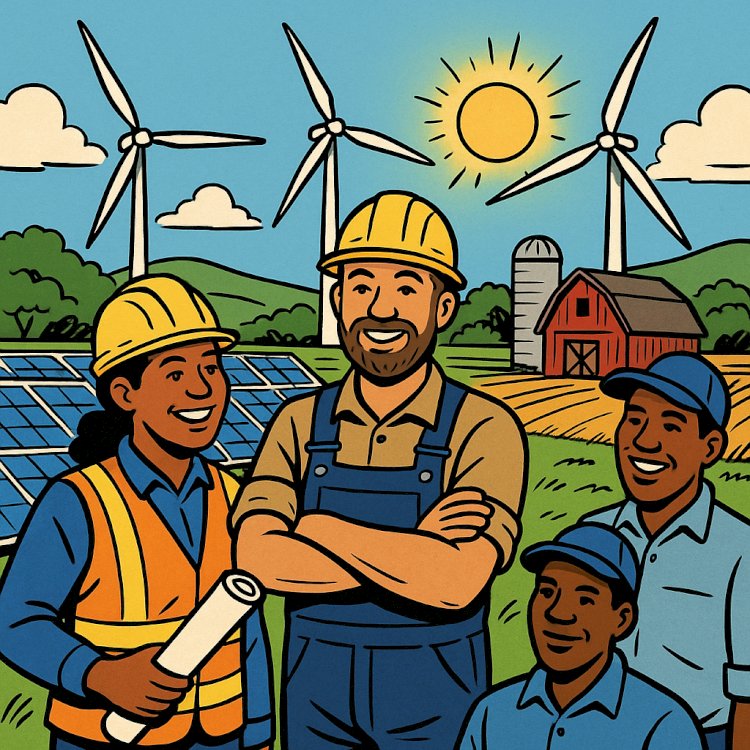
This comprehensive analysis examines how renewable energy transitions are reshaping employment landscapes and economic structures in rural communities, revealing a complex interplay of opportunities, challenges, and transformative potential that extends far beyond simple job creation metrics.
Understanding Renewable Energy Transitions
The renewable energy transition represents a fundamental shift in global energy systems, defined as "the process of shifting energy production away from sources that release greenhouse gases – such as fossil fuels – to those that release little to no greenhouse gases"[1]. This transformation encompasses multiple dimensions beyond mere technological substitution, involving comprehensive changes in infrastructure, policy frameworks, and socioeconomic structures that collectively drive the move toward sustainable energy systems[2].
At its core, the energy transition involves seven primary renewable energy technologies that are reshaping rural energy landscapes. Solar energy utilizes photovoltaic cells to convert sunlight into electricity, offering widespread accessibility since most of the Earth's population has access to sunlight[3]. Wind energy harnesses air movement through large turbines strategically positioned in traditionally windy areas, with installations ranging from individual turbines supplementing single homes to massive wind farms powering entire cities[3]. Hydroelectric power leverages moving water through turbines, creating artificial waterfalls via dams or utilizing fast-moving rivers to generate electricity[3]. Ocean energy captures both thermal differentials between surface and deep waters and mechanical energy from tidal movements[3]. Geothermal energy taps into heat trapped beneath the Earth's crust, using controlled tunneling to convert underground heat into steam for electricity generation[3]. Biomass energy derives from organic materials that can be burned for heat or allowed to decompose to produce methane gas for fuel[3].
The transition's scope extends beyond technological deployment to encompass systemic transformation of energy production, distribution, and consumption patterns. The sustainable energy transition prioritizes equity, inclusion, and human development through the concept of a "just transition," ensuring that the benefits of clean energy reach all communities while addressing historical marginalization in energy decision-making[2]. This comprehensive approach recognizes that effective energy transitions require not only adopting cleaner energy sources but also enhancing energy efficiency, deploying advanced technologies like energy storage, and decarbonizing key sectors including electricity, transportation, and industry[2].
Economic projections demonstrate the transition's financial viability, with research indicating that transitioning to a decarbonized energy system by 2050 could save the world at least $12 trillion compared to continuing current fossil fuel use levels[4]. This "win-win-win scenario" delivers lower energy system costs than fossil fuel systems while providing more energy to the global economy and expanding energy access to more people internationally[4]. The study's "Fast Transition" scenario shows a realistic pathway to a fossil-free energy system by around 2050, providing 55% more energy services globally than today through rapid deployment of solar, wind, batteries, electric vehicles, and clean fuels such as green hydrogen[4].
Employment Effects in Rural Contexts
Rural communities are experiencing significant employment transformation as renewable energy development accelerates across traditional agricultural and resource extraction regions. The employment landscape reveals both immediate job creation during project development phases and long-term opportunities in operations and maintenance sectors that provide sustainable career pathways for rural workers. Current data indicates that by the end of 2020, solar employed 317,000 Americans nationwide, wind employed 117,000, and energy storage employed 67,000, with the Midwest alone hosting one in five clean energy jobs (143,800) located in rural areas[5].
The temporal dynamics of renewable energy employment create distinct phases of labor demand that rural communities must navigate strategically. Recent research on U.S. power sector transitions identifies three distinct employment phases: scale-up, scale-down, and low carbon power system operations[6]. During the scale-up phase, currently underway, job demand is projected to peak in the early 2030s with substantial spikes in labor requirements for manufacturing and construction industries, followed by decline in the latter half of the decade[6]. This pattern creates both opportunities and challenges for rural workforce development, requiring targeted training programs to address skill mismatches and ensure displaced workers can transition successfully between phases.
Specific occupational categories demonstrate varying growth trajectories throughout the transition period. Consistent growth is projected for electrical power line installers and wind turbine service technicians, reflecting the ongoing maintenance requirements of renewable energy infrastructure[6]. Conversely, traditional power plant operators, distributors, and dispatchers face declining demand as fossil fuel facilities are decommissioned[6]. Wind technicians currently receive median pay of $56,260 annually, while solar installers represent the fifth-fastest growing occupation nationally, demonstrating the quality employment opportunities emerging in rural renewable energy sectors[5].
The geographic concentration of renewable energy projects in rural areas stems from fundamental resource availability and land use patterns. Ninety-nine percent of all wind projects are located in wide, open spaces typically found in rural regions, creating concentrated employment clusters that can transform local economic conditions[5]. These projects generate hundreds of jobs across multiple industries during construction phases, from manufacturing and transportation to specialized installation and commissioning work[5]. The construction phase alone for projects coming online by 2030 is projected to employ 40,000 workers and deliver $2.3 billion in annual wages, while operations and maintenance positions will support 38,000 workers with $3.7 billion in annual wages[5].
International examples demonstrate the global nature of rural renewable energy employment growth. The International Labour Organization predicts that the shift to a green economy could provide 24 million new jobs globally by 2030, with significant portions concentrated in rural areas where renewable energy resources are most abundant[7]. In North America specifically, green jobs offer pathways back to prosperity for rural towns historically dependent on declining fossil fuel industries[7].
Economic Resilience and Community Development
Renewable energy development is fundamentally transforming rural economic structures by creating new revenue streams, diversifying economic bases, and building long-term resilience against external economic shocks. The economic impact extends far beyond direct employment, encompassing broader community wealth-building through property tax revenues, land lease payments, and local business development that collectively strengthen rural economic foundations.
Tax revenue generation represents one of the most significant economic benefits for rural communities hosting renewable energy projects. These installations provide substantial new sources of local tax revenue that communities can allocate toward essential infrastructure improvements, educational upgrades, and public service enhancements[8]. The increased tax base reduces the financial burden on existing residents while enabling communities to invest in long-term development initiatives that improve quality of life and attract additional economic activity[8].
Land lease arrangements create particularly important income streams for rural landowners, especially agricultural producers facing economic pressures from rising input costs and volatile commodity prices. German case studies illustrate this dynamic effectively, where farmers in the village of Raa-Besenbek have developed wind power as a "second cash crop" that provides crucial supplemental income[9]. For farming families like the Koelings, who struggle with rising prices for fertilizer, fuel, and other agricultural inputs, wind power lease payments allow them to maintain operations and avoid losing generational farmland[9]. The managing director of their community wind project notes that "oftentimes, farmers would have to close their businesses if it wasn't for renewables"[9].
Community ownership models are emerging as particularly effective mechanisms for ensuring that renewable energy benefits remain within rural communities rather than flowing to external developers. In Raa-Besenbek, the community-funded wind farm ensures that villagers who invest receive guaranteed income shares at 0.2 cents per kilowatt-hour, with most tax revenue remaining in the community[9]. This approach changes community attitudes toward renewable energy infrastructure because "the wind turbines are their own—they belong to the people and to the village," creating local ownership and investment in project success[9].
The biomass sector demonstrates additional pathways for rural economic development, particularly in regions previously dominated by declining coal and paper industries. Drax's operations across the Southeastern United States exemplify this transformation, with expansion resulting in sawmill reopenings and hundreds of new jobs in communities throughout Louisiana, Mississippi, Arkansas, and Alabama[7]. In 2023, these operations boosted the combined GDP of these four states by more than $1 billion, demonstrating the substantial economic multiplier effects of renewable energy industrial development[7].
Energy access improvements through renewable energy deployment create foundation conditions for broader economic development in rural areas. Nearly 1 billion people worldwide, predominantly in rural areas, still lack basic electricity access, limiting opportunities for business development, education, and healthcare delivery[10]. Renewable energy solutions, particularly decentralized systems like solar mini-grids and standalone solar home systems, bypass costly grid extensions to provide reliable power that enables businesses to operate efficiently, extends working hours, and attracts new investments[10]. These improvements enhance healthcare services through electrified clinics that can store vaccines and operate medical equipment, advance education through schools with extended study hours and digital learning tools, and increase water and food security through distributed power sources for irrigation and water access[10].
Policy Frameworks and Funding Mechanisms
Government policy frameworks and funding mechanisms play pivotal roles in enabling rural renewable energy transitions, with federal, state, and local initiatives providing essential financial support and regulatory structures that determine project viability and community benefit distribution. The policy landscape has evolved dramatically in recent years, with legislation such as the Inflation Reduction Act creating unprecedented opportunities for rural renewable energy development through targeted incentives and funding streams.
Federal incentive structures have become increasingly sophisticated in addressing rural-specific challenges and opportunities. The Inflation Reduction Act includes bonus tax credits specifically for installing wind and solar on brownfields, coal communities, and mining sites, recognizing the unique transition opportunities in former fossil fuel regions[11]. These energy community tax credits provide additional financial support for projects in areas historically dependent on fossil fuel industries, helping ensure that the benefits of energy transition reach communities most affected by fossil fuel industry decline[11].
The Rural Energy for America Program (REAP) represents a cornerstone federal initiative specifically designed to support renewable energy development in rural contexts. Through partnership between the National Renewable Energy Laboratory (NREL) and the U.S. Department of Agriculture (USDA), REAP allocates $145 million to expand renewable energy access and reduce energy costs for rural communities[12]. This funding supports 700 loan and grant awards to help agricultural producers and rural small business owners make energy efficiency improvements and renewable energy investments[12]. The program provides technical support and educational resources through informational webinars covering hydropower, distributed wind energy, solar plus storage, and geothermal energy technologies[12].
State-level incentives complement federal programs by addressing regional-specific conditions and priorities. The Database of State Incentives for Renewables & Efficiency (DSIRE) tracks numerous state and local incentives that support renewable energy development on potentially contaminated lands and in rural areas[11]. These programs often focus on addressing local infrastructure challenges, workforce development needs, and community engagement requirements that federal programs may not fully address.
Innovative financing mechanisms are emerging to address the unique financial barriers facing rural renewable energy development. Community solar programs demonstrate effective models for expanding renewable energy access while maintaining affordability for rural residents. Grand Valley Power's community solar projects in Colorado illustrate successful approaches, offering on-bill financing options that eliminate upfront subscription fees by allowing members to pay $15 monthly for five years rather than $800 upfront[13]. This payment structure, included in regular utility bills, significantly increases participation rates and ensures that low-income households can access solar energy benefits[13].
Partnership models between rural cooperatives and nonprofit organizations create additional pathways for expanding renewable energy access to underserved populations. Grand Valley Power's collaboration with GRID Alternatives resulted in a 122-panel community solar farm exclusively for low-income cooperative members earning less than 80% of Area Median Income[13]. This model eliminates upfront costs entirely for qualifying households while providing ongoing energy cost savings[13].
International policy examples provide valuable insights for rural renewable energy development strategies. Germany's 2021 Renewable Energy Act establishes guaranteed income sharing mechanisms for community wind investments, ensuring that local residents receive direct financial benefits from renewable energy development in their areas[9]. This policy framework helps maintain community support for renewable energy projects while ensuring that economic benefits remain within local communities rather than flowing to external developers.
Case Studies of Rural Renewable Energy Projects
Real-world implementations of renewable energy projects in rural communities provide concrete evidence of the employment and economic impacts that theoretical frameworks predict. These case studies demonstrate both successful models for rural energy development and the specific mechanisms through which renewable energy creates lasting economic benefits for rural communities.
Grand Valley Power's community solar initiative in Colorado exemplifies successful rural renewable energy development through cooperative ownership and innovative financing. The rural electric cooperative developed two community solar projects: a self-funded 17 kW, 88-panel solar farm and a 22 kW, 122-panel community solar farm specifically designed for low-income families[13]. The cooperative's first project required a total investment of $77,500 using internal capital and human resources, demonstrating that rural utilities can successfully develop renewable energy projects without external developers[13]. Initially, marketing through radio advertisements, websites, and monthly newsletters resulted in only 20% subscription rates due to the $800 upfront fee barrier[13]. The introduction of on-bill financing, allowing members to pay $15 monthly for five years rather than requiring upfront payment, significantly improved participation rates and accessibility[13].
The partnership with GRID Alternatives for the low-income solar farm demonstrates effective models for ensuring energy equity in rural renewable energy development. Cooperative members earning less than 80% of Area Median Income ($48,000 for a family of four in Mesa County in 2015) could participate without any upfront costs, requiring only commitment to receive solar energy benefits through their utility bills[13]. This approach addresses a critical barrier to renewable energy access in rural communities where household incomes may be lower than urban areas but energy costs represent significant budget portions.
The German village of Raa-Besenbek provides an international example of long-term community-owned renewable energy success. With a population of 600 people in the northern Schleswig-Holstein region, the community has operated wind energy since 1999, recently expanding from four turbines to eight[9]. The expanded facility now produces approximately 50 million kilowatt-hours of electricity annually, sufficient to power about 16,000 homes[9]. The community ownership model ensures that farmers who lease land for wind turbine installation receive ongoing revenue that serves as a "second cash crop," providing crucial income diversification for agricultural operations facing rising input costs[9].
The economic impact measurement demonstrates quantifiable benefits for community members and local government. Under Germany's 2021 Renewable Energy Act, villagers who invest in the wind farm receive guaranteed income shares at 0.2 cents per kilowatt-hour, with most tax revenue remaining within the community rather than flowing to external developers[9]. This policy framework creates lasting economic benefits that strengthen community finances while maintaining local control over energy development decisions[9].
Regional economic development through renewable energy is exemplified by Drax's biomass operations across the Southeastern United States. The company's expansion throughout Louisiana, Mississippi, Arkansas, and Alabama has resulted in sawmill reopenings and hundreds of new jobs in communities previously experiencing industrial decline[7]. The operations utilize low-grade forestry by-products and residues, creating value from materials that would otherwise have limited economic use[7]. In 2023, Drax's operations contributed more than $1 billion to the combined GDP of the four states, demonstrating substantial economic multiplier effects beyond direct employment[7].
The biomass sector's impact extends to similar regions in Canada, where Drax's operations in British Columbia and Alberta continue growing the wood pellet sector[7]. These developments illustrate how renewable energy industries can revitalize rural economies across different national contexts while providing sustainable income sources for forestry-dependent communities[7].
Employment quality metrics from these case studies reveal the substantial career opportunities renewable energy creates in rural areas. Wind technicians currently earn median wages of $56,260 annually, providing family-supporting incomes that enable young people to remain in rural communities rather than migrating to urban areas for employment[5]. Solar installation represents one of the fastest-growing occupations nationally, with strong growth projections continuing through the energy transition period[5].
Challenges and Barriers to Equitable Transition
Despite significant opportunities, rural renewable energy development faces substantial barriers that can limit equitable access to transition benefits and create uneven development patterns across different rural communities. Understanding these challenges is essential for developing effective policy responses and ensuring that renewable energy transitions truly benefit all rural areas rather than only those with optimal conditions or resources.
Financial barriers remain among the most significant obstacles to rural renewable energy development. Although renewable energy technology costs have declined substantially, initial capital requirements for system installation, particularly for mini-grids or large solar installations, continue challenging many rural communities[14]. Rural households often face additional financial constraints that make upfront investment in renewable energy systems difficult, even when long-term savings are substantial[14]. Financing solutions such as microloans and subsidies are critical for overcoming these barriers, but access to such financing mechanisms varies significantly across rural regions[14].
Infrastructure limitations create fundamental challenges for renewable energy development in many rural areas. The lack of existing infrastructure, including adequate roads and communication networks, complicates material transportation and system maintenance[14]. Rural areas often have limited technical capacity for installing and maintaining renewable energy systems, requiring substantial investment in training programs and partnerships with renewable energy companies to build necessary expertise[14]. Grid integration challenges are particularly acute in rural areas where existing electrical infrastructure may be outdated or inadequate for handling variable renewable energy inputs[15].
Grid integration represents one of the most complex technological barriers affecting rural renewable energy deployment. Most existing electrical grids were not designed to integrate renewable energy sources, requiring upgrades or modifications that involve significant costs and technical complexity[15]. Since renewable energy power plants are often located in remote areas, they require additional transmission lines to connect to main grids[15]. The cost and complexity of these grid modifications can make renewable energy projects economically unviable in some rural areas, particularly those with limited existing electrical infrastructure[15].
Social and cultural barriers can significantly impact renewable energy project acceptance in rural communities. Introduction of renewable energy technologies sometimes faces resistance due to unfamiliarity with new technologies or distrust of external developers[14]. Some communities may have cultural or social reasons for opposing renewable energy development, particularly when projects involve significant landscape changes or potential impacts on traditional land uses[14]. Engaging with local communities, understanding their specific needs, and incorporating community input into project design are essential for ensuring successful rural electrification efforts[14].
Regulatory and administrative complexities create additional barriers to rural renewable energy development. Ineffective policies by governments can create confusion among various departments over subsidy implementation and project approval processes[15]. Administrative hurdles, including planning delays and restrictions, unnecessarily extend project development timelines and increase costs[15]. Lack of coordination between different authorities and long lead times for obtaining authorization reduce investor motivation and can make projects financially unviable[15].
Long-term sustainability challenges threaten the continued success of rural renewable energy systems. Renewable energy projects often struggle with ongoing maintenance, especially when replacement parts are not locally available or when required technical expertise is lacking[14]. Creating sustainable ecosystems for renewable energy, including development of local supply chains and maintenance networks, is vital for continued project success but requires substantial initial investment and ongoing coordination[14].
Labor market transitions create specific challenges for rural communities as energy systems shift away from traditional fossil fuel industries. Research on U.S. power sector employment transitions reveals potential labor spikes, skills shortages, and other labor friction points that require active management[6]. While the overall employment impact of renewable energy transition is modestly positive, specific occupations and regions may experience significant disruption without proper planning[6]. Skills mismatches between declining fossil fuel sector jobs and emerging renewable energy opportunities can strand workers without adequate retraining programs[6].
Geographic and resource disparities mean that not all rural areas have equal access to renewable energy development opportunities. Areas with limited wind resources, insufficient solar irradiation, or geographic constraints may struggle to participate in renewable energy transitions[16]. Ocean energy technologies are limited to coastal regions, while geothermal energy requires specific geological conditions that are not universally available[3]. These resource limitations can create uneven development patterns where some rural areas benefit substantially from renewable energy transitions while others are left behind.
Conclusion
The analysis reveals that renewable energy transitions are creating profound transformations in rural communities, generating substantial opportunities for job creation and economic resilience while simultaneously presenting significant challenges that require careful policy attention and community engagement. The evidence demonstrates that successful rural renewable energy development depends on comprehensive approaches that address technological, financial, social, and regulatory factors simultaneously rather than focusing solely on technical deployment.
Employment impacts show clearly positive trends, with renewable energy creating both immediate construction jobs and long-term operations and maintenance positions that provide family-supporting wages in rural areas. The projected 24 million new green jobs globally by 2030 represent substantial opportunities for rural economic revitalization, particularly in regions historically dependent on declining fossil fuel industries. However, the temporal dynamics of employment creation require active workforce development strategies to address skills mismatches and ensure smooth transitions between project phases.
Economic resilience benefits extend far beyond direct employment, encompassing tax revenue generation, land lease income, and broader community wealth-building that strengthens rural economic foundations. Community ownership models demonstrate particular promise for ensuring that renewable energy benefits remain within rural communities rather than flowing to external developers. The German Raa-Besenbek case and Colorado's Grand Valley Power projects illustrate effective mechanisms for maintaining local control while accessing renewable energy benefits.
Policy frameworks have evolved substantially to support rural renewable energy development, with programs like REAP and Inflation Reduction Act incentives providing targeted support for rural communities. However, successful implementation requires continued coordination between federal, state, and local initiatives to address the diverse challenges facing different rural contexts.
Looking forward, the energy transition's success in rural communities will depend on addressing persistent barriers including infrastructure limitations, financing constraints, and social acceptance challenges. Active government oversight, targeted retraining programs, and continued innovation in community engagement and financing mechanisms will be essential for ensuring that renewable energy transitions deliver their full potential for rural economic development and resilience. As communities like Raa-Besenbek and the rural cooperatives across America demonstrate, renewable energy can serve as a powerful catalyst for rural prosperity when implemented with attention to local needs, community control, and equitable benefit distribution.
- https://www.nationalgrid.com/stories/energy-explained/what-clean-energy-transition
- https://climatepromise.undp.org/news-and-stories/what-sustainable-energy-transition-and-why-it-key-tackling-climate-change
- https://www.igs.com/energy-resource-center/energy-101/types-of-renewable-energy
- https://www.ox.ac.uk/news/2022-09-14-decarbonising-energy-system-2050-could-save-trillions-new-oxford-study
- https://cleangridalliance.org/blog/143/renewable-energy-sparks-a-connection-with-rural-america
- https://www.inet.ox.ac.uk/news/us-policymakers-alerted-to-labour-market-frictions-on-horizon
- https://www.drax.com/us/opinion/powering-green-jobs-and-economic-growth-in-rural-america/
- https://cleangridalliance.org/blog/229/3-ways-rural-communities-benefit-from-renewable-energy-development
- https://www.theenergymix.com/community-wind-farm-earns-support-generates-income-in-german-village/
- https://www.self.org/articles/renewable-energy-for-rural-development/
- https://www.epa.gov/re-powering/incentives-and-policies
- https://www.nrel.gov/state-local-tribal/rural-energy-for-america-program
- https://uvcellsolar.com/case-study/township/
- https://climatechangewriters.com/stories/renewable-energy-in-rural-areas-challenges-opportunities-and-successful-rural-projects
- https://pmc.ncbi.nlm.nih.gov/articles/PMC6351575/
- https://www.snhu.edu/about-us/newsroom/stem/types-of-renewable-energy
What's Your Reaction?