Beyond Killer Robots: How AI is Revolutionizing Modern Warfare
Artificial intelligence (AI) is rapidly transforming numerous aspects of our lives, and the realm of warfare is no exception. While popular imagination often conjures images of autonomous killer robots when considering AI in military contexts, the reality is far more nuanced and, arguably, more impactful in the present day. The true revolution of AI in warfare is not about sentient machines making life-or-death decisions on the battlefield, at least not yet. Instead, it's about the subtle yet profound ways AI is augmenting human capabilities, reshaping strategies, and altering the very nature of conflict.
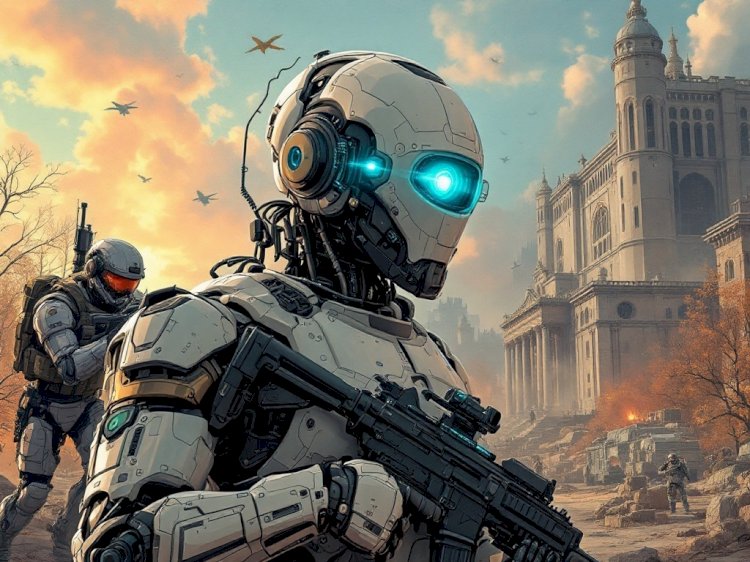
This blog post delves into the real, ongoing impact of AI on modern warfare, moving beyond the sensationalism of "killer robots" to explore the practical applications and ethical considerations of this transformative technology. We'll unpack how AI is currently being used, the benefits and risks it presents, and what the future of AI-driven warfare might look like.
The Misconception of "Killer Robots"
The idea of fully autonomous weapons systems – often dubbed "killer robots" – captures public attention and fuels ethical debates. These are imagined as machines capable of independently selecting targets and engaging in combat without human intervention. However, the development and deployment of such systems are still largely theoretical and face significant technological and ethical hurdles.
While research and development in autonomous weapons are certainly underway, the immediate and more pervasive impact of AI in warfare lies elsewhere. It's in the less sensational, but equally transformative, applications that are already changing how wars are fought and won.
AI's Current Role: Augmenting Human Capabilities
Instead of replacing humans, current AI applications in warfare primarily focus on enhancing human decision-making, improving efficiency, and providing strategic advantages. Here are some key areas where AI is making a significant difference:
1. Intelligence Gathering and Analysis: The Power of Big Data
Modern warfare generates vast amounts of data from various sources: satellite imagery, drone footage, communications intercepts, social media, and more. Analyzing this deluge of information manually is an overwhelming task. AI excels at processing and interpreting big data, identifying patterns, and extracting actionable intelligence far faster and more accurately than humans.
- Enhanced Situational Awareness: AI algorithms can sift through massive datasets to provide commanders with a comprehensive and real-time understanding of the battlefield. This includes tracking enemy movements, identifying potential threats, and predicting enemy actions.
- Improved Target Identification: AI can analyze images and sensor data to identify targets with greater precision, reducing the risk of civilian casualties and collateral damage. For example, AI-powered image recognition can distinguish between military vehicles and civilian vehicles, even in complex environments.
- Predictive Analysis: By analyzing historical data and current trends, AI can help predict future events, such as potential conflict hotspots or the likelihood of specific enemy tactics. This allows for proactive planning and resource allocation.
2. Logistics and Resource Management: Optimizing the Supply Chain
Military operations are incredibly complex logistical undertakings. Moving troops, equipment, and supplies efficiently is crucial for success. AI is revolutionizing military logistics by:
- Optimizing Supply Routes: AI algorithms can analyze factors like terrain, weather conditions, and enemy activity to determine the most efficient and safest routes for transporting supplies. This minimizes delays and reduces vulnerability to attacks.
- Predictive Maintenance: AI can analyze sensor data from vehicles and equipment to predict potential maintenance needs before breakdowns occur. This allows for proactive maintenance scheduling, reducing downtime and ensuring operational readiness.
- Inventory Management: AI-powered systems can optimize inventory levels, ensuring that military units have the right supplies at the right time, minimizing waste and reducing storage costs.
3. Cyber Warfare: A New Battleground
Cyber warfare is increasingly becoming a critical domain of conflict. AI is playing a crucial role in both offensive and defensive cyber operations:
- Enhanced Cyber Defense: AI can detect and respond to cyberattacks faster and more effectively than traditional security systems. AI algorithms can learn to recognize patterns of malicious activity and automatically deploy countermeasures to neutralize threats.
- Automated Cyber Offense: AI can be used to develop sophisticated cyber weapons capable of penetrating enemy networks and disrupting critical infrastructure. However, the use of AI in offensive cyber operations raises significant ethical concerns about escalation and unintended consequences.
- Vulnerability Analysis: AI can automatically scan software and networks to identify vulnerabilities that could be exploited by adversaries, allowing for proactive security patching and hardening.
4. Training and Simulation: Preparing for Future Conflicts
Realistic and effective training is essential for military readiness. AI is transforming military training through:
- Advanced Simulations: AI-powered simulations can create highly realistic and dynamic training environments that mimic the complexities of modern warfare. These simulations can adapt to trainee actions, providing personalized and challenging training scenarios.
- Intelligent Tutoring Systems: AI can provide personalized feedback and guidance to trainees, adapting to their learning styles and identifying areas for improvement. This can lead to more efficient and effective training outcomes.
- Virtual Reality and Augmented Reality Training: AI can enhance VR and AR training environments, creating immersive and interactive simulations that allow soldiers to practice complex skills in a safe and cost-effective manner.
Ethical and Strategic Implications
While the benefits of AI in warfare are undeniable, its integration also raises significant ethical and strategic concerns that must be carefully considered:
- Bias and Fairness: AI algorithms are trained on data, and if that data reflects existing biases, the AI system may perpetuate or even amplify those biases in its decision-making. This is particularly concerning in military applications, where biased AI could lead to discriminatory targeting or unfair outcomes.
- Accountability and Responsibility: As AI systems become more integrated into military operations, questions of accountability and responsibility become increasingly complex. If an AI system makes a mistake that leads to civilian casualties, who is responsible? The programmer? The commander? The AI itself?
- Escalation and Arms Races: The development and deployment of AI in warfare could trigger a new arms race, as nations compete to develop ever more sophisticated AI-powered military capabilities. This could lead to increased instability and a higher risk of conflict.
- Loss of Human Control: Even if fully autonomous weapons are not yet a reality, the increasing reliance on AI in critical military functions raises concerns about the potential for humans to lose control over warfare. As AI systems become more complex and opaque, it may become harder for humans to understand their decision-making processes or to intervene effectively in their operations.
The Future of AI in Warfare: A Human-Machine Partnership
The future of AI in warfare is likely to be characterized by a human-machine partnership, rather than the replacement of humans by machines. AI will continue to augment human capabilities, providing soldiers and commanders with enhanced information, improved decision-making tools, and greater operational efficiency.
However, realizing the benefits of AI in warfare while mitigating the risks requires careful planning, ethical considerations, and international cooperation. Key steps include:
- Developing Ethical Guidelines: Establishing clear ethical guidelines for the development and deployment of AI in military applications is crucial. These guidelines should address issues such as bias, accountability, and human control.
- Promoting Transparency and Explainability: Efforts should be made to make AI systems more transparent and explainable, so that humans can understand how they are making decisions and identify potential biases or errors. "Explainable AI" (XAI) is a growing field focused on this challenge.
- International Dialogue and Cooperation: International dialogue and cooperation are essential to prevent an AI arms race and to establish common norms and standards for the responsible use of AI in warfare. Organizations like the United Nations are playing a role in facilitating these discussions.
Conclusion: Navigating the AI Revolution in Warfare
AI is undeniably changing warfare, but not in the way often depicted in science fiction. The revolution is happening now, in the form of AI-powered intelligence analysis, logistics optimization, cyber defense, and training simulations. These applications are already enhancing military capabilities and reshaping the landscape of conflict.
As AI continues to evolve, its role in warfare will only become more significant. By focusing on responsible development, ethical guidelines, and international cooperation, we can harness the benefits of AI to enhance security and stability, while mitigating the risks of unintended consequences and escalating conflicts. The key is to ensure that AI remains a tool that serves human objectives and values, rather than becoming an autonomous force beyond our control.
What's Your Reaction?