Climate Guardians of the Deep: How Whales Contribute to Regulating Earth's Climate
The ocean absorbs approximately 31 percent of all carbon dioxide emissions, making it a critical component in global climate regulation [1]. Yet within this vast blue expanse, some of the most important climate regulators are not the microscopic plankton or powerful currents we might expect, but rather the largest animals ever to have lived on Earth: whales.
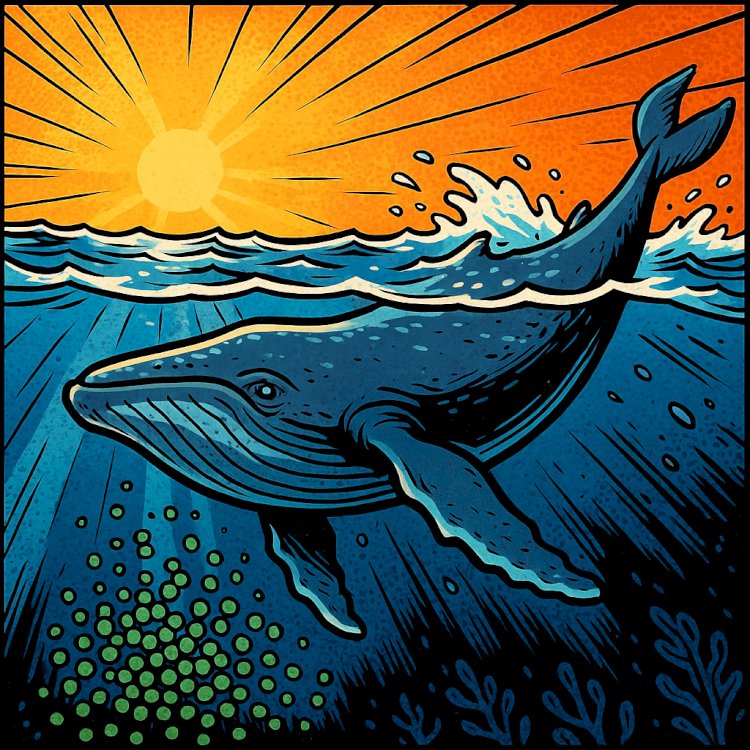
Scientific research is revealing that these marine giants serve as sophisticated biological machines that help stabilize our planet's climate through complex ecological processes. From their role in nutrient cycling to carbon sequestration, whales represent nature's own climate engineering system—one that has been operating for millions of years but is only now being fully understood and appreciated by climate scientists.
Understanding Whale Biology and Ecological Significance
Whales roam throughout all of the world's oceans, with their sheer size representing one of nature's most remarkable achievements[2]. The blue whale can reach lengths of more than 100 feet and weigh up to 200 tons—equivalent to approximately 33 elephants[2]. Despite their massive size, many whale species subsist on creatures no larger than a paper clip, demonstrating one of the ocean's most fascinating ecological relationships[3]. This seemingly paradoxical feeding strategy is made possible through highly specialized adaptations that have profound implications for marine ecosystem functioning.
Baleen whales, including blue, right, bowhead, sei, and gray whales, possess special bristle-like structures in their mouths called baleen that strain food from the water[2]. Their feeding process, known as lunge feeding, is unique to rorquals and represents a tremendous energetic endeavor[3]. A 160-ton blue whale swimming at approximately 4 meters per second opens its triple-hinged jaws and takes in a gulp equal to about 140 percent of its mass, then slows down to filter its meal before preparing for the next feeding attempt[3]. This feeding behavior is facilitated by complex biomechanical and anatomical adaptations that allow whales to engulf volumes of water and prey larger than their own body size[3].
The geographic distribution of whale feeding grounds reveals their ecological importance. The Santa Barbara Channel and San Francisco region serve as critical feeding grounds and migratory routes for blue, fin, and humpback whales—all species that remain endangered or threatened[4]. These regions support four National Marine Sanctuaries and are characterized by the rich biodiversity of the California Current system[4]. Thirty-six species of cetacean have been recorded in the North-East Atlantic Ocean alone, demonstrating their widespread distribution and ecological significance[5].
The Whale Pump: Revolutionizing Ocean Nutrient Cycling
Perhaps the most remarkable climate-regulating function of whales lies in their role as biological nutrient pumps, a process scientists have termed the "whale pump"[6][7]. This mechanism fundamentally challenges traditional understanding of ocean nutrient cycling and reveals whales as ecosystem engineers that actively transport essential nutrients from the deep ocean to surface waters where photosynthesis occurs.
The whale pump operates through a relatively simple yet profoundly important process. Whales feed at great depths in waters that are often pitch dark, consuming nutrient-rich prey such as krill, fish, and squid[8][7]. After feeding in these deep, nutrient-laden waters, whales must return to the surface to breathe, where they release what biologists call "fecal plumes"—vast outpourings of nutrient-rich waste material[8]. These fecal plumes are extraordinarily rich in iron and nitrogen, nutrients that are often severely scarce in surface waters but essential for phytoplankton growth[8].
Research conducted on Stellwagen Bank has provided quantitative evidence of this process's significance. Scientists collected and analyzed 16 fecal plume samples and found that concentrations of particulate organic nitrogen (PON) were elevated by as much as two orders of magnitude above typical mixed-layer concentrations for summer conditions[6]. Concentrations of ammonium in fecal plumes ranged from 0.4 to 55.5 micromoles per kilogram, while reference samples collected away from visible fecal plumes had concentrations below 0.1 micromoles per kilogram[6]. The measured ammonium production rates in incubated samples were strongly correlated with sample PON concentration, with the highest observed production rate equivalent to about 50 times a typical plankton assimilation rate during summer in Massachusetts Bay[6].
Recent research has revealed that whale excrement contains particularly significant amounts of iron, a vital element that is often scarce in ocean ecosystems[9]. University of Washington researchers found that whale feces contains nontoxic forms of copper as well, representing another essential nutrient that in some forms can harm marine life[9]. The iron content is especially crucial because the Southern Ocean, which encircles Antarctica and plays an important role in global climate regulation, is largely considered a high-nutrient, low-chlorophyll zone where phytoplankton growth is limited by the availability of trace elements, particularly iron[10].
The fertilization effect extends beyond simple nutrient release. Sperm whales, which are prodigious divers that descend to great depths in search of prey, shut down all non-essential bodily functions during deep dives, including excretion[11]. They only defecate when they reach the surface, creating a perfect coincidence with the habitat of photosynthetic plankton in the shallow water column where sunlight penetrates[11]. Approximately 12,000 sperm whales in the Southern Ocean excrete around 50 tonnes of iron into the ocean every year, and based on iron fertilization experiments, this amount of iron enables the sequestration of over 400,000 tonnes of carbon annually[11].
Carbon Sequestration Through Whale Activity
Beyond their role in nutrient cycling, whales contribute to climate regulation through multiple carbon sequestration mechanisms that operate on different timescales and spatial scales. These mechanisms include direct carbon storage in their biomass, carbon export through whale falls, and indirect carbon capture through enhanced phytoplankton productivity.
Whales are remarkably efficient at capturing and storing atmospheric carbon directly in their large bodies throughout their exceptionally long lives[1]. Like trees in a rainforest, whales accumulate carbon in their tissues, but their efficiency surpasses that of terrestrial vegetation. One whale can capture an average of 33 tons of carbon dioxide over its lifespan, while a live oak tree—one of the most efficient carbon-capturing tree species—captures roughly 12 tons of carbon dioxide over a maximum 500-year lifespan[1][12]. This remarkable efficiency stems from whales' ability to digest and store large quantities of carbon-rich prey while exhaling very little carbon dioxide back into the atmosphere[1].
The carbon sequestration potential becomes even more significant when whales die. When whales die naturally, their carbon-rich carcasses often sink to the seafloor, where the carbon is trapped and prevented from returning to the atmosphere as carbon dioxide for centuries to millennia[1]. This process, known as whale falls, represents a direct pathway for removing atmospheric carbon and storing it in deep-sea sediments.
Research modeling whale-mediated carbon sequestration across the southern hemisphere has revealed the temporal dynamics of this carbon pump from 1890 to 2100[10]. At their pre-exploitation abundance, five species of southern hemisphere baleen whales could sequester 400,000 tonnes of carbon per year[10]. This estimate dropped dramatically to 60,000 tonnes of carbon per year by 1972 following intensive commercial whaling[10]. Projections suggest that with whale population restoration under current climate scenarios, sequestration could reach 170,000 tonnes of carbon per year by 2100, though without climate change impacts, recovered whale populations could sequester nearly twice as much—320,000 tonnes of carbon per year—by 2100[10].
The carbon storage capacity extends beyond individual whale biomass to encompass entire populations. Large baleen whale populations now store 9.1 million tons less carbon than before whaling began[13]. While some of this lost storage has been offset by increases in smaller competitors, the relative metabolic efficiency of larger organisms means that a shift toward smaller animals could decrease total community biomass by 30 percent or more[13]. Scientists estimate that rebuilding whale populations would remove 160,000 tons of carbon each year through sinking whale carcasses alone[13].
Trophic Cascades and Marine Food Web Regulation
The climate-regulating functions of whales extend beyond direct nutrient cycling and carbon storage to encompass their role in maintaining the structure and stability of marine food webs through trophic cascades. These ecological processes demonstrate how whales' presence influences the entire marine ecosystem in ways that ultimately affect global carbon cycling.
Trophic cascades represent ecological processes that start at the top of the food chain and cascade down through all trophic levels to affect the entire ecosystem[8][14]. Contrary to simplistic assumptions that removing whale predators would increase prey populations, scientific observation has revealed the opposite: as great whale populations declined due to commercial whaling, fish and krill populations also decreased[8][14]. This counterintuitive result is explained by understanding whales' complex role in ecosystem functioning rather than viewing them merely as predators.
The mechanism of whale-driven trophic cascades operates through multiple pathways. Beyond the nutrient fertilization provided by the whale pump, whale movements through the water column create significant vertical mixing that helps maintain phytoplankton in the euphotic zone where photosynthesis can occur[8]. Even with current greatly reduced whale populations, the vertical mixing of water caused by animal movements up and down through the ocean column is roughly equivalent to the amount of mixing caused by all the world's wind, waves, and tides combined[8].
Increased phytoplankton productivity resulting from whale activity creates a positive feedback loop that supports higher trophic levels. More phytoplankton means more animal plankton, which provides food for larger creatures including the fish and krill that whales themselves consume[8]. This relationship demonstrates that more whales actually mean more fish and krill, not fewer as might be intuitively expected[8]. The cooperative feeding behaviors observed in species like humpback whales, including bubble-net feeding where multiple whales coordinate to corral prey, suggest that whales actively create and maintain the productive feeding grounds upon which they depend[15].
The ecosystem effects extend to phytoplankton's role in global carbon cycling. Phytoplankton not only form the base of marine food webs but also absorb carbon dioxide from the atmosphere during photosynthesis[8]. When these organisms die, they sink to the ocean floor, effectively removing carbon from the atmospheric system and storing it in deep-sea sediments[8]. The whale-mediated enhancement of phytoplankton productivity therefore creates a significant indirect pathway for carbon sequestration that extends far beyond the direct carbon storage in whale biomass.
Threats to Whale Populations and Climate Implications
Despite their crucial role in climate regulation, whale populations face an array of anthropogenic threats that compromise their ability to provide these essential ecosystem services. These threats not only endanger whale populations directly but also undermine the climate-regulating functions that make whales so valuable for global environmental stability.
Historical commercial whaling represents the most severe threat whale populations have faced, with effects that continue to reverberate through marine ecosystems today. Seven out of 13 great whale species remain classified as endangered or vulnerable even after decades of protection[2]. The North Atlantic right whale population has been reduced to approximately 400 individuals, representing one of the most critically endangered large whale populations[2]. These population reductions have had cascading effects on whale-mediated climate processes, with carbon sequestration capacity dropping from 400,000 tonnes per year before exploitation to just 60,000 tonnes per year by 1972[10].
Contemporary threats continue to challenge whale population recovery and their climate-regulating functions. An estimated minimum of 300,000 whales and dolphins are killed each year as a result of fisheries bycatch, while others succumb to shipping strikes, habitat loss, and pollution[2]. Ship strikes represent a particularly significant threat in important whale habitats such as the California Current system, where shipping traffic intersects with critical feeding grounds and migratory routes[4].
Plastic pollution has emerged as a pervasive threat that affects whale health and, by extension, their ecosystem functions. More than 11 million metric tons of plastic flow into the ocean each year, and by 2050, there could be more plastic in the sea by weight than fish[16]. Ocean plastic pollution harms marine life through both ingestion and entanglement, with more than 240 wildlife species, including whales, known to have ingested plastic[16]. Flexible plastic materials are responsible for the largest proportion of deaths from debris, primarily due to gastric obstructions that prevent normal feeding and digestion[16]. About 10 percent of ocean plastic pollution consists of plastic-based fishing nets and rope, which contribute to the annual deaths of 300,000 whales, dolphins, and porpoises[16].
Climate change itself presents an additional layer of threats that create feedback loops affecting whale populations and their climate-regulating capacity. Warming ocean temperatures, rising sea levels, ocean acidification, and increased frequency of extreme weather events are altering marine ecosystems in ways that particularly impact whales at the top of the food web[17]. North Pacific right whales, with only an estimated 30 individuals in the eastern population, face habitat changes in their northernmost Pacific range where sea ice coverage determines zooplankton distribution and availability[17]. Beluga whales experience unprecedented changes to seasonal ice coverage and thickness that affect their migration routes and increase the potential for ice entrapment[17]. These climate-driven changes in prey distribution force whales to alter their foraging behavior, often requiring longer, deeper, and more frequent dives to find food[17].
The interconnection between climate change and whale populations creates concerning feedback loops. As climate change reduces whale populations and alters their distribution, the ocean's capacity for carbon sequestration and nutrient cycling decreases, potentially accelerating climate change impacts. Conversely, healthy whale populations could provide natural climate mitigation services that become increasingly valuable as atmospheric carbon dioxide concentrations continue to rise.
Conclusion
The scientific evidence reveals whales as sophisticated biological systems that have been regulating Earth's climate for millions of years through mechanisms we are only beginning to fully understand and appreciate. Through the whale pump, these marine giants transport essential nutrients from deep ocean waters to surface layers where they fertilize phytoplankton communities that form the foundation of marine food webs and global carbon cycling. Their massive bodies serve as efficient carbon storage vessels throughout their long lives, and their carcasses provide long-term carbon sequestration when they sink to the ocean floor after death.
The trophic cascades initiated by whale feeding behaviors create positive feedback loops that enhance marine ecosystem productivity and carbon sequestration capacity far beyond what their direct impacts might suggest. Even with current dramatically reduced populations, whales contribute vertical mixing equivalent to all global wind, wave, and tidal action combined, demonstrating the scale of their ecosystem influence.
However, the multiple anthropogenic threats facing whale populations—from historical overexploitation to contemporary challenges including ship strikes, plastic pollution, and climate change—continue to undermine their capacity to provide these crucial climate services. The reduction in whale-mediated carbon sequestration from 400,000 tonnes annually before whaling to just 60,000 tonnes by 1972 illustrates the magnitude of lost climate regulation capacity.
Protecting and restoring whale populations therefore represents a nature-based climate solution with proven effectiveness and established biological mechanisms. Unlike complex technological approaches to carbon capture and storage, whale conservation offers a low-tech strategy that simultaneously addresses biodiversity conservation, ecosystem restoration, and climate mitigation. As the climate crisis intensifies, recognizing whales as climate guardians of the deep becomes not just an ecological imperative but a practical necessity for maintaining the ocean's capacity to regulate our planet's climate system.
The path forward requires integrated approaches that address the full spectrum of threats while supporting whale population recovery through marine protected areas, shipping route modifications, plastic pollution reduction, and climate change mitigation. In protecting whales, we protect one of nature's most effective climate regulation systems—a living technology that has been refining its effectiveness for millions of years and offers proven solutions for our climate challenges.
- https://www.fisheries.noaa.gov/feature-story/whales-and-carbon-sequestration-can-whales-store-carbon
- https://www.worldwildlife.org/species/whale
- https://news.stanford.edu/stories/2016/09/unique-feeding-habits-whales-come-light
- https://whalesafe.com/whales-matter/
- https://oap.ospar.org/en/ospar-assessments/intermediate-assessment-2017/biodiversity-status/marine-mammals/abundance-distribution-cetaceans/abundance-and-distribution-cetaceans/
- https://pmc.ncbi.nlm.nih.gov/articles/PMC2952594/
- https://mersociety.org/news-media/humpback-whales/what-whales-do-for-you-whale-pump-whale-poo/
- https://www.youtube.com/watch?v=M18HxXve3CM
- https://www.washington.edu/news/2025/02/06/whale-poop-contains-iron-that-may-have-helped-fertilize-past-oceans/
- https://royalsocietypublishing.org/doi/10.1098/rspb.2022.0375
- https://www.nationalgeographic.com/science/article/sperm-whale-poo-offsets-carbon-by-fertilising-the-oceans-with-iron
- https://www.imf.org/en/Publications/fandd/issues/2019/12/natures-solution-to-climate-change-chami
- https://pmc.ncbi.nlm.nih.gov/articles/PMC2928761/
- https://themeaningofwater.com/2016/09/03/how-whales-change-climate/
- https://www.adfg.alaska.gov/static/viewing/pdfs/whale_behaviors.pdf
- https://www.worldwildlife.org/stories/whales-and-the-plastics-problem
- https://www.fisheries.noaa.gov/national/climate/whales-and-climate-change-big-risks-oceans-biggest-species
What's Your Reaction?