Navigating the Sino-Russian Tech Alliance: Challenges and Opportunities in a Shifting Global Order
In an era defined by rapid technological advancements and shifting geopolitical landscapes, the relationship between China and Russia has become increasingly pivotal. While often portrayed as a unified front against the West, a closer examination reveals a complex dynamic, particularly in the realm of technology and economic cooperation. This blog post delves into the intricate layers of the Sino-Russian tech alliance, analyzing its strengths, inherent challenges, and potential future trajectories. We aim to provide a comprehensive overview, drawing insights from expert analyses and recent global trends to understand the true nature of this evolving partnership.
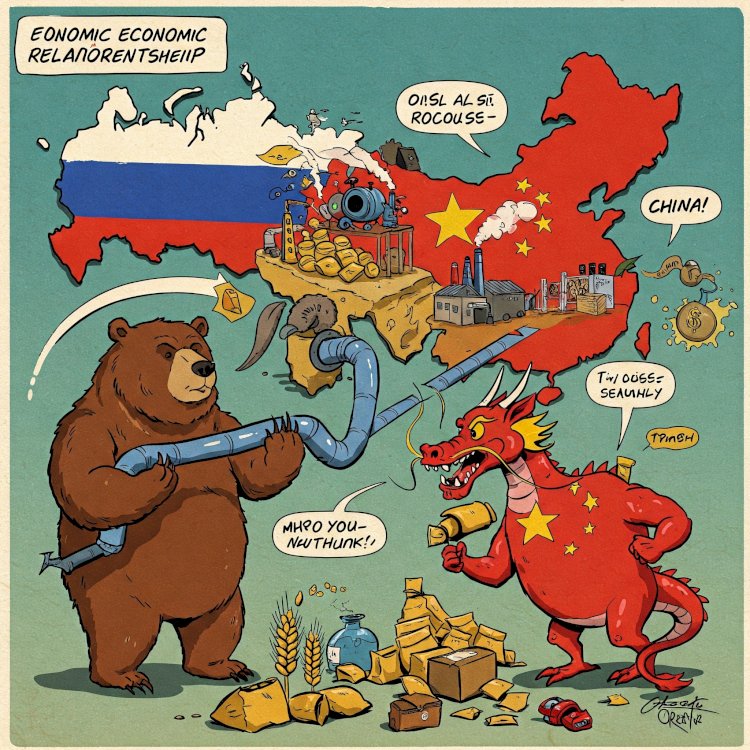
The Economic Interplay: Trade and Asymmetry
The economic relationship between Russia and China is primarily rooted in trade, with China emerging as a dominant player. Chinese investments in Russia, while present, are largely concentrated in traditional sectors such as timber, oil and gas, and tourism. Data indicates that Chinese investment constitutes a relatively small fraction of the total foreign investment in Russia, suggesting a cautious approach rather than a deep strategic commitment.
- Trade Dynamics: The trade relationship is characterized by an increasing asymmetry. Russia primarily exports raw materials and energy resources to China, while importing a growing volume of high-value, technology-intensive goods from China. This dynamic is further highlighted by the automotive sector, where Chinese companies have significantly filled the market vacuum left by Western automakers, leveraging Russia as a crucial market for their expanding industries.
- Yuan's Ascendancy: Western sanctions have pushed Russia towards greater economic reliance on China, notably in financial transactions. The "Yuanisation" of the Russian economy is evident as Russia increasingly settles foreign trade in Chinese Yuan, a stark shift from pre-sanction practices. This growing dominance of the Yuan in Russian trade and reserves underscores the deepening economic dependence and the potential vulnerabilities it introduces.
- Filling the Void: The exodus of Western companies from the Russian market post-sanctions has created a significant opportunity for Chinese exporters. Chinese companies have rapidly expanded their market share in Russia, particularly in sectors like automobiles, machinery, and electronics, effectively capitalizing on the economic isolation of Russia from Western markets.
China's Technological Nationalism: A Focus Inward
At the heart of China's technological strategy lies the concept of "technological nationalism." This approach prioritizes indigenous innovation, self-reliance, and the development of national technological champions. China's focus is firmly set on building a robust domestic tech sector, aiming for global leadership in key technologies.
- Indigenous Innovation: China's commitment to technological self-sufficiency is evident in its massive investments in research and development and policies aimed at fostering domestic innovation. This drive is fueled by a historical narrative emphasizing technological independence as crucial for national strength and resilience.
- Strategic Sectors: The Chinese government strategically promotes advancements in key sectors like AI, quantum computing, and advanced manufacturing. These sectors are seen as vital for future economic growth and national security, with significant state support directed towards achieving breakthroughs and global dominance.
- Managed Tech Sector: While supporting technological advancement, the Chinese government also maintains a keen focus on managing and regulating its large tech corporations. This approach aims to balance innovation with control, mitigating potential systemic risks and ensuring alignment with national strategic goals.
The Contradiction: Russia's Tech Aspirations vs. China's Strategic Priorities
A significant contradiction emerges when examining Russia's technological aspirations in the context of China's strategic tech priorities. Russia, facing technological isolation due to sanctions, seeks advanced technology investments and cooperation, particularly from China. However, China's "technological nationalism" and strategic focus on its domestic sector create inherent limitations in this collaboration.
- Limited Tech Transfer: Despite Russia's hopes, large-scale technology investments from China, especially in core tech sectors, remain elusive. China's primary focus is on leveraging Russia as a market and resource provider, rather than a partner for deep technological development.
- Hesitant Investment: Chinese companies exhibit hesitation towards substantial investments in Russian manufacturing and technology sectors. Factors such as currency volatility, sanctions risks, and economic uncertainties in Russia deter long-term, deep investments. Instead, Chinese investments tend to favor sectors with easier entry and exit strategies, lacking commitments to long-term technological advancement in Russia.
- Unequal Partnership: The technological landscape of the Sino-Russian relationship reveals an imbalance. Russia's reliance on China for technological goods contrasts with China's strategic focus on its own tech sector, suggesting a partnership where Russia may become increasingly technologically dependent without gaining substantial technology transfer or co-development opportunities in critical areas.
Internal Dynamics of China's Tech Industry: Competition and Integration
To understand China's approach to technology cooperation, it's crucial to consider the internal dynamics of its tech industry. Characterized by intense competition in consumer-facing products, the Chinese tech sector also exhibits deep integration and cooperation in the underlying digital infrastructure.
- Integrated Market Approach: China fosters an "integrated market" where tech companies fiercely compete in consumer markets while simultaneously cooperating and supporting each other in developing and maintaining the foundational digital infrastructure. This model promotes rapid innovation and quality improvement as companies are both rivals and collaborators.
- State Support and Direction: The Chinese government plays a significant role in shaping the tech industry through substantial funding, policy direction, and regulatory oversight. This state-centric approach, while fostering rapid growth in targeted sectors, differs markedly from more market-driven models seen in other global tech leaders.
- Semiconductor Lag: Despite significant advancements, China still faces challenges in certain core technologies, particularly in advanced semiconductors. While leading in some tech areas, China lags behind global leaders in the design and manufacturing of the most cutting-edge chips, highlighting areas where self-reliance remains a work in progress.
Future Trajectories: Navigating a Complex Path
Looking ahead, the Sino-Russian tech alliance presents a complex picture of opportunities and constraints. While economic ties will likely deepen, particularly in trade and resource extraction, significant technological integration and cooperation in core sectors face considerable headwinds.
- Economic Dependence vs. Tech Independence: Russia's growing economic dependence on China is likely to continue, especially as sanctions limit its access to Western markets and technologies. However, this dependence may not translate into the technological advancements Russia seeks. China's strategic focus on its own technological self-reliance suggests that Russia's aspirations for technological parity through this partnership may remain largely unmet.
- Geopolitical Implications: The evolving Sino-Russian relationship has broader geopolitical implications. As both nations seek to navigate a global order increasingly characterized by competition and technological rivalry, their partnership will continue to be a key factor in international relations. The extent to which this alliance can challenge the existing global order, particularly in technology and economic influence, remains a subject of ongoing observation and analysis.
- Alternative Paths for Russia: Faced with the limitations of technological cooperation with China and ongoing Western sanctions, Russia may need to explore alternative strategies for developing its tech industry. This could involve focusing on niche sectors, fostering domestic innovation through different models, or seeking technological partnerships with other nations beyond the Sino-Russian sphere.
Conclusion:
The Sino-Russian tech alliance is a multifaceted relationship shaped by economic realities, strategic priorities, and geopolitical considerations. While trade and economic cooperation are expanding, particularly driven by the current global landscape, the depth and nature of technological collaboration are constrained by China's focus on its own technological nationalism and Russia's increasing economic dependence. Understanding these nuances is crucial for navigating the complexities of the evolving global order and anticipating the future trajectory of this significant international partnership.
What's Your Reaction?