The Future of Cybersecurity: How Quantum Computing Will Reshape Digital Defenses
The cybersecurity landscape is on the verge of a radical transformation. As quantum computing progresses from theoretical models to functional systems, its implications for digital security become increasingly urgent. This article explores the evolving relationship between quantum technology and cybersecurity, outlining the potential threats and the urgent need for proactive strategies.
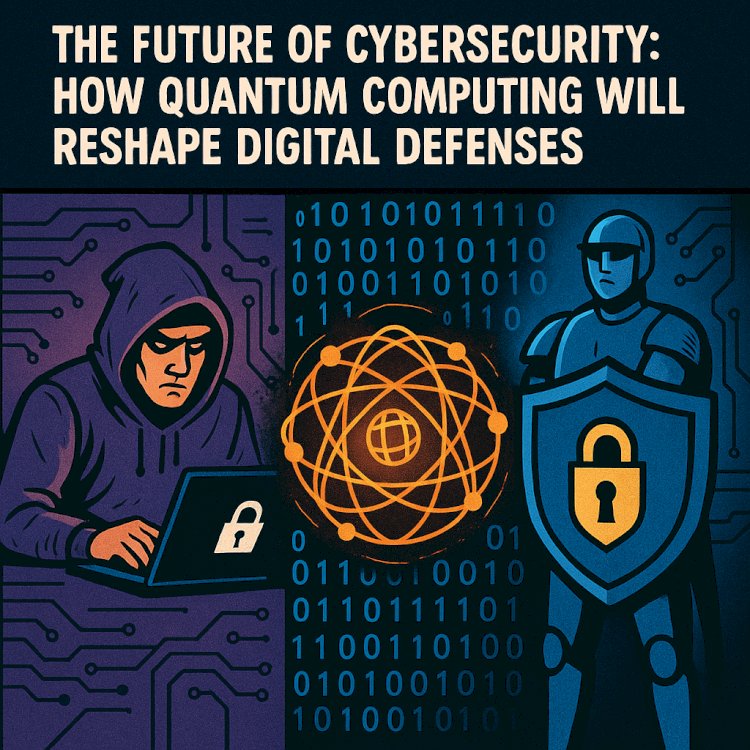
We will walk through the basics of quantum computing, current vulnerabilities, the nature of quantum threats, emerging defenses, expected timelines, and practical steps organizations must take to secure their digital future.
Understanding Quantum Computing Fundamentals
Quantum computing represents a seismic shift from classical computing. Traditional computers process information in bits — 0s and 1s — whereas quantum computers use qubits, capable of being 0 and 1 simultaneously due to a phenomenon known as superposition. Moreover, qubits can be entangled, meaning the state of one directly affects another, no matter the distance between them.
These properties enable quantum computers to process enormous datasets and solve complex problems far beyond the capacity of classical machines. While still in the early stages, companies like IBM, Google, and startups around the world are rapidly pushing the boundaries. Understanding these principles is critical for appreciating the cybersecurity revolution that's coming.
Current Cryptographic Systems and Vulnerabilities
Modern cybersecurity heavily relies on encryption systems, particularly Public Key Infrastructure (PKI) methods such as RSA and Elliptic Curve Cryptography (ECC). These systems depend on the difficulty of mathematical problems, like factoring large primes, which current computers cannot solve efficiently.
However, quantum computers pose a significant threat. Algorithms such as Shor’s can, theoretically, solve these problems exponentially faster than classical computers, rendering current encryption obsolete. If even moderately powerful quantum computers become available, the fundamental security layers protecting data transmission, financial transactions, and government communications could collapse.
Quantum Threats to Cybersecurity
The most famous quantum threats stem from two groundbreaking algorithms:
-
Shor's Algorithm: Capable of factoring large integers and breaking RSA and ECC encryption.
-
Grover’s Algorithm: Speeds up the search for cryptographic keys, reducing the time needed to brute-force symmetric encryption by roughly a square root factor.
Although Grover’s algorithm poses less immediate danger, it still undermines symmetric key cryptography by halving its effective security strength.
The implications are massive: everything from encrypted emails to secure banking communications would be vulnerable. As quantum technology matures, it won't be a question of if cyber threats will materialize, but when.
Quantum-Resistant Cryptography Development
Recognizing the looming threat, researchers and standardization bodies have initiated efforts to develop post-quantum cryptography (PQC). These are encryption methods designed to be secure against quantum attacks.
The National Institute of Standards and Technology (NIST) leads the effort to identify and standardize quantum-resistant algorithms. Techniques like lattice-based cryptography, hash-based signatures, and multivariate polynomial cryptography have emerged as promising candidates.
Lattice-based cryptography, in particular, has shown strong resistance to both classical and quantum attacks, making it a frontrunner for future standards. Migration to these new systems, however, will require careful planning and global coordination.
Timeline for Quantum Supremacy and Real-World Impacts
Predicting the arrival of practical quantum computers capable of breaking encryption is complex. Estimates vary widely:
-
Some optimistic projections suggest quantum decryption capabilities within the next 10-15 years.
-
Others, more conservative, predict several decades before sufficient quantum capacity is achieved.
Nevertheless, the concept of "harvest now, decrypt later" underscores the urgency. Adversaries could intercept and store encrypted data today, awaiting future quantum breakthroughs to unlock sensitive information retroactively.
Major tech firms and intelligence agencies are investing heavily in quantum research, meaning significant breakthroughs could occur faster than expected. The window for preparation is narrowing.
Strategies for Cybersecurity Adaptation
Organizations must start preparing now. Key steps include:
-
Inventory Critical Assets: Identify data and systems most at risk from quantum decryption.
-
Adopt Hybrid Cryptography: Begin integrating quantum-resistant methods alongside classical encryption to ensure gradual transition.
-
Monitor Standardization Efforts: Stay updated with bodies like NIST to align strategies with emerging standards.
-
Invest in Cryptographic Agility: Build systems capable of switching encryption algorithms without massive reengineering.
-
Educate and Train: Raise awareness among stakeholders about quantum threats and mitigation strategies.
Governments are already moving. Agencies like the NSA and CISA have issued guidance for transitioning to quantum-safe systems, emphasizing the need for an immediate start.
Conclusion
Quantum computing promises to revolutionize technology — but it also heralds a new era of cybersecurity threats. Organizations and governments that fail to anticipate and prepare for the quantum future risk catastrophic vulnerabilities. By understanding quantum fundamentals, assessing current weaknesses, tracking timelines, and proactively adopting quantum-resistant strategies, we can navigate this impending shift with resilience.
The quantum era is coming. Preparation must begin today to secure tomorrow.
What's Your Reaction?