Exploring the Impact of Urban Green Spaces on Mental Health in City Populations
As urbanization accelerates globally, the relationship between urban environments and mental health has become a critical area of research. This systematic literature review explores how urban green spaces affect mental health in city populations, examining the psychological, environmental, and societal connections between urban greenery and mental well-being[1].
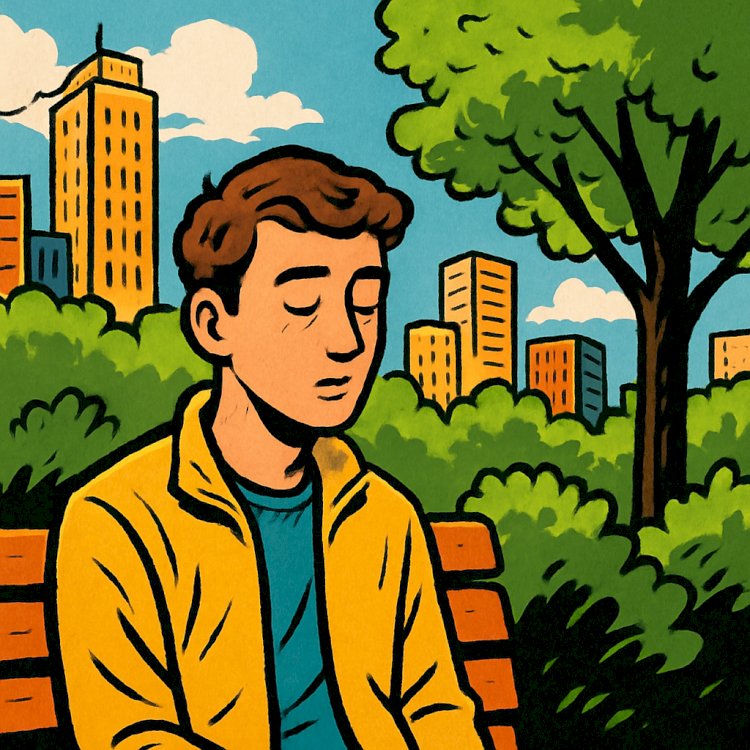
Urban green spaces serve as vital refuges amidst the hustle and bustle of city life, offering more than just aesthetic value through their profound benefits for mental health[2]. The growing body of evidence suggests that access to nature within urban settings can significantly impact psychological outcomes, providing a compelling argument for their preservation and integration into city planning[2][3].
- Defining Urban Green Spaces and Mental Health
What Qualifies as Urban Green Space?
The World Health Organization (WHO) defines urban green spaces as "all urban land covered by vegetation of any kind"[4]. This broad definition encompasses various types of green areas, including:
- Public parks and gardens
- Street trees and vegetation
- Private gardens
- Small water bodies (also known as "blue spaces")
- Vegetation on both private and public grounds, regardless of size and function[4][5]
Urban green space is considered a component of "green infrastructure," representing an important part of public open spaces and common services provided by a city[4]. These spaces can serve as health-promoting settings for all members of the urban community, making equitable distribution and accessibility essential considerations[4][6].
Defining and Measuring Mental Health
Mental health encompasses a state of well-being that enables people to cope with life stresses, realize their abilities, work productively, and contribute to their communities[7]. In the context of green space research, mental health is measured through various indicators:
- Clinical assessments of psychiatric disorders (depression, anxiety, etc.)
- Self-reported psychological states (stress, mood, anxiety)
- Physiological markers (cortisol levels, heart rate)
- Cognitive functioning measures
- Subjective well-being and quality of life assessments[8][7][9]
Recent efforts to develop better indicators for mental health and wellbeing emphasize the importance of adopting a wider, more comprehensive, and positively framed approach to measuring and monitoring mental wellbeing beyond just the absence of mental illness[8].
- Psychological Benefits of Green Spaces
Stress Reduction and Mood Improvement
Urban green spaces offer significant benefits for stress reduction and mood enhancement. Research has consistently shown that exposure to natural environments can decrease stress hormone levels and improve overall mood[2][10]. Studies measuring salivary cortisol (a primary stress hormone) have found that individuals who spent time in urban green spaces had significantly lower cortisol levels compared to those in built-up areas[2][9].
After accounting for the natural diurnal drop in cortisol (11.7% per hour), nature experiences were found to produce an additional 21.3% per hour drop in cortisol levels[9]. The efficiency of this "nature pill" was greatest between 20-30 minutes of exposure, after which benefits continued to accrue but at a reduced rate[9][10].
Cognitive Benefits and Restoration
Green space exposure is associated with notable cognitive benefits, including:
- Enhanced attention and concentration
- Improved cognitive functioning
- Better problem-solving abilities
- Increased creativity[2][11]
A study from the National Institute on Aging found that residential areas with more green space were associated with faster thinking, better attention, and higher overall cognitive function in middle-aged women[11]. From a cognitive perspective, this translated to being 1.2 years younger[11]. These findings support the theory that natural environments provide restorative experiences that help combat mental fatigue and improve cognitive performance[7][3].
Mental Health Disorders Prevention and Treatment
Beyond general psychological well-being, green spaces may play a role in preventing and treating mental health disorders. Research indicates that:
- People living in neighborhoods with more green space have a 51% lower likelihood of developing depression and a 63% lower likelihood of developing anxiety disorders[12]
- Individuals residing in cities are 21% more likely to develop anxiety disorders and 39% more likely to develop mood disorders compared to those with greater access to green spaces[10]
- Green space exposure can be an effective component of therapeutic interventions for individuals with chronic illnesses and mental health conditions, including anxiety, depression, and ADHD[13][7]
A meta-analysis found that a 10% increase in the proportion of green space was linked to a lower risk of depression (merged OR = 0.963) and anxiety (merged OR = 0.938), while a 0.1 unit increase in Normalized Difference Vegetation Index (NDVI) was linked to a lower risk of depression (merged OR = 0.931)[14][15].
- Socioeconomic and Demographic Variations
Income and Access Disparities
Access to urban green spaces is not equitably distributed, with significant disparities based on socioeconomic status. Research has consistently shown that:
- Wealthier neighborhoods typically have greater access to parks, trees, greenways, and sports fields[16][17]
- Urban tracts with higher median household incomes have higher levels of NDVI, NatureScore, park cover, and odds of containing blue space[18]
- Urban tracts in the highest median household income quintile had higher NDVI (44.8% of the SD), corresponding to a 0.08 higher NDVI; higher NatureScore (54.9% of the SD), corresponding to an 18.3 higher NatureScore; and higher park cover (16.2% of the SD), corresponding to a 2.1% higher park cover, compared with urban tracts in the lowest median household income quintile[18][19]
These disparities in access to green spaces can exacerbate existing health inequalities, as lower-income populations who might benefit most from green space exposure often have the least access to quality green environments[20][17].
Racial and Ethnic Disparities
In addition to income-based disparities, access to green spaces often varies by race and ethnicity:
- In some metropolitan areas, access to green spaces is significantly related to race, with predominantly white neighborhoods having greater access than neighborhoods with higher percentages of people of color[16][21]
- Urban tracts with lower percentages of Black and Hispanic residents had higher levels of NDVI, NatureScore, and park cover[18]
- Percent greenspace was higher in block groups with lower percentages of people of color, people with low income, and people with lower education[22]
These patterns reflect broader environmental justice concerns, as marginalized communities residing in underprivileged neighborhoods often bear the burden of greater environmental risks while having less access to environmental benefits like green spaces[20][23].
Age and Demographic Considerations
The relationship between green space access and mental health also varies across age groups:
- Children who grew up with the lowest levels of green space had up to 55% higher risk of developing psychiatric disorders independent from effects of other known risk factors[24]
- Neighborhoods with higher percentages of population under 5 years or over 64 years had higher land cover by greenspace or tree coverage but reduced access to park entrances compared to other neighborhoods[22]
- Stronger association between cumulated green space and risk during childhood constitutes evidence that prolonged presence of green space is important for development[24][25]
Research from Philadelphia found that increased residential tree cover, particularly within 250 meters of a residence, was linked to a significant reduction in mental health conditions, with an especially positive impact on lower-income individuals[25].
- Urban Design and Policy Interventions
Green Infrastructure Planning Approaches
Green infrastructure planning represents a strategic approach to developing interconnected and multifunctional networks of blue and green spaces that provide environmental, social, and economic benefits while enhancing urban climate resilience[26]. Key planning approaches include:
- Incorporating green spaces into urban planning and zoning regulations
- Utilizing green infrastructure in stormwater management and flood mitigation
- Implementing green roofs and walls in building design
- Creating green corridors and connectivity between urban green spaces[27][28]
The core principle of green infrastructure is to utilize natural processes to achieve urban planning goals rather than relying solely on traditional "gray" infrastructure[27]. This approach recognizes that green spaces function as an ecosystem providing multiple services rather than as disconnected green spots[29][26].
Policy Instruments and Frameworks
Various policy instruments have been developed to promote green infrastructure in urban settings:
- Certification systems for securing quantity and quality urban green space, such as those outlined in the Urban Green Space Act[30]
- Strategic frameworks that establish green infrastructure as a separate priority distinct from "business-as-usual" issues[28]
- Codified design standards for materials, buildings, and space embedded in urban development plans[28]
- WHO guidelines recommending that green spaces of at least 0.5 hectares should be accessible within a 300-meter linear distance of residences[31]
Effective green infrastructure delivery can be achieved through existing planning processes, including plan-making, development management, urban design, and pre-planning consultations[28]. Creating dedicated green infrastructure plans can help establish clear objectives and implementation strategies[28][32].
Implementation Challenges and Solutions
Despite the recognized benefits, implementing green infrastructure faces several challenges:
- Limited funding and resources
- Regulatory and policy barriers
- Public awareness and engagement issues
- Maintenance and management requirements[27][26]
Addressing these challenges requires a coordinated effort from policymakers, urban planners, and community stakeholders[27]. Successful implementation often involves:
- Engaging diverse stakeholders, including engineers, transport consultants, architects, and emergency services personnel[28]
- Establishing collaboration systems among landowners, businesses, and residents[30]
- Developing area management plans that present clear policies concerning green spaces[30]
- Ensuring that green spaces are maintained properly, kept clean, well-lit, and have wardens available to address safety concerns[33]
Research from the University of York highlighted that safety in green spaces is a critical consideration, as the mental health benefits of outdoor environments are only realized when participants feel safe and the spaces are well-maintained[33].
- Limitations and Confounding Variables
Methodological Challenges
Research on green spaces and mental health faces several methodological limitations:
- Heterogeneity in study designs, geographical locations, mental health outcomes, and green space measures makes direct comparisons difficult[34]
- Reliance on small, convenience samples in many studies limits generalizability[13]
- Cross-sectional designs predominate, with few longitudinal studies establishing causality over time[13][35]
- Inconsistent measurement of green space exposure, with some studies using self-developed questionnaires rather than validated tools[35]
The most prevalent research approach combines questionnaires and Geographic Information Systems (GIS), which is cost-effective but has limitations[35]. GIS-based studies without additional information on exposure cannot provide evidence on the immediacy, visibility, quality, perceptions, usage, and consciousness of green spaces[35].
Causality vs. Correlation
Establishing causality in the relationship between green spaces and mental health remains challenging:
- Self-selection may contribute to the positive relationship, as healthier individuals tend to move to or stay in greener neighborhoods[3]
- Confounding variables such as socioeconomic status, education level, and other environmental factors are not always adequately controlled[13][36]
- The direction of causality is often unclear – do green spaces improve mental health, or do people with better mental health seek out green spaces?[3][37]
Some studies have attempted to address these issues through longitudinal designs. For example, individuals who moved from less green to more green areas showed significantly better mental health in the three post-move years, implying a sustained improvement[3]. However, such studies remain relatively rare in the literature[38].
Contextual and Individual Factors
The relationship between green spaces and mental health is influenced by various contextual and individual factors:
- The quality of green spaces, not just quantity, affects their impact on mental health[33][35]
- Different types of green spaces (e.g., forests, parks, gardens) may have varying effects on mental health outcomes[39]
- Individual characteristics such as age, gender, socioeconomic status, and cultural background can moderate the relationship[36][22]
- Urban environmental profiles that combine multiple factors (e.g., social deprivation, air pollution, street network density) may influence specific psychiatric symptom groups through distinct neurobiological pathways[36]
A study using UK Biobank data found that different environmental profiles of urban living may influence specific psychiatric symptom groups through distinct neurobiological pathways, with genetic factors moderating these relationships[36]. This highlights the complex interplay between environmental, biological, and social factors in determining mental health outcomes[36][37].
Conclusion
This systematic review of the literature reveals substantial evidence supporting the positive impact of urban green spaces on mental health in city populations[1][12]. From stress reduction and mood improvement to cognitive restoration and prevention of mental disorders, green spaces offer multiple psychological benefits that contribute to overall well-being[2][9][11]. However, these benefits are not equitably distributed, with significant disparities in access based on socioeconomic status, race, and other demographic factors[18][16][22].
Urban design and policy interventions can play a crucial role in addressing these disparities and maximizing the mental health benefits of green spaces[28][26]. By incorporating green infrastructure into urban planning and ensuring equitable access to quality green environments, cities can create healthier and more resilient communities[27][31]. Nevertheless, research in this field faces methodological challenges, including issues of causality, measurement inconsistencies, and confounding variables[35][13][36].
Future research should prioritize longitudinal designs, diverse and representative samples, validated measurement tools, and consideration of contextual and individual factors[13][35][38]. By addressing these limitations and building on existing evidence, we can deepen our understanding of how urban green spaces affect mental health and develop more effective strategies for creating mentally supportive urban environments[34][36].
This holistic investigation into the relationship between urban greenery and psychological well-being underscores the importance of nature in our increasingly urbanized world and provides a foundation for evidence-based policies and interventions that promote mental health in city populations[1][2][31].
- https://www.nrpa.org/our-work/Three-Pillars/health-and-well-being/ParksandHealth/fact-sheets/parks-improved-mental-health-quality-life/
- https://www.miragenews.com/urban-oasis-the-mental-health-lifeline-of-green-1005602/
- https://pmc.ncbi.nlm.nih.gov/articles/PMC5663018/
- https://iris.who.int/bitstream/handle/10665/344116/9789289052498-eng.pdf?sequence=1
- https://en.wikipedia.org/wiki/Urban_green_space
- https://iris.who.int/handle/10665/345751
- https://en.wikipedia.org/wiki/Nature_exposure_and_mental_health
- https://epha.org/wp-content/uploads/2025/05/building-better-indicators-for-mental-health-and-wellbeing-report.pdf
- https://www.frontiersin.org/articles/10.3389/fpsyg.2019.00722/full
- https://adaa.org/learn-from-us/from-the-experts/blog-posts/consumer-professional/case-green-space-cost-effective
- https://www.nia.nih.gov/news/exposure-green-space-may-boost-cognitive-health
- https://stories.tamu.edu/news/2024/02/22/study-green-space-improves-mental-health/
- https://ncceh.ca/sites/default/files/Full_Review-Greenspace_Mental_Health_Mar_2015.pdf
- https://pubmed.ncbi.nlm.nih.gov/37268208/
- https://pmc.ncbi.nlm.nih.gov/articles/PMC10885792/
- https://phys.org/news/2020-06-income-disparities-access-green-spaces.html
- https://blog.mipimworld.com/guide-green-real-estate/green-real-estate-unraveling-socioeconomic-disparities-urban-green-space-access/
- https://ehp.niehs.nih.gov/EHP11164
- https://pmc.ncbi.nlm.nih.gov/articles/PMC3590901/
- https://www.theswaddle.com/how-unequal-access-to-green-space-impacts-health
- https://landsat.gsfc.nasa.gov/article/landsat-helps-urban-planners-find-disparities-in-access-to-green-spaces/
- https://pmc.ncbi.nlm.nih.gov/articles/PMC10005950/
- https://pubmed.ncbi.nlm.nih.gov/35729137/
- https://www.pnas.org/doi/10.1073/pnas.1807504116
- https://research.fs.usda.gov/nrs/projects/urbangreenspaces
- https://climate-adapt.eea.europa.eu/en/metadata/adaptation-options/green-spaces-and-corridors-in-urban-areas
- https://www.numberanalytics.com/blog/green-infrastructure-urban-planning-policy
- https://www.weforum.org/stories/2016/04/what-is-green-infrastructure-and-how-do-we-include-it-in-urban-planning/
- https://netzerocities.app/resource-3308
- https://www.mlit.go.jp/en/toshi/kankyo/content/001768735.pdf
- https://isglobalranking.org/faq-items/what-are-the-who-guidelines-on-green-space/
- https://wjarr.com/sites/default/files/WJARR-2024-3751.pdf
- https://www.york.ac.uk/news-and-events/news/2023/research/green-spaces-should-feel-for-mental-health/
- https://kar.kent.ac.uk/102737/1/Beute et al. People and Nature 2023.pdf
- https://pmc.ncbi.nlm.nih.gov/articles/PMC10951718/
- https://www.nature.com/articles/s41591-023-02365-w
- https://pubmed.ncbi.nlm.nih.gov/33933490/
- https://ui.adsabs.harvard.edu/abs/2025EnInt.19509223D/abstract
- https://pubmed.ncbi.nlm.nih.gov/35255415/
What's Your Reaction?