The Role of Fungi in Combating Climate Change: Nature's Hidden Climate Warriors
Recent scientific research has unveiled fungi as critical yet underappreciated allies in the fight against climate change, with mycorrhizal fungi alone sequestering the equivalent of 13 billion tons of carbon dioxide annually - equal to 36% of current fossil fuel emissions[1]. These remarkable organisms operate through multiple mechanisms including carbon sequestration, soil health enhancement, ecosystem restoration, and innovative climate mitigation technologies.

From the vast underground networks that stabilize forest carbon stores to cutting-edge mycoremediation applications, fungi demonstrate extraordinary potential to address climate challenges through both natural processes and human-engineered solutions. This comprehensive analysis reveals how understanding and harnessing fungal capabilities could revolutionize our approach to climate action, offering scalable, nature-based solutions that work in harmony with existing ecosystems while providing measurable environmental benefits.
Understanding Fungi and Their Ecological Functions
The fungal kingdom represents one of Earth's most diverse and ecologically significant groups of organisms, comprising millions of species that perform essential ecosystem functions often invisible to the naked eye. Modern taxonomic classification recognizes nine major phylum-level clades of fungi: Opisthosporidia, Chytridiomycota, Neocallimastigomycota, Blastocladiomycota, Zoopagomycota, Mucoromycota, Glomeromycota, Basidiomycota, and Ascomycota[2]. These organisms range from completely unicellular forms to complex syncitial filaments capable of forming macroscopic structures, all characterized by chitinous cell walls and heterotrophic nutrition strategies[2]. The evolutionary history of fungi spans over 500 million years, with the earliest recognizable forms appearing during the late pre-Cambrian period, establishing them as ancient partners in terrestrial ecosystem development[3].
Fungi occupy three primary ecological niches that directly impact climate dynamics: saprophytic decomposition, mycorrhizal symbiosis, and pathogenic relationships. Saprophytic fungi represent the largest group of macrofungi and serve as nature's primary recyclers, breaking down dead plant and animal material through the secretion of powerful enzymes that decompose lignin, cellulose, and chitin[4]. This decomposition process is fundamental to nutrient cycling, as it releases essential elements like carbon, nitrogen, and phosphorus back into ecosystem circulation[5]. Without these digestive activities, forests would disappear under accumulating organic debris, demonstrating the critical role fungi play in maintaining ecosystem balance[4].
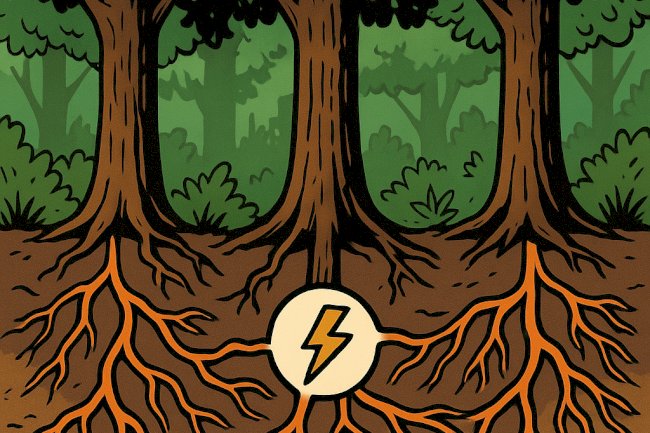
The mycorrhizal fungi represent perhaps the most climate-relevant fungal group, forming symbiotic relationships with approximately 80-90% of all plant species globally[6]. These relationships, which evolved 400-500 million years ago, involve fungi colonizing plant root systems and extending far beyond their hosts to access nutrients that would otherwise be unavailable[6][7]. The two primary types of mycorrhizal associations—endomycorrhizal and ectomycorrhizal—differ in their physical structure but both facilitate extensive underground networks that can extend a plant's nutrient and water absorption capacity up to 100 times beyond its root system[8]. This symbiotic relationship creates what mycologist Paul Stamets describes as "the neurological network of nature," connecting plants across vast distances and enabling resource sharing within forest ecosystems[5].
Fungal Adaptability and Resilience
Recent research has revealed remarkable fungal resilience to environmental stressors, particularly drought conditions that are becoming increasingly common due to climate change. Studies conducted in the Southwestern United States demonstrated that fungal communities maintain consistent growth and decomposition rates even under severe drought stress, suggesting these organisms possess inherent mechanisms for adapting to changing climatic conditions[9]. This resilience contrasts sharply with the proposed "YAS" framework (Yield, Acquisition, Stress tolerance) which predicted evolutionary trade-offs among these traits[9]. Instead, fungi appear capable of maintaining multiple advantageous characteristics simultaneously, positioning them as particularly robust ecosystem components in an era of climate uncertainty.
Fungi and Carbon Sequestration
The role of fungi in global carbon cycling has emerged as one of the most significant discoveries in recent climate science, with implications that could reshape our understanding of natural climate mitigation potential. Mycorrhizal fungi serve as a primary pathway for carbon transfer from the atmosphere into long-term soil storage, with plants allocating up to 20% of their photosynthesized carbon to these fungal partners[10]. This massive carbon transfer represents approximately 4 gigatons of carbon annually—nearly equivalent to the combined annual emissions of the United States and China[7]. The fungi incorporate this carbon into their hyphal networks, where it can persist for extended periods and contribute to soil organic matter formation[11].
The mechanism of fungal carbon sequestration operates through multiple pathways that enhance both short-term and long-term carbon storage. Living mycorrhizal fungi utilize plant-derived carbon to build extensive underground networks, with their biomass representing a significant carbon pool in terrestrial ecosystems[1]. When these fungi die, their carbon-rich tissues become incorporated into soil organic matter, contributing to what scientists term Mineral-Associated Organic Carbon (MAOC)[10]. This form of carbon storage is particularly durable, with MAOC persisting in soils for millennia due to its chemical association with soil minerals[10]. Research indicates that up to 60% of plant-derived soil organic carbon can be attributed to mycorrhizal fungi, highlighting their central role in terrestrial carbon cycling[10].
Quantifying Global Fungal Carbon Impact
Recent quantitative analyses have provided unprecedented insights into the scale of fungal carbon sequestration on a global level. Mycorrhizal fungi are estimated to sequester up to 13.12 gigatons of CO₂ equivalent annually in uncultivated lands, making soil the second-largest carbon sink on the planet after oceans[10]. Agricultural lands represent additional untapped potential, with capacity to sequester up to 8 gigatons of CO₂ equivalent annually if mycorrhizal networks are properly restored[10]. However, modern agricultural practices including intensive tillage and chemical inputs have disrupted these systems, resulting in the release of approximately 785 gigatons of CO₂ equivalent to the atmosphere[10].
The durability of mycorrhizal carbon sequestration sets it apart from many other biological carbon storage mechanisms. Unlike plant biomass that may decompose relatively quickly, fungal carbon becomes incorporated into soil matrices where it can persist for thousands of years[10]. Studies using isotopic tracing techniques have demonstrated that mycorrhizal fungi efficiently transfer plant-derived carbon into stable soil pools, with some carbon remaining sequestered for millennia[11]. This longevity makes fungal carbon sequestration particularly valuable for climate mitigation strategies, as it represents true long-term atmospheric carbon removal rather than temporary storage.
Fungi's Role in Soil Health and Plant Growth
The intricate relationship between fungi and soil health forms a cornerstone of terrestrial ecosystem functioning, with implications that extend far beyond simple nutrient exchange. Fungal hyphae create physical soil structure through the production of specialized proteins like glomalin, which bind soil particles together and improve soil aeration, water retention, and overall stability[8]. This structural enhancement reduces soil erosion and creates optimal conditions for root penetration, while simultaneously increasing the soil's capacity to store both water and carbon[12]. The fungal contribution to soil aggregation operates at multiple scales, with fungi working alongside bacteria to link microaggregates into larger macroaggregates that create essential air and water infiltration pathways[12].
Mycorrhizal associations dramatically enhance plant nutrient uptake capabilities, particularly for phosphorus and other essential minerals that have limited mobility in soil[6][8]. The extensive hyphal networks can access nutrient sources far beyond the reach of plant roots, effectively expanding the plant's foraging area by orders of magnitude[8]. This enhanced nutrient acquisition enables plants to achieve greater biomass production and carbon fixation, creating a positive feedback loop that benefits both the fungi and the broader ecosystem[6]. The symbiotic relationship also provides plants with increased drought resistance, as the fungal networks can access water sources unavailable to roots alone[8].
Fungal Networks and Ecosystem Connectivity
The underground fungal networks create sophisticated communication and resource-sharing systems that connect individual plants across landscapes. These networks, often called the "wood wide web," enable plants to transfer nutrients, water, and even chemical signals between individuals, creating resilient plant communities capable of responding collectively to environmental stresses[5]. When fungi are consumed by soil fauna such as nematodes or microarthropods, they release excess nutrients in plant-available forms, creating localized nutrient hotspots that support plant growth[12]. Additionally, healthy fungal communities occupy potential infection sites on plant roots, preventing pathogenic organisms from establishing and protecting plant health through competitive exclusion[12].
The fragility of fungal networks poses significant challenges for maintaining these beneficial relationships in managed ecosystems. Soil disturbances including tillage, chemical fertilizer application, and heavy machinery use can damage or destroy fungal hyphae, breaking down the intricate networks that support plant communities[12]. This disruption leads to reduced soil aggregation, decreased nutrient cycling efficiency, and increased susceptibility to plant diseases[12]. Understanding this fragility has led to the development of no-till farming practices, strategic mulching, and biological soil amendments that support fungal community recovery and maintenance[12].
Fungi-Based Innovations in Climate Action
The unique biochemical capabilities of fungi have inspired a growing array of climate mitigation technologies that harness natural fungal processes for environmental restoration and carbon management. Mycoremediation represents one of the most promising applications, utilizing fungal mycelium to break down environmental pollutants including petroleum products, pesticides, and heavy metals while simultaneously improving soil carbon storage[13]. The enzymes produced by fungi are remarkably efficient at degrading complex pollutants, with some species capable of breaking down materials as diverse as polypropylene face masks and plastic gloves[13]. This dual function of pollution remediation and ecosystem restoration positions mycoremediation as a valuable tool for addressing both environmental contamination and climate change simultaneously.
Biochar applications enhanced with fungal inoculation have demonstrated significant potential for improving soil carbon storage and agricultural productivity. Research conducted in karst regions of Southwest China revealed that biochar application at rates of 4.0% dramatically improved soil nutrient content while enhancing fungal community structure and diversity[14]. The biochar treatment increased soil pH, organic matter content, and available nutrients while promoting the growth of beneficial fungal genera including Aspergillus, Mortierella, and Penicillium[14]. Notably, the biochar application inhibited harmful pathogenic fungi while encouraging beneficial species, suggesting that this approach could simultaneously improve crop yields and soil carbon sequestration[14].
Forest Management and Restoration Applications
Fungi play increasingly important roles in forest management and restoration efforts, particularly in the context of climate adaptation and carbon storage enhancement. Arbuscular mycorrhizal fungi (AMF) and ectomycorrhizal fungi (EMF) have proven effective as restoration tools that surpass traditional approaches in promoting ecosystem recovery[15]. These fungi enhance soil attributes, improve seedling establishment and survival rates, and facilitate natural plant community succession in degraded landscapes[15]. EMF have demonstrated particular value in restoration projects involving heavy metal contamination, as they create physical barriers between toxic metals and plant tissues while sequestering metals in their fruiting bodies[15].
The development of mycorrhizal inoculation technologies has opened new possibilities for large-scale ecosystem restoration and carbon enhancement projects. Commercial mycorrhizal inoculants can reduce transplant shock in restoration plantings by up to 90% while accelerating plant establishment and growth[8]. Forest management strategies that preserve existing fungal networks through retention forestry and soil transplantation from mature forests have shown superior results compared to conventional clear-cutting approaches[15]. These methods maintain the complex fungal communities that support forest carbon storage while promoting rapid regeneration of harvested areas.
Case Studies of Fungal Impact in Ecosystems
Arctic ecosystems provide compelling evidence of fungi's critical role in climate change adaptation and carbon cycling under extreme environmental conditions. Research conducted along a proglacial chronosequence in Svalbard demonstrated that fungi dominate carbon assimilation processes in newly exposed glacial deposits, with implications for understanding ecosystem development in a warming Arctic[16]. Using quantitative stable isotope probing techniques, scientists traced amino acid uptake by specific fungal taxa and found that fungal communities serve as primary drivers of carbon stabilization during early soil development[16]. The high fungal-to-bacterial ratios observed in these pioneer soils correlate with increased carbon storage capacity, suggesting that fungi act as ecosystem engineers in Arctic environments[16].
The Arctic study revealed that fungi possess unique advantages for carbon sequestration in extreme environments, with their hyphal networks efficiently capturing and immobilizing organic compounds from glacial meltwater[16]. As glaciers continue to retreat due to climate change, the exposed terrain provides expanding opportunities for fungal colonization and carbon capture[16]. The research demonstrated that fungal amino acid assimilation rates directly correlate with soil carbon accumulation, indicating that fungal activity serves as a predictor of ecosystem carbon storage potential[16]. These findings have significant implications for global carbon modeling, as Arctic regions are experiencing the most rapid climate changes on Earth.
European Forest Carbon Storage Networks
Large-scale research across 238 forest inventory plots spanning 15 European countries has provided unprecedented insights into the relationship between fungal communities and forest carbon storage. The study revealed a seven-fold variation in tree growth rates and biomass carbon stocks that correlated strongly with fungal community composition, particularly symbiotic endophytic and ectomycorrhizal fungi[17]. This relationship remained significant even when controlling for dominant tree species, climate variables, and other environmental factors, indicating that fungal communities serve as independent drivers of forest carbon accumulation[17]. The linkage between tree growth rates and belowground soil carbon stocks suggests that fungal composition predicts overall forest carbon storage across continental scales[17].
Forest disturbance studies have illuminated the vulnerability of fungal-mediated carbon storage to human activities and environmental changes. Research in tropical forests demonstrated that increasing disturbance intensity leads to declining saprotrophic fungi abundance while increasing facultative pathogenic fungi populations[18]. The replacement of dominant phosphorus-solubilizing saprotrophic fungi with diverse pathogenic species results in weaker carbon decomposition ability and potential shifts from phosphate to carbon limitation in disturbed soils[18]. These changes suggest that fungal functional group composition serves as a sensitive indicator of forest health and carbon storage capacity, providing valuable metrics for assessing ecosystem restoration success[18].
Conclusion
The evidence presented reveals fungi as indispensable allies in global climate change mitigation, operating through sophisticated mechanisms that span from molecular-level carbon chemistry to landscape-scale ecosystem processes. The magnitude of fungal carbon sequestration—equivalent to 36% of annual fossil fuel emissions—positions these organisms as major players in Earth's carbon cycle that have been historically underappreciated in climate models and conservation strategies[1]. The durability of fungal carbon storage, persisting for millennia in soil matrices, offers genuine long-term atmospheric carbon removal that surpasses many technological solutions in both scale and permanence[10].
The multi-faceted benefits of fungal systems extend beyond carbon sequestration to encompass soil health enhancement, ecosystem resilience, and innovative restoration technologies that address climate change through nature-based solutions. The fragility of fungal networks to human disturbance underscores the urgent need for agricultural and forestry practices that protect and restore these critical systems[12][18]. As climate change accelerates and traditional mitigation approaches prove insufficient, the integration of fungal-based strategies into global climate action represents both a scientific imperative and a practical opportunity to harness nature's own climate solutions at the scale and speed required to address this planetary challenge.
- https://eos.org/articles/soil-fungi-are-a-major-carbon-sink
- https://pmc.ncbi.nlm.nih.gov/articles/PMC6899921/
- https://bio.libretexts.org/Courses/Lumen_Learning/Fundamentals_of_Biology_I_(Lumen)/08:_Module_5-_Fungi/8.15:_Classifications_of_Fungi
- https://fungimap.org.au/about-fungi/saprophytic-fungi/
- https://earth.org/fungi-the-hidden-heroes-of-ecosystems/
- https://extension.okstate.edu/fact-sheets/mycorrhizal-fungi.html
- https://www.conservation.org/blog/fungi-our-new-climate-allies
- https://www.pthorticulture.com/en-us/training-center/mycorrhizae-benefits-application-and-research
- https://allisonlab.bio.uci.edu/fungal-resilience-to-drought/
- https://groundworkbioag.com/mycorrhizal-carbon/
- https://www.science.org/doi/10.1126/science.1236338
- https://www.harmonyfoodscapes.com/fungi-soil-food-web/
- https://usfblogs.usfca.edu/sustainability/2022/02/03/mycoremediation-how-fungi-can-repair-our-land/
- https://www.frontiersin.org/journals/plant-science/articles/10.3389/fpls.2022.1020832/full
- https://nau.edu/wp-content/uploads/sites/140/2023.PembertonFungiForestManagementRestoration.pdf
- https://www.pnas.org/doi/10.1073/pnas.2402689121
- https://www.nature.com/articles/s41467-024-46792-w
- https://pmc.ncbi.nlm.nih.gov/articles/PMC6544830/
What's Your Reaction?