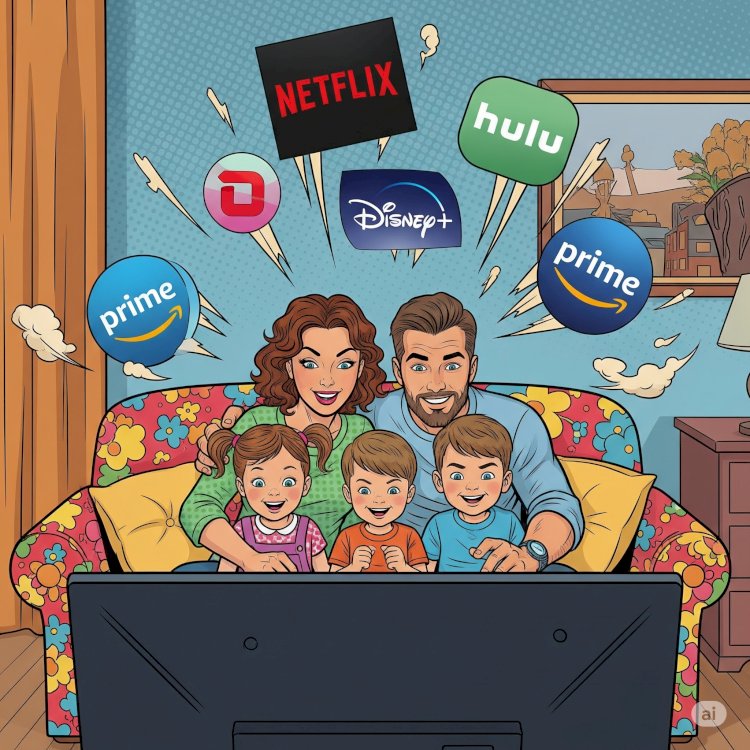
An invisible revolution has rewired the architecture of our culture. It hasn't happened on the streets but in our living rooms, on our laptops, and in the palms of our hands. The global rise of streaming platforms like Netflix, Amazon Prime Video, and Disney+ represents one of the most significant media transformations of the 21st century. More than just a new way to watch movies and television, streaming has fundamentally dismantled and reassembled the century-old industries of film and television, altering everything from how stories are financed and created to how they traverse the globe and shape our collective consciousness. This shift is not merely technological; it is economic, creative, and profoundly cultural.
The core of this transformation lies in the move from a model of scarcity—scheduled broadcasts and limited cinema screens—to one of unparalleled abundance and user control. This new paradigm has triggered a cascade of disruptions, creating new empires while threatening established ones, and launching an unprecedented global dialogue through shared stories. It forces us to ask critical questions: How has this new digital infrastructure changed the art of filmmaking and the business of television? What does it mean for the future of the local cinema or the national broadcaster? And as content from Seoul to São Paulo becomes instantly accessible in Seattle, are we witnessing the dawn of a truly globalized culture, or the subtle creep of a new, algorithmically-defined monoculture? In this article, we will explore this topic through the following key areas:
Table of Contents
-
Evolution of Streaming Platforms
-
Changes in Film and TV Production Models
-
Disruption of Traditional Distribution Channels
-
Globalization of Cultural Content
-
Cultural Homogenization vs. Diversity Debate
1. Evolution of Streaming Platforms
To understand the current media landscape is to understand the meteoric rise of streaming. At its core, "streaming" refers to the technology of continuously delivering media—video or audio—to an end-user from a provider. This stands in stark contrast to the traditional models of broadcasting, where content is pushed out on a fixed schedule, or physical media, which requires a complete file to be downloaded or purchased. Streaming platforms, often called Over-The-Top (OTT) services, deliver this content directly to viewers over the internet, bypassing the traditional "top" of cable or satellite providers who historically controlled content distribution.
The origins of this model are more gradual than a single disruptive event. While the internet had hosted video content for years, it was Netflix's strategic pivot in 2007 that marked the true beginning of the streaming era. Shifting from its successful DVD-by-mail business, the company launched its "Watch Now" service, initially a modest library of titles available to its subscribers. The key enablers of this transition were external: the rapid, global expansion of high-speed broadband internet and the proliferation of internet-connected devices, from smart TVs to smartphones. This technological foundation turned a niche service into a mass-market proposition.
For its first decade, Netflix enjoyed a relatively open field, its primary innovation being the "all-you-can-eat" subscription model. This introduced concepts that are now cultural touchstones: on-demand access and, most famously, the "binge-watch," a viewing pattern enabled by releasing entire seasons of a series at once. The platform's success did not go unnoticed. Amazon leveraged its e-commerce might to bundle Prime Video with its popular shipping service, while Hulu, a joint venture of legacy media companies, offered a way to catch up on recently aired broadcast television.
The ecosystem entered a new, more aggressive phase around 2019, often dubbed the "Streaming Wars." Recognizing the existential threat posed by these tech giants, legacy media titans struck back. Disney, arguably the most powerful content owner in the world, launched Disney+, reclaiming its vast library of beloved classics and new originals. Warner Bros. Discovery consolidated its assets into HBO Max (now Max), and others like Peacock (NBCUniversal) and Paramount+ (Paramount Global) entered the fray. This marked a fundamental shift from an era of aggregation, where Netflix could license content from everyone, to an era of fragmentation, where each major studio built its own digital, walled garden. What began as a technological novelty has now evolved into the central battleground for the future of entertainment, a global industry driven by subscription numbers and the relentless pursuit of viewer attention.
2. Changes in Film and TV Production Models
The ascendancy of streaming has sent seismic shocks through the foundations of film and television production, reshaping not just business practices but the very nature of the content being created. The traditional models, honed over decades, have been systematically dismantled and replaced by a new logic dictated by the economics of the subscription-based, direct-to-consumer universe.
Historically, television production was governed by the "pilot system." A network would commission a single pilot episode, test it with audiences and executives, and then decide whether to order a full season. This was a risk-averse, incremental process heavily influenced by the need to appeal to advertisers and fit into a rigid 22-episode broadcast season. Streaming platforms obliterated this model. With a primary goal of attracting and retaining subscribers rather than selling advertising slots, services like Netflix began offering straight-to-series orders. This gives creators a guaranteed canvas—often a full 8- or 10-episode season—from the outset. The result was a boom in creator-driven, serialized storytelling, attracting top-tier film directors and writers to television, a medium they once may have shunned.
The financial engine behind this shift is also profoundly different. Instead of relying on box office returns, international sales, and syndication revenue, streamers operate on a model of massive, debt-fueled, upfront content expenditure. In 2022 alone, total content spending by major media companies and tech giants was estimated to be over $230 billion. This firehose of cash is aimed at creating a vast and constantly refreshing library to justify a monthly subscription fee. This has led to the rise of the mega-budget series, such as Amazon's The Lord of the Rings: The Rings of Power or Netflix's The Crown, with production costs rivaling or exceeding those of major Hollywood blockbusters.
Furthermore, creative decisions are increasingly intertwined with data analytics. Platforms possess an unprecedented wealth of information about viewer habits: what they watch, when they pause, what they abandon, and what they binge in a single night. This data is used not just to recommend content but to inform greenlighting decisions. A platform might identify an overlap between viewers who enjoy historical dramas and a particular actor's films, creating a data-driven rationale for commissioning a new project that combines those elements. While this can lead to finely-tuned content, it also raises concerns among creatives about a new form of "algorithmic oversight" replacing the old network notes, potentially favoring commercially safe formulas over bold artistic risks. Martin Scorsese's The Irishman, a sprawling, three-and-a-half-hour crime epic financed by Netflix for a reported $160 million after traditional studios balked, exemplifies this double-edged sword: a visionary director was given immense resources to realize a passion project, but one that was primarily destined for the small screen, fundamentally altering its cinematic context.

3. Disruption of Traditional Distribution Channels
The streaming revolution's most visible casualty has been the traditional distribution infrastructure that long served as the gatekeeper between creators and audiences. For a century, the movie theater and the broadcast television network were the uncontested primary venues for visual storytelling. Streaming's direct-to-consumer model has challenged their dominance, if not their very existence.
For the film industry, the most significant disruption has been the assault on the "theatrical window." This term refers to the exclusive period, historically around 90 days, during which a film could only be viewed in cinemas before it became available on other platforms like home video or television. This window was the economic bedrock of the theater business, guaranteeing a period of scarcity that drove ticket sales. Streaming platforms, in their quest for exclusive content to lure subscribers, began challenging this norm. They financed high-profile films like Roma and The Irishman and gave them only a brief, token theatrical run to qualify for awards before debuting them online.
The COVID-19 pandemic acted as a powerful accelerant to this trend. With cinemas shuttered globally, studios were forced to experiment. Disney released Mulan as a premium add-on to its Disney+ service, while Warner Bros. made the unprecedented decision to release its entire 2021 film slate—including blockbusters like Dune and The Matrix Resurrections—simultaneously in theaters and on its HBO Max platform in the U.S. This strategy, known as "day-and-date" release, sent shockwaves through the industry, infuriating filmmakers who create for the big screen and signaling to consumers that waiting for a film to arrive at home was no longer a matter of months, but weeks or even no time at all. While the strict day-and-date model has since been moderated, the theatrical window has been permanently compressed, now often standing at just 45 days or less. This forces cinemas to re-evaluate their value proposition, increasingly positioning themselves as venues for premium, must-see-on-the-big-screen "event" films, while smaller and mid-budget dramas migrate directly to streaming.
Simultaneously, in the television sphere, streaming has fueled the phenomenon of "cord-cutting"—the cancellation of traditional cable or satellite subscriptions in favor of more flexible and affordable online alternatives. The linear, appointment-based viewing model that defined television for generations has been supplanted by the on-demand, binge-able library. Broadcast and cable networks now face a dual crisis: a shrinking subscriber base for their legacy products and the need to invest billions to compete in the streaming space with their own platforms, effectively disrupting their own business models to survive. The disruption is therefore total: streaming has not just offered an alternative to traditional distribution, it has fundamentally devalued its core principles of scheduled programming and theatrical exclusivity.
4. Globalization of Cultural Content
Perhaps the most profound cultural impact of streaming platforms is their role as a new engine for the globalization of content. For most of media history, the global flow of film and television was overwhelmingly a one-way street, with Hollywood content exported from the United States to the rest of the world. While national cinemas and television industries existed, their reach was often limited. Streaming has radically reconfigured this dynamic, creating a multi-directional network of cultural exchange on an unprecedented scale.
The mechanics of this shift are built into the platforms' global architecture. A service like Netflix operates in over 190 countries. When a production company in South Korea, Spain, or Nigeria sells a show to the platform, it gains access to an instantaneous global distribution network. The platform handles the significant logistical hurdles of subtitling and dubbing into dozens of languages, removing the barriers that once confined most content to its home region.
The quintessential example of this new reality is the 2021 South Korean drama, Squid Game. A violent, allegorical critique of capitalism, it was not a show created with a global audience in mind. Yet, upon its release on Netflix, it became a worldwide phenomenon, topping the charts in over 90 countries and becoming the platform's most-watched series ever. Viewers from different cultural backgrounds connected with its universal themes of economic desperation and moral compromise. This success was not an anomaly but the most potent illustration of a wider trend. Spanish-language shows like Money Heist (La Casa de Papel), German sci-fi thrillers like Dark, and French comedies like Call My Agent! have all found massive international audiences, turning their stars into global names and their home countries into new, influential production hubs.
This phenomenon extends beyond Europe and East Asia. Platforms are increasingly investing in content from India (Bollywood and regional industries), Nigeria (Nollywood), Brazil, and the Middle East. This is driven by a simple business logic: producing local originals is a powerful tool for subscriber acquisition in those markets. However, the byproduct is the creation of a global library where a user in Ohio can easily discover and watch a police procedural from Mumbai. This represents a partial decentering of Hollywood, fostering a new environment where cultural influence is no longer solely the domain of American media. It allows for a more complex form of cultural conversation, where stories rooted in specific national contexts can find surprising and powerful resonance across borders.
5. Cultural Homogenization vs. Diversity Debate
The global reach of streaming platforms presents a fascinating and critical paradox: are these services ushering in an era of unprecedented cultural diversity, or are they subtly fostering a new form of global homogenization? The debate cuts to the heart of what happens when culture is filtered through the logic of a global, algorithm-driven technology platform.
The argument for diversity is compelling and builds directly on the globalization of content. For the first time, creators from outside the Anglosphere have a viable, mainstream platform to share their stories with the world. The success of works like Squid Game or the Oscar-winning film Parasite (whose success was amplified by its availability on Hulu) demonstrates a global audience's appetite for narratives that are culturally specific and challenge Hollywood conventions. By providing access to thousands of titles from dozens of countries, streaming platforms have undeniably broadened the palette of available content for the average viewer far beyond what was offered by traditional broadcast or cable. This exposure can foster cross-cultural understanding and break down stereotypes, introducing viewers to new languages, customs, and perspectives.
However, a persuasive counter-argument points toward the risk of cultural homogenization, often framed around the concept of a "Netflix aesthetic." The argument posits that in the drive to create content that can "travel" well across multiple markets, platforms may favor stories that are slick, fast-paced, high in production value, but ultimately sanded down in their cultural specificity. To appeal to a global audience, a show might avoid deep, nuanced explorations of local politics or culture that could alienate foreign viewers. The result could be a generic, globally-palatable form of entertainment that looks diverse on the surface but shares a common, market-tested DNA.
This risk is amplified by the platforms' reliance on algorithmic curation. The recommendation engine, designed to keep users engaged, primarily shows them content similar to what they have already watched. While it can surface foreign titles, it often does so based on genre or thematic similarities to familiar American content, potentially creating "taste clusters" that reinforce existing preferences rather than truly expanding them. Critics argue this system, optimized for engagement and retention, is not a neutral tool for cultural discovery but an active force shaping taste on a global scale. The fear is that local creators, seeing the international success of a certain type of show, might begin to emulate that "global" style, leading to a gradual erosion of unique national filmmaking and television traditions in favor of a hegemonic, platform-defined standard. The future likely lies somewhere in the tension between these two poles: a world with more diverse content available than ever before, yet one where the forces of global capital and algorithmic logic continuously exert a powerful, standardizing pressure.
Conclusion
The rise of the streaming platform is far more than a simple technological update; it is a paradigm shift that has irrevocably altered the currents of global media and culture. We have seen how it began as a niche service and evolved into a dominant, warring ecosystem of media titans. This evolution has upended production, trading the methodical pilot system for data-fueled, straight-to-series orders, and injecting unprecedented sums of money into creating a constant stream of content. In parallel, it has shattered the long-standing distribution monopolies of the cinema and the broadcast network, compressing timeframes and shifting the center of gravity from public screens to private ones.
Most significantly, streaming has re-drawn the map of cultural influence. It has created pathways for stories from around the world to achieve global resonance, challenging the historical dominance of Hollywood and fostering a more multi-directional exchange of narratives. Yet, this incredible new access is tempered by the critical debate over its ultimate cultural effect. The same platforms that champion diverse voices are governed by algorithms and market imperatives that could, over time, favor a homogenous, globally-palatable creative standard.
As we look forward, the entertainment industry continues to navigate this new terrain. The era of limitless spending appears to be waning, replaced by a new focus on profitability, which may bring further changes to production and content strategy. The balance between theatrical and streaming releases continues to be negotiated, and the long-term cultural impact remains a story being written in real-time. What is certain is that streaming platforms have become the primary arena where the economic, creative, and cultural battles for the future of film and television will be fought, shaping not just what we watch, but how we see the world and each other.