Alaska: The Last Frontier
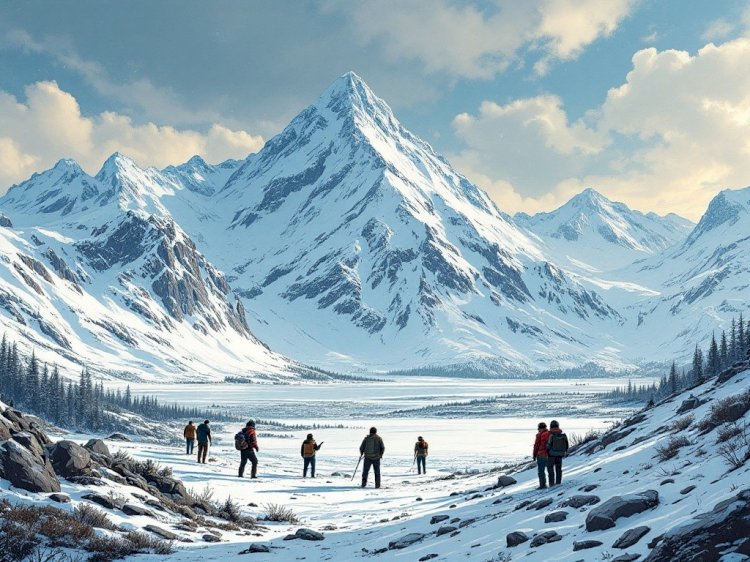
Alaska, the largest state in the United States, is a land of breathtaking beauty and unparalleled adventure. Nicknamed "The Last Frontier," it's a place where towering mountains meet icy glaciers, where wildlife roams freely [1], and where the spirit of exploration is alive and well. This blog delves into the captivating facts, rich history, diverse environment, vibrant economy, and unique challenges that define this remarkable state.
Basic Facts about Alaska
Alaska is a vast and geographically unique state in the northwestern extremity of North America. It's one of the two non-contiguous states in the U.S., the other being Hawaii. Interestingly, Alaska holds the distinction of being the northernmost, westernmost, and easternmost state in the United States. This seemingly contradictory fact arises from its Aleutian Islands extending across the 180th meridian [1]. Imagine standing on Alaskan soil and being in the easternmost and westernmost parts of the U.S. simultaneously!
Here are some key facts about Alaska [1, 2]:
- Capital: Juneau
- Population: 733,406 (2023)
- Size: 591,000 square miles – twice the size of Texas! In fact, 12 states the size of New York or 470 Rhode Island states could fit within Alaska's borders [3].
- Geography: Dominated by majestic mountains, glistening glaciers, and vast stretches of untouched wilderness.
- Coastline: With 46,600 miles of shoreline [4], Alaska boasts more coastline than all the other U.S. states combined!
- Official Sport: Dog sledding [3]
- Unique Coastline: Alaska is the only state with coastlines on three different seas: the Arctic Ocean, Pacific Ocean, and Bering Sea [1].
A Glimpse into Alaska's Past
Alaska's history is a captivating tapestry woven with threads of ancient migrations, indigenous cultures, European exploration, and the pursuit of gold. The story begins in the Upper Paleolithic period, around 14,000 BC, when groups of intrepid people migrated across the Bering land bridge into what is now western Alaska [5]. These early inhabitants, the ancestors of today's Alaska Natives, demonstrated remarkable resilience and adaptability, thriving in this challenging environment for thousands of years before the arrival of Europeans. They developed unique cultures and traditions, with diverse tribes like the Tlingit, Haida, Aleut, Tsimshian, and Inuit leaving their mark on the land [6].
The first recorded European contact with Alaska occurred in 1741 during Vitus Bering's Russian exploration [7]. The name "Alaska" itself is derived from the Aleut word "Alaxsxaq," meaning "mainland" or "the object toward which the action of the sea is directed" [5]. Russia established a presence in Alaska, primarily driven by the lucrative fur trade. However, in 1867, Russia sold the territory to the United States in a deal that would forever alter the course of Alaskan history [5].
The Klondike Gold Rush in the 1890s brought a wave of fortune seekers to Alaska, dramatically transforming the landscape and population [5]. Towns sprang up, infrastructure was developed, and Alaska's economy experienced a period of rapid growth. This era left an indelible mark on the state's identity, shaping its culture and development. Finally, on January 3, 1959, Alaska achieved statehood, marking a new chapter in its remarkable journey [2].
Alaska's Diverse Economy
Alaska's economy is a dynamic blend of resource extraction, tourism, and traditional industries. While oil and gas production plays a dominant role, other sectors like tourism, fishing, and mining contribute significantly to the state's economic vitality.
Key Industries:
- Oil and Gas: The discovery of oil in Prudhoe Bay in 1968 revolutionized Alaska's economy [9]. The Trans-Alaska Pipeline, an 800-mile engineering marvel, transports oil from the North Slope to Valdez [9]. This pipeline, the largest privately financed construction project in history [10], underscores the scale of Alaska's oil industry. Oil revenue provides a substantial portion of the state's budget, highlighting the state's dependence on this resource [9]. However, this reliance on oil also presents potential risks, as fluctuations in global oil prices can significantly impact Alaska's economy.
- Tourism: Alaska's stunning scenery and abundant wildlife attract over 1.1 million visitors annually [9]. From towering mountains and glistening glaciers to majestic whales and playful otters, Alaska offers a visual feast for nature lovers. Tourism is the second largest primary employer in the state [9], providing jobs and supporting local communities. The tourism industry thrives on Alaska's pristine natural environment, creating a symbiotic relationship between economic growth and environmental preservation.
- Fishing: Alaska boasts some of the richest fishing grounds in the world, teeming with salmon, halibut, and other prized seafood [9]. It's the number one producer of wild salmon globally [9], supplying seafood lovers worldwide with sustainably harvested delicacies. The fishing industry is deeply intertwined with Alaska's cultural heritage, with indigenous communities relying on fishing for sustenance and livelihood for centuries.
- Mining: Alaska has significant deposits of minerals like coal, silver, and zinc [9]. Gold mining, a legacy of the gold rush era, continues to be an important activity, drawing prospectors and contributing to the state's economy [9].
- Timber: Alaska's vast forests, covering a significant portion of the state, provide renewable economic resources [9]. The timber industry plays a role in Alaska's economy, but it also faces challenges in balancing economic development with sustainable forestry practices and environmental protection.
It's important to note that Alaska's economy faces challenges related to the high costs of labor and transportation, which can discourage outside investment and impact the cost of goods and services [11].
Government and Politics in the Last Frontier
Alaska's constitution, adopted in 1956, established a government with three branches: executive, legislative, and judicial [12]. The governor, along with the lieutenant governor, is elected to a four-year term [12]. The Alaska State Legislature consists of a Senate and a House of Representatives, responsible for making laws and representing the interests of Alaskans [13].
Interestingly, Alaska has a unique system of open primaries and ranked-choice voting, which has been praised for fostering nonpartisan cooperation and addressing key issues [14]. This system allows voters to rank candidates in order of preference, promoting a more inclusive and representative electoral process. It has been credited with reducing political polarization and encouraging candidates to appeal to a broader range of voters.
Historically, there has been an ongoing pattern of federal control in Alaska, which has at times elicited strong responses from Alaskans seeking greater autonomy and influence over their land and resources [15]. This tension between federal oversight and local control reflects the unique political dynamics of this frontier state.
A Land of Extremes: Alaska's Climate and Environment
Alaska's climate is as diverse as its landscape, ranging from the Arctic in the north to the maritime climate in the southeast. The state experiences a wide range of temperatures and precipitation, influenced by factors such as latitude, elevation, and ocean currents [16].
|
Climate Zone |
Location |
Characteristics |
|---|---|---|
|
Arctic |
North of the Brooks Range |
Long, cold winters with short, cool summers. Snow is possible year-round. Temperatures are moderated by the Arctic Ocean [16]. |
|
Interior |
Central Alaska |
Extreme subarctic climate with the largest temperature variations in the state. Hot summers and frigid winters [16]. |
|
Southcentral |
Southcentral Alaska |
Subarctic climate with short, cool summers [18]. |
|
Southeast, South Coast, and Southwest Islands |
Southeast, South Coast, and Southwest Islands |
Moderate temperatures and high precipitation, supporting lush rainforests [16]. |
Alaska's environment is a treasure trove of natural wonders, shaped by its dynamic climate and geological forces. It's home to:
- Glaciers: Over 100,000 glaciers, including the massive Malaspina Glacier, which covers around 850 square miles [4]. These icy giants carve through the landscape, creating breathtaking fjords and valleys.
- Mountains: Towering peaks like Denali, the highest mountain in North America, dominate the skyline. These mountains provide habitat for a variety of wildlife and offer stunning views for adventurers.
- Wildlife: Abundant populations of bears, moose, caribou, whales, and other iconic species thrive in Alaska's diverse ecosystems. From the brown bears of Katmai National Park to the humpback whales of Glacier Bay, Alaska offers unparalleled wildlife viewing opportunities.
Alaska's climate and environment are intricately interconnected. Changes in one inevitably affect the other. For example, rising temperatures can lead to glacial melt, which in turn impacts water resources, wildlife habitats, and coastal communities [19]. Understanding this delicate balance is crucial for preserving Alaska's natural heritage.
Ocean currents also play a significant role in shaping Alaska's climate. The warm Alaska Current, carrying Pacific waters northward, moderates temperatures along the western coasts and influences precipitation patterns [20]. This interplay of oceanic and atmospheric forces creates the diverse climate zones that characterize Alaska.
Adventure Awaits: Tourism and Outdoor Activities
Alaska is a paradise for outdoor enthusiasts and adventure seekers. With its vast wilderness, pristine lakes, and towering mountains, the state offers a wide array of activities for every interest and skill level.
Popular Activities:
- Hiking: Explore trails ranging from easy strolls through meadows carpeted with wildflowers to challenging climbs up rugged peaks.
- Biking: Pedal through scenic landscapes, past charming towns, and along historic routes.
- Sport Fishing: Cast a line in world-renowned fishing spots, reeling in salmon, halibut, and other prized catches.
- Kayaking: Paddle through icy fjords, surrounded by towering cliffs and cascading waterfalls, and observe marine life up close.
- Dog Sledding: Experience the thrill of this traditional Alaskan mode of transportation, gliding through snowy landscapes behind a team of huskies.
- River Rafting: Navigate exciting rapids, surrounded by breathtaking scenery, and feel the adrenaline rush of conquering the wild waters.
- Flightseeing: Soar over glaciers and mountains in a small plane or helicopter, gaining a bird's-eye view of Alaska's grandeur.
- Wildlife Viewing: Observe bears, whales, eagles, and other wildlife in their natural habitat, capturing unforgettable moments in the wild.
Alaska also boasts a variety of attractions that draw visitors from around the globe:
- Arctic Circle: Experience the unique phenomenon of the midnight sun or the polar night in this region of extreme contrasts.
- White Pass and Yukon Route Railway: Journey through stunning scenery and retrace the steps of gold rush stampeders on this historic railway.
- Matanuska Glacier: Explore the icy wonderland of this accessible glacier, hiking on its surface or ice climbing its frozen walls [21].
While tourism provides economic benefits, it's essential to practice responsible tourism and ecotourism to minimize the impact on Alaska's fragile environment [22]. By respecting nature, supporting local communities, and choosing sustainable tourism options, visitors can help preserve Alaska's beauty for future generations.
Challenges Facing Alaska
Despite its abundance of natural resources and breathtaking beauty, Alaska faces unique challenges that require innovative solutions and collaborative efforts.
- Climate Change: Rising temperatures, melting permafrost, and coastal erosion threaten communities and ecosystems [23]. The impacts of climate change are particularly pronounced in Alaska, with disappearing sea ice and melting glaciers contributing to flooding and sea level rise, not only in Alaska but also in other parts of the world [25]. These changes pose significant risks to infrastructure, wildlife habitats, and traditional ways of life.
- Economic Development: Balancing economic growth with environmental protection and the needs of local communities is an ongoing challenge [26]. Alaska's economy is heavily reliant on resource extraction, which can have environmental consequences. Finding sustainable ways to develop the economy while preserving the state's natural heritage is crucial.
- Infrastructure: Maintaining and developing infrastructure in a vast and challenging environment is crucial for transportation, communication, and access to essential services [24]. The harsh climate, remote locations, and permafrost thaw pose significant challenges to infrastructure development and maintenance.
- Healthcare Access: Providing adequate healthcare to remote communities, often separated by vast distances and limited transportation options, is a significant concern [28]. Ensuring access to quality healthcare for all Alaskans, regardless of their location, is essential for the well-being of the state's population.
These challenges are interconnected and require a holistic approach that considers the economic, social, and environmental dimensions of sustainability [26].
Conclusion
Alaska, the Last Frontier, is a land of contrasts and complexities. Its stunning natural beauty, rich history, and diverse economy make it a unique and captivating destination. From the towering peaks of the Alaska Range to the icy waters of Glacier Bay, Alaska offers a sensory feast for adventurers and nature lovers alike. Explore ancient glaciers, witness the dance of the Northern Lights, and encounter majestic wildlife in their natural habitat. Whether you seek thrilling outdoor adventures, cultural immersion, or simply a chance to connect with nature, Alaska has something to offer everyone.
While challenges remain, Alaska's spirit of resilience and its commitment to preserving its natural and cultural heritage offer hope for a sustainable future. By embracing innovation, collaboration, and responsible stewardship, Alaska can continue to thrive as a land of opportunity and wonder.
References
- Fun Facts about Alaska, accessed January 19, 2025, https://www.alaskaaircargo.com/alaska/fun-facts-about-alaska/
- en.wikipedia.org, accessed January 19, 2025, https://en.wikipedia.org/wiki/Alaska
- Alaska Fun Facts, accessed January 19, 2025, https://www.denaliparkvillage.com/go/alaska-fun-facts/
- 5 Fun Facts About Alaska - Princess Cruises, accessed January 19, 2025, https://www.princess.com/learn/cruise-destinations/alaska-cruises/alaska-cruise-tips/learn-about-alaska/5-fun-facts-about-alaska-its-history.html
- History of Alaska - Wikipedia, accessed January 19, 2025, https://en.wikipedia.org/wiki/History_of_Alaska
- Alaska State History for Kids - Ducksters, accessed January 19, 2025, https://www.ducksters.com/geography/us_states/alaska_history.php
- Alaska's History - Alaska Public Lands (U.S. National Park Service), accessed January 19, 2025, https://www.nps.gov/anch/learn/historyculture/alaska-s-history.htm
- 9 Fun Facts About Alaska: From Sled Dogs to the Northern Lights | Rustic Pathways, accessed January 19, 2025, https://rusticpathways.com/inside-rustic/online-magazine/fun-facts-about-alaska
- Division of Homeland Security and Emergency Management, accessed January 19, 2025, https://ready.alaska.gov/Documents/Mitigation/SHMP/2023%20SHMP%20Chapter%2002%20Background.pdf
- Economy, Alaska Kids' Corner, State of Alaska, accessed January 19, 2025, https://alaska.gov/kids/learn/economy.htm
- Alaska - Oil, Fishing, Tourism | Britannica, accessed January 19, 2025, https://www.britannica.com/place/Alaska/Economy
- Alaska - Politics, Economy, Culture | Britannica, accessed January 19, 2025, https://www.britannica.com/place/Alaska/Government-and-society
- AK Government - Alaska Kids' Corner, accessed January 19, 2025, https://alaska.gov/kids/learn/government.htm
- How Alaska is making government work again - The Fulcrum, accessed January 19, 2025, https://thefulcrum.us/electoral-reforms/ranked-choice-voting-alaska
- Alaska Politics and Government - University of Nebraska Press, accessed January 19, 2025, https://www.nebraskapress.unl.edu/nebraska-paperback/9780803281493/alaska-politics-and-government/
- Climate of Alaska - Earth@Home, accessed January 19, 2025, https://earthathome.org/hoe/w/climate-ak/
- Depending on latitude, elevation or a location adjacent to sea or inland, a multitude of very different climate zones are predominant. - Alaska Climate Research Center, accessed January 19, 2025, https://akclimate.org/climate/
- Climate of Alaska - Wikipedia, accessed January 19, 2025, https://en.wikipedia.org/wiki/Climate_of_Alaska
- Climate of Alaska - Alaska Nature and Science (U.S. National Park Service), accessed January 19, 2025, https://www.nps.gov/subjects/aknatureandscience/climate.htm
- Alaska - Arctic, Subarctic, Temperate | Britannica, accessed January 19, 2025, https://www.britannica.com/place/Alaska/Climate
- The BEST Alaska Outdoor activities 2025 - FREE Cancellation | GetYourGuide, accessed January 19, 2025, https://www.getyourguide.com/alaska-l254/outdoor-activities-tc1093/
- Alaska Adventure Tours, accessed January 19, 2025, https://www.travelalaska.com/things-to-do/adventure
- Policy Priorities in Alaska | The Nature Conservancy, accessed January 19, 2025, https://www.nature.org/en-us/about-us/where-we-work/united-states/alaska/stories-in-alaska/government-relations/
- Infrastructure Challenges in the Alaskan Arctic - Belfer Center, accessed January 19, 2025, https://www.belfercenter.org/publication/infrastructure-challenges-alaskan-arctic
- Alaska Resilient and Rising | Stories | WWF - World Wildlife Fund, accessed January 19, 2025, https://www.worldwildlife.org/stories/alaska-resilient-and-rising
- Issues | Ground Truth Alaska, accessed January 19, 2025, https://groundtruthalaska.org/Issues/
- https://www.belfercenter.org/publication/infrastructure-challenges-alaskan-arctic#:~:text=Infrastructure%20in%20northern%20Alaska%20requires,are%20exacerbated%20by%20climate%20change.
- Unique challenges faced by Alaskan communities - YMCA Alaska, accessed January 19, 2025, https://ymcaalaska.org/understanding-the-unique-challenges-faced-by-alaskan-communities/
-------------------------------------------------------------
Read more
Alabama - the "Heart of Dixie"
What's Your Reaction?