What are the economic consequences of an aging population on national productivity and public finance systems?
An in-depth analysis of the economic consequences of an aging population on national productivity, labor markets, public finance, pension systems, and healthcare costs.
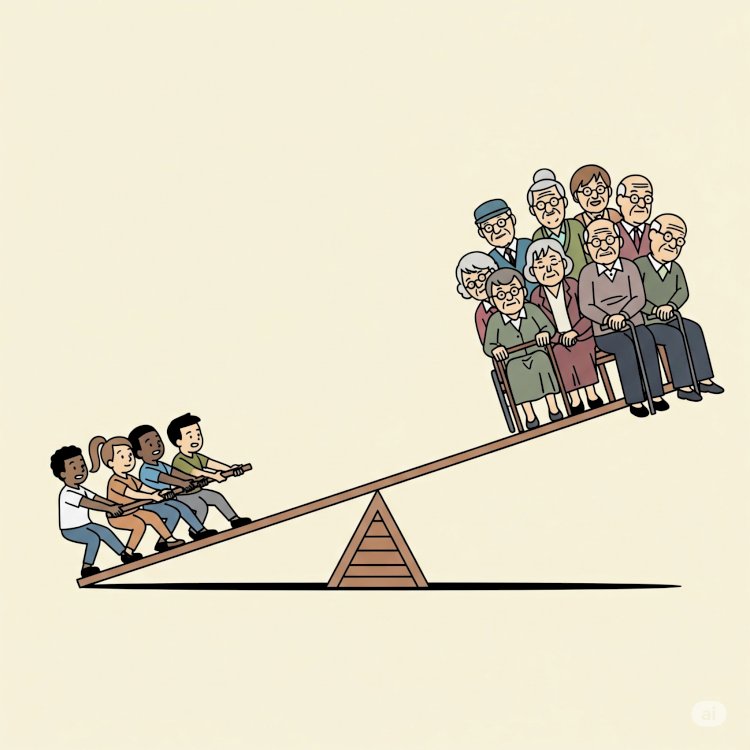
A silent, tectonic shift is reshaping the global economic landscape. It is not driven by technology, trade, or financial markets, but by a force far more fundamental: demography. The world is getting older. For decades, developed nations and, increasingly, emerging economies have been on a trajectory of unprecedented population aging, a phenomenon characterized by falling fertility rates and rising life expectancy. While longer, healthier lives are a triumph of human development, this demographic transition presents profound and complex challenges to national productivity, economic growth, and the very sustainability of our public finance systems. The so-called "demographic time bomb" is no longer a distant forecast; its economic consequences are materializing now, forcing a global reassessment of long-held assumptions about work, retirement, and the social contract.
The objective of this analysis is to dissect the intricate economic repercussions of an aging population. We will move beyond headlines to explore the nuanced mechanisms through which this demographic shift impacts labor markets, strains government budgets, and reshapes entire sectors like healthcare. By combining demographic economics with fiscal policy analysis, we can understand not only the scale of the challenges but also the innovative strategies nations can deploy to navigate this new reality, ensuring long-term economic sustainability and prosperity in an older world.
In this article, we will explore this topic through the following key areas:
Table of Contents
-
Demographic Trends and Population Aging
-
Impact on Labor Productivity and Workforce Dynamics
-
Fiscal Pressures and Public Spending
-
Healthcare Costs and Long-Term Care Systems
-
Policy Responses and Economic Adaptation Strategies
1. Demographic Trends and Population Aging
At its core, population aging is a simple story of two powerful, interlocking trends: people are having fewer children, and they are living longer. The first driver, a sustained decline in fertility rates, began in advanced economies in the 20th century and has now become a global phenomenon. Many nations, including most of Europe, Japan, and now even China, have fertility rates well below the replacement level of approximately 2.1 children per woman. This means that, absent immigration, each new generation is smaller than the one that preceded it, fundamentally altering the age structure of society.
The second driver is the remarkable increase in life expectancy, a testament to advancements in public health, nutrition, and medicine. According to the United Nations, global average life expectancy at birth has risen from under 50 years in 1950 to over 73 years today, and it is projected to continue increasing. While a cause for celebration, this longevity revolution means that individuals spend a much larger portion of their lives in retirement, drawing on pensions and consuming more healthcare services.
When these two trends combine, the result is a dramatic shift in the population pyramid. The traditional pyramid shape, with a broad base of young people supporting a narrow top of older individuals, is morphing into a rectangle or, in some cases, an inverted pyramid. A key metric to understand this shift is the old-age dependency ratio, which measures the number of people of retirement age (typically 65 and over) for every 100 people of working age (typically 15-64). In 1960, the OECD average was around 17 older persons per 100 workers. By 2020, it had climbed to 32, and it is projected to exceed 50 by 2050. Countries like Japan and Italy are at the forefront of this trend, with dependency ratios already approaching this critical level. This statistical shift is not merely an academic curiosity; it represents a profound change in the human and economic balance of a nation.
2. Impact on Labor Productivity and Workforce Dynamics
The most direct economic consequence of a shrinking and aging population is its impact on the labor force. A smaller cohort of young people entering the workforce naturally leads to slower labor force growth, and in some countries, an outright decline. This scarcity of labor can act as a significant headwind to overall economic growth, as fewer workers mean less potential output, all else being equal. The International Monetary Fund has repeatedly highlighted that demographic trends are a primary factor in the projected slowdown of potential GDP growth in advanced economies over the coming decades.
The question of how an older workforce affects productivity is more complex and subject to debate. A common assumption is that productivity declines with age due to deteriorating physical and cognitive abilities. While this may hold true in physically demanding sectors, a growing body of research presents a more nuanced picture. Older workers often possess a wealth of experience, tacit knowledge, and problem-solving skills honed over decades. They demonstrate higher levels of conscientiousness and can serve as crucial mentors to younger colleagues. Therefore, the net effect on a firm's or a nation's productivity depends on the industry, the nature of the work, and the policies in place to leverage the strengths of all age groups.
However, a potential challenge lies in the realm of innovation and dynamism. Younger workers are often associated with greater entrepreneurial activity and quicker adoption of new technologies. An economy with a significantly older average age may experience a slower pace of creative destruction and business formation, potentially leading to a less dynamic and adaptable economic structure. Furthermore, lower geographic and occupational mobility among older workers can create rigidities in the labor market, making it harder for the economy to reallocate resources in response to technological shocks or shifts in global demand. Consequently, while individual older workers can be highly productive, an aging workforce in the aggregate may face headwinds in maintaining the high rates of innovation and productivity growth that characterized the 20th century.
3. Fiscal Pressures and Public Spending
Perhaps the most formidable challenge posed by population aging is the immense pressure it exerts on public finances. This pressure manifests as a "fiscal scissor" effect: on one side, government revenues are squeezed by a shrinking base of working-age taxpayers; on the other, expenditures are forced upward by rising demand for age-related public services, primarily pensions and healthcare.
Most developed nations operate Pay-As-You-Go (PAYG) pension systems, where contributions from today's workers are used to pay the benefits of current retirees. The financial stability of such systems is entirely dependent on a healthy support ratio of contributors to beneficiaries. This can be conceptualized with a simple formula for the support ratio, :
As the population ages, the denominator (retirees) grows while the numerator (workers) stagnates or shrinks, causing the to fall precipitously. To keep the system solvent, governments face an unpalatable set of choices: they can increase contribution rates (i.e., raise taxes on the working population), reduce pension benefits, or raise the statutory retirement age. Each option carries significant political and social costs. Failing to act leads to unsustainable deficits that must be financed by issuing public debt, shifting the burden onto future generations and potentially threatening the nation's long-term fiscal solvency.
This fiscal strain extends beyond pensions. Tax revenues from labor and consumption naturally decline as the workforce shrinks. At the same time, governments face rising costs associated with other age-related programs, from disability benefits to social care. The cumulative effect is a structural deterioration of government budget balances. For nations already grappling with high levels of public debt, this demographic headwind can create a vicious cycle, where rising debt service costs consume an ever-larger share of the budget, further crowding out productive investments in infrastructure, education, and research that are vital for future growth.
4. Healthcare Costs and Long-Term Care Systems
Alongside pensions, healthcare represents the other major channel through which aging populations strain public finances. It is a biological and economic reality that healthcare consumption is heavily skewed towards the later stages of life. While a 30-year-old might have minimal healthcare needs, an 80-year-old is far more likely to suffer from chronic conditions like heart disease, diabetes, or dementia, all of which require expensive and ongoing medical intervention. Data from across the OECD consistently shows that per capita health spending on individuals over 65 is three to five times higher than for the population under 65.
This dynamic means that as the share of the elderly population grows, a nation's total healthcare expenditure is set to rise dramatically, even without any changes in medical technology or prices. The challenge is not just one of acute medical care in hospitals but also the burgeoning need for long-term care (LTC). LTC encompasses a range of services - from assistance with daily activities like eating and bathing to skilled nursing care in specialized facilities - for individuals who cannot care for themselves for extended periods.
Unlike acute healthcare, which is often episodic, LTC can be required for years, and its delivery is extremely labor-intensive. The economic burden is immense and falls on both public systems and private households. In many countries, public funding for LTC is limited, placing a huge financial and emotional strain on families. This often results in a significant "informal care" economy, where family members, typically women, reduce their working hours or leave the labor force entirely to care for elderly relatives, representing a further loss of economic output. As societies age, building and funding sustainable, high-quality LTC systems has become one of the most pressing public policy challenges of the 21st century.
5. Policy Responses and Economic Adaptation Strategies
While the challenges are daunting, they are not insurmountable. The slow-moving nature of demographic change provides a window of opportunity for societies to adapt. Proactive and forward-looking policies can mitigate the negative economic consequences and help nations transition to a new demographic equilibrium. These strategies can be broadly grouped into three categories: labor market reforms, fiscal adjustments, and investments in technology and human capital.
First, labor market reforms aim to expand the effective labor supply. The most direct lever is raising the statutory retirement age to reflect increases in healthy life expectancy, a policy already implemented or planned in many OECD countries. Beyond this, governments can create incentives for phased retirement, promote lifelong learning and reskilling programs to keep older workers' skills relevant, and implement stronger anti-age-discrimination laws. Encouraging higher labor force participation among women and integrating migrant populations are also powerful tools to offset the demographic decline in the native-born workforce.
Second, fiscal adjustments are necessary to ensure the long-term sustainability of public finances. This involves comprehensive pension reform, often moving away from pure PAYG defined-benefit systems towards multi-pillar systems that include pre-funded, defined-contribution accounts. Such reforms not only improve fiscal health but also give individuals more ownership over their retirement savings. On the revenue side, some economists argue for shifting the tax base away from labor and towards consumption or capital, which are less sensitive to demographic shifts.
Finally, innovation and investment are critical for boosting productivity. Automation and artificial intelligence can directly substitute for scarce labor in certain industries, from manufacturing to logistics and even elderly care, as seen with the development of assistive robotics in Japan. Public and private investment in research and development can spur the technological breakthroughs needed to enhance productivity growth. Equally important is investment in human capital. Improving education and health outcomes for all citizens ensures that every future worker is as productive as possible, maximizing the economic output of a smaller workforce. This "quality over quantity" approach is fundamental to thriving in an aging world.
Conclusion
The aging of the world's population is a defining trend of our time, presenting a multifaceted economic challenge that touches everything from labor productivity and innovation to the stability of our most important social safety nets. The core of the problem lies in the shifting balance between a shrinking working-age population and a growing cohort of retirees, which creates powerful headwinds for economic growth and places immense strain on public finances, particularly pension and healthcare systems. The fiscal scissor effect of falling revenues and rising expenditures threatens to lock many nations into a future of slower growth and higher public debt.
Yet, this demographic destiny is not necessarily one of decline. The narrative of an inevitable economic crisis can be rewritten through strategic adaptation and forward-thinking policy. By reforming labor markets to leverage the experience of older workers, recalibrating fiscal systems for long-term sustainability, and embracing technological innovation to enhance productivity, nations can navigate this transition successfully. The challenge of an aging society is ultimately a call to build more resilient, efficient, and inclusive economies. It forces us to rethink the traditional lifecourse of education, work, and retirement, and to invest more wisely in the health and skills of all citizens. The societies that thrive in the 21st century will be those that view their aging populations not as a burden, but as a catalyst for innovation and a reason to build a more sustainable and equitable future for all generations.
What's Your Reaction?