America's Departure from WHO: A Blow to Global Health
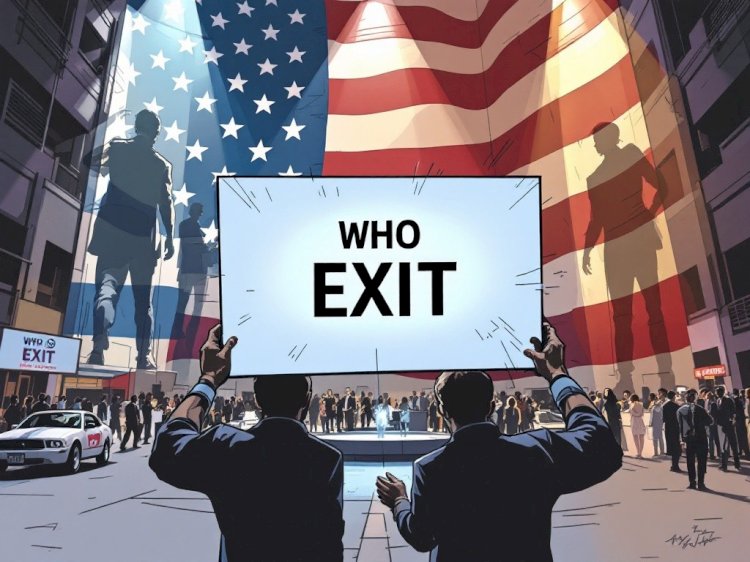
On his first day back in office, President Donald Trump signed an executive order to withdraw the United States from the World Health Organization (WHO) [1]. This decision, which follows a similar attempt during his first term in 2020 [2], has sparked widespread concern among public health experts and international organizations. The administration justifies the withdrawal by citing the WHO's "mishandling of the COVID-19 pandemic," "failure to adopt urgently needed reforms," and "inability to demonstrate independence from the inappropriate political influence of WHO member states" [3]. Specifically, President Trump has accused the WHO of being too deferential to China in the early days of the COVID-19 outbreak and not acting quickly enough to contain the disease [2]. He has also criticized the organization for opposing travel restrictions imposed by the US [2]. However, many argue that the consequences of this decision will be detrimental to both the US and the global community.
A Loss for Global Health
The WHO, founded in 1948 with the US as a founding member, plays a critical role in coordinating international health efforts [6]. With 194 member countries, it is responsible for a range of vital public health programs. These programs are interconnected and contribute to a global health security architecture that benefits all nations.
Disease Surveillance and Outbreak Response
The WHO operates a global network to track outbreaks of diseases like Ebola, Marburg virus, malaria, tuberculosis, and HIV [8]. This surveillance system enables early detection and response to potential pandemics, as seen with the containment of Ebola outbreaks [9]. By sharing information and coordinating efforts, the WHO helps to prevent outbreaks from becoming global health emergencies.
Vaccine Development and Deployment
The WHO plays a crucial role in vaccine development, particularly for influenza and COVID-19. Each year, scientists at the WHO work with health officials worldwide to identify the strains to include in updated vaccines [1]. This ensures that vaccines are effective against the circulating strains of these viruses. The WHO was also instrumental in coordinating the eradication of smallpox and is currently working to eliminate polio [1]. The US withdrawal could jeopardize these efforts, potentially leading to a resurgence of these diseases.
Health Systems Strengthening
The WHO provides technical assistance to countries to strengthen their health systems, including training health workers, supporting policy development, and promoting sustainable financing [3]. This is particularly important for low-income countries that lack the resources to develop robust health systems on their own. By strengthening health systems globally, the WHO helps to improve health outcomes and reduce health inequities.
Emergency Response and Disaster Management
The WHO coordinates international responses to health emergencies, including natural disasters and disease outbreaks [3]. This includes providing guidance on managing the response to disasters, such as the health effects of particulate matter and hazardous emissions from wildfires [10]. The WHO's expertise in emergency response is crucial for mitigating the impact of these events and protecting public health.
Setting Global Health Standards and Sharing Knowledge
The WHO sets global health policies and priorities, helping to guide research and funding allocations [8]. It also plays a vital role in disseminating scientific findings and guidelines, ensuring that countries have access to the latest evidence-based information to inform their health policies and practices [9]. Additionally, the WHO facilitates drug approvals, allowing countries to benefit from new treatments without having to conduct their own costly and time-consuming drug trials [8].
Statements from International Organizations
The WHO has expressed regret over the US decision to withdraw, emphasizing the long-standing partnership between the two and the significant contributions the US has made to global health [6]. The organization highlighted the role the US has played in eradicating smallpox, bringing polio to the brink of eradication, and protecting Americans and people worldwide from health threats [7]. The African Union has also urged President Trump to reconsider the withdrawal, recognizing the potential negative impact on global health [2].
Financial Implications
The US has historically been the largest financial contributor to the WHO, providing approximately 15% of its total funding [10]. In 2022-2023, the US contributed $1.3 billion to the organization [10]. This funding supports a wide range of programs, including vaccination campaigns, disease surveillance, and emergency response efforts. The withdrawal will create a significant funding gap, potentially hindering the WHO's ability to carry out its mission effectively.
This funding gap could have a particularly devastating impact on low-income countries that rely heavily on WHO support. For example, India's immunization and disease surveillance efforts could be disrupted [4]. The withdrawal could also affect funding for initiatives like PEPFAR, which focuses on HIV prevention, and the Cancer Moonshot, which aims to accelerate cancer research and improve patient outcomes [12].
Expert Opinions
Public health experts have expressed serious concerns about the US withdrawal. Dr. Tom Frieden, former director of the US Centers for Disease Control and Prevention (CDC), stated that "withdrawing from the WHO makes Americans and the world less safe" [1]. Dr. Ashish Jha, dean of the Brown University School of Public Health, warned that the US could see an increase in flu infections and deaths if it loses access to the WHO's influenza strain database [1].
Several experts have also highlighted the potential impact on global health initiatives. Dr. Judd Walson, chair of the Department of International Health at the Johns Hopkins Bloomberg School of Public Health, noted that the US plays a key role in supporting healthcare systems around the world, and the withdrawal could jeopardize this assistance [3].
However, some experts believe that the US withdrawal, while concerning, could also present an opportunity for other countries to step up and provide more flexible funding to the WHO [13]. This could potentially lead to a more balanced and effective global health governance structure.
Impact on the US
The US also stands to lose from its departure from the WHO. Some of the potential consequences include:
- Reduced Access to Global Health Data: The US will lose access to the WHO's global database of health information, including surveillance data on emerging infectious diseases [1]. This could hinder the country's ability to detect and respond to outbreaks effectively, leaving it more vulnerable to importing diseases spreading elsewhere [3].
- Weakened Vaccine Preparedness: The US may lose access to samples of influenza strains, which are crucial for developing effective flu vaccines [1]. This could lead to increased hospitalizations and deaths from influenza.
- Diminished Influence in Global Health Policy: The US will lose its position as a key influencer in global health policy [1]. This could create a vacuum that other countries, such as China or Russia, might fill, potentially diminishing US influence and soft power on the global stage [1].
- Loss of Soft Power: The US has traditionally been seen as a benevolent nation that supports global health initiatives [8]. Withdrawing from the WHO could damage this image and harm US foreign policy, particularly in regions like sub-Saharan Africa, where the US has cultivated valuable relationships through its support of health programs [8].
Furthermore, the US withdrawal could lead to increased isolation in the global health arena. The US could find itself in the company of countries like Taiwan and Liechtenstein, which are not WHO members [14]. This isolation could hinder the US's ability to collaborate on global health issues and respond to future pandemics.
Conclusion
The US withdrawal from the WHO is a concerning development with potentially far-reaching consequences. While the administration's criticisms of the WHO – such as its alleged slow response to the COVID-19 pandemic and its perceived lack of independence from China – may resonate with some, withdrawing from the organization is not the solution. The WHO has acknowledged the need for reforms and has been working to improve its efficiency and transparency. Engaging constructively with the WHO and other member states to address these concerns would be a more effective approach than withdrawing entirely.
The US withdrawal undermines the principle of international cooperation, which is essential for addressing global health challenges. By working together, countries can share information, pool resources, and coordinate efforts to prevent and respond to health threats. The US, with its scientific expertise and financial resources, has a crucial role to play in this global effort. Withdrawing from the WHO not only harms the organization and the countries that rely on its support but also weakens the US's own ability to protect its citizens and contribute to a healthier world.
Ultimately, the US withdrawal from the WHO is a step backward for global health. It is a decision that will have negative consequences for people around the world, including Americans.
References
- What Leaving the WHO Means for the U.S and the World | TIME, accessed January 23, 2025, https://time.com/7208937/us-world-health-organization-trump-withdrawal/
- EXPLAINER - What does Trump's withdrawal from the WHO mean for global health?, accessed January 23, 2025, https://www.aa.com.tr/en/opinion/explainer-what-does-trumps-withdrawal-from-the-who-mean-for-global-health/3459506
- What Leaving the WHO Means for U.S. Public Health, accessed January 23, 2025, https://www.verywellhealth.com/us-withdrawal-from-who-8778494
- The U.S. Withdrawal from WHO: Implications for Global Health, accessed January 23, 2025, https://vajiramandravi.com/upsc-daily-current-affairs/mains-articles/us-withdrawal-from-who-implications-for-global-health/
- Withdrawing The United States From The World Health Organization - The White House, accessed January 23, 2025, https://www.whitehouse.gov/presidential-actions/2025/01/withdrawing-the-united-states-from-the-worldhealth-organization/
- Reflecting on the US Withdrawal from the World Health Organization, accessed January 23, 2025, https://www.infectioncontroltoday.com/view/reflecting-on-the-us-withdrawal-from-the-world-health-organization
- The United States is leaving the World Health Organization. What could that mean for Spokane? | The Spokesman-Review, accessed January 23, 2025, https://www.spokesman.com/stories/2025/jan/23/the-united-states-is-leaving-the-world-health-orga/
- What the US exit from the WHO means for global health and pandemic preparedness, accessed January 23, 2025, https://news.northeastern.edu/2025/01/23/us-withdrawn-from-who/
- US leaving World Health Organization: Now what? - University of Michigan News, accessed January 23, 2025, https://news.umich.edu/us-leaving-world-health-organization-now-what/
- The Dire Consequences of Trump Withdrawing America From the WHO - Time, accessed January 23, 2025, https://time.com/7209265/trump-who-consequences-essay/
- World Health Organization Urges Trump to Reconsider Exit - SWI swissinfo.ch, accessed January 23, 2025, https://www.swissinfo.ch/eng/world-health-organization-urges-trump-to-reconsider-exit/88754568
- Global health in flux: What a potential US exit from the WHO means for the world, accessed January 23, 2025, https://www.orfonline.org/expert-speak/global-health-in-flux-what-a-potential-us-exit-from-the-who-means-for-the-world
- WHO 'regrets' US withdrawal; experts fear adverse impact - Hindustan Times, accessed January 23, 2025, https://www.hindustantimes.com/india-news/who-regrets-us-withdrawal-experts-fear-adverse-impact-101737463272184.html
- Expert Q&A: US Withdrawal from WHO a National Security Risk - The Cipher Brief, accessed January 23, 2025, https://www.thecipherbrief.com/column_article/expert-qa-us-withdrawal-from-who-a-national-security-risk
What's Your Reaction?