Germany and France at a Crossroads: What Their Economic and Political Challenges Mean for Europe
The European Union is facing a critical test as its two largest economies, Germany and France, grapple with a period of profound economic and political uncertainty. While pronouncements of "official bankruptcy" may be overblown, the challenges confronting these nations are substantial and could have repercussions throughout the Eurozone and the global economy. This post examines the economic and political headwinds buffeting Germany and France, analyzes the historical context of financial crises in Europe, and explores the potential consequences and existing safety nets in place to mitigate the impact of this turmoil.
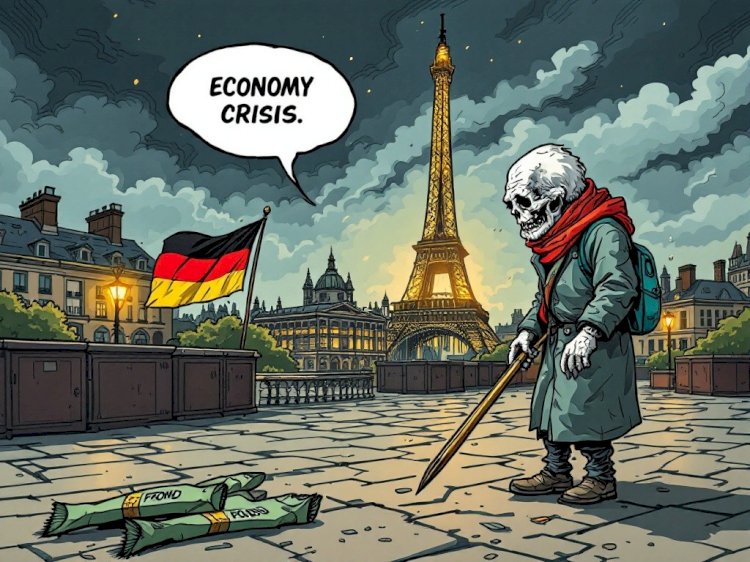
Economic Slowdown and Political Instability
Europe's economic powerhouse, Germany, is facing a second consecutive year of economic contraction. In 2024, its GDP shrank by 0.1% [1], a stark contrast to the robust growth experienced in the 2010s [2]. The country is grappling with a multitude of challenges, including a shortage of skilled labor, cumbersome bureaucracy, and the lingering effects of high energy prices [3]. Political instability further complicates the situation, with disagreements within the ruling coalition hindering efforts to address these economic woes [3]. The Conference Board's economic forecast for the Euro Area paints a concerning picture, highlighting downside risks such as high energy prices, weak demand, political uncertainty, and restrictive fiscal policies [4]. While a robust labor market, strengthened real wages, and a less restrictive monetary policy offer some hope, the overall outlook remains subdued [4].
France, while exhibiting more resilience than Germany, is not immune to economic challenges. Projected GDP growth of 1.1% in 2025 and 0.8% in 2026 [3] falls short of expectations. The recent collapse of the French government after a mere 91 days in power adds to the uncertainty, raising concerns about policy paralysis and prolonged economic stagnation [5]. However, France has demonstrated remarkable resilience in recent years, navigating the COVID-19 pandemic and the 2022 energy crisis with relative success [2]. This resilience can be attributed in part to significant economic reforms undertaken by the Macron government, including pension system and labor market reforms, which have boosted competitiveness and attracted foreign investment [2].
Adding to the complexity of the situation is the uneven economic landscape across the Eurozone. While some countries like Spain and Portugal have shown strong growth, others, including Germany, France, and Italy, are experiencing stagnation or contraction [6]. Inflation rates also vary significantly across the Euro area, with some countries exceeding the European Central Bank's 2.0% target while others remain below [7]. This divergence underscores the challenges of managing a monetary union with diverse economic conditions.
The contrasting economic situations in the US and Europe further highlight the challenges facing the Eurozone. While the US economy has shown more robust growth, Europe is grappling with stagnation, prompting the European Central Bank to cut interest rates in an effort to stimulate economic activity [8]. This divergence raises questions about the long-term competitiveness of the Eurozone and its ability to keep pace with global economic trends.
It is important to note that despite the economic downturn, the impact on Germany's potential output appears to be relatively mild and transitory [9]. This suggests that the country's long-term growth prospects remain intact, although the short-term challenges are undeniable.
The Auto Industry: A Microcosm of Wider Challenges
The struggles of the automotive industry in both Germany and France provide a glimpse into the broader economic headwinds facing these nations. Both countries have been slow to adapt to the electric vehicle (EV) revolution, and their traditional dominance in the auto sector is being challenged by new players, particularly from Asia [5].
Volkswagen (VW), Germany's largest industrial employer and a symbol of its manufacturing prowess, has experienced a dramatic decline in profits. In the third quarter of 2024, VW's profits plummeted by 60%, with its operating margin shrinking to a meager 2% [5]. The company has been forced to take drastic measures, including shutting down plants in Germany for the first time in its history, raising concerns about job losses and the ripple effects on local economies [5].
Similarly, Stellantis, the French-Italian multinational automotive manufacturer, has faced declining profit margins, leading to the dismissal of its CEO, Carlos Tavares [5]. These difficulties in the auto industry, a crucial sector for both countries, reflect the broader challenges of declining competitiveness and the need for industrial transformation.
Furthermore, the decline in German industrial production extends beyond the automotive sector. A slowdown in external demand, particularly from China, coupled with higher energy prices, has impacted various industrial sectors, including energy-intensive industries and those with significant exposure to the Chinese market [1]. This decline in industrial output is a worrying sign for the German economy and underscores the need for structural reforms to enhance competitiveness and promote innovation.
Historical Context: Lessons from Past Crises
The current economic and political turmoil in Europe evokes memories of past financial crises that have tested the resilience of the European Union. The European sovereign debt crisis, which erupted in 2008 with the collapse of Iceland's banking system, quickly spread to several Eurozone countries, including Greece, Portugal, Ireland, Spain, and Italy [10]. This crisis, fueled by a combination of factors such as excessive government spending, lax lending practices, and the global financial crisis of 2007-2008, led to a loss of confidence in European economies and necessitated intervention from international institutions like the International Monetary Fund (IMF) [10].
The Euro area crisis was further exacerbated by a sudden stop of foreign capital flows into countries with substantial current account deficits [11]. The inability of these countries to devalue their currency due to their participation in the Eurozone and the lack of fiscal policy coordination among member states contributed to the severity of the crisis [11].
The historical context highlights the interconnectedness of European economies and the potential for financial contagion. The current situation in Germany and France, while not as acute as the sovereign debt crisis, underscores the importance of addressing underlying economic weaknesses and preventing a wider crisis.
Drawing parallels with the Great Depression, the role of sovereign debt vulnerabilities in triggering and exacerbating financial crises becomes evident [12]. The experiences of countries like Germany in the interwar period, struggling with high levels of sovereign debt and an unforgiving macroeconomic environment, offer valuable lessons for navigating the current challenges [12].
However, it is important to acknowledge that Europe has learned from past crises. The EU has taken decisive action to improve its public finances, implement structural reforms, and establish new institutions to better manage and prevent future crises [13]. These efforts have strengthened the resilience of the European Union and provide a foundation for navigating the current turmoil.
Potential Consequences and Mitigating Factors
The economic and political instability in Germany and France could have far-reaching consequences for the Eurozone and the broader European Union. A prolonged slowdown in these key economies could lead to:
- Reduced economic growth: A decline in consumer spending and investment could further dampen economic activity across the Eurozone, potentially leading to a recession.
- Increased unemployment: Job losses in key sectors like the automotive industry could result in higher unemployment rates, exacerbating social and economic inequalities.
- Social unrest: Economic hardship and declining living standards could fuel social and political instability, potentially leading to protests and unrest.
- Weakened EU unity: The inability of Germany and France to effectively address their economic challenges could undermine confidence in the EU and its ability to act decisively on critical issues. This could further erode public trust in the EU's institutions, which has already declined significantly following the financial crisis [14].
However, several mitigating factors could help to cushion the impact of the current turmoil:
- Resilient French economy: Despite recent political instability, the French economy has shown resilience in the face of various challenges, including the COVID-19 pandemic and the 2022 energy crisis [2]. This resilience, supported by structural reforms and a favorable business environment, could help to mitigate the negative impact of the current political uncertainty.
- Strong German fundamentals: While facing challenges, Germany still possesses a robust economy with a low unemployment rate and globally competitive companies [2]. This underlying strength could provide a foundation for recovery and help to prevent a deeper economic downturn.
- Existing safety nets: The EU has established various financial support mechanisms, such as the European Stability Mechanism (ESM), to provide assistance to member states facing financial difficulties [15]. These safety nets can help to prevent a full-blown financial crisis and support the stability of the Eurozone.
- Monetary policy response: The European Central Bank has taken steps to ease monetary policy and support economic growth [8]. These measures, including interest rate cuts, could help to stimulate investment and consumer spending, mitigating the impact of the economic slowdown.
- European Commission's "Competitiveness Compass": The European Commission has launched the "Competitiveness Compass" initiative, which aims to improve productivity and boost the economic outlook for the medium term [6]. This initiative, focused on addressing structural weaknesses and promoting innovation, could contribute to a more sustainable and competitive European economy.
Contingency Plans and Safety Nets
The European Union has learned valuable lessons from past crises and has implemented a multi-layered system of contingency plans and safety nets to mitigate the impact of financial instability. These include:
|
Layer |
Description |
Example |
|---|---|---|
|
Countries' own international reserves |
A country's holdings of foreign currency and other assets that can be used to stabilize its currency and economy. |
Germany's Bundesbank holds significant foreign currency reserves. |
|
Bilateral swap arrangements |
Agreements between central banks to exchange currencies to provide liquidity to financial markets during times of stress. |
The US Federal Reserve has swap arrangements with the European Central Bank. |
|
Regional financial arrangements |
Mechanisms by which countries pool resources to leverage financing in a crisis. |
The European Stability Mechanism (ESM) is a regional financial arrangement for the Eurozone. |
|
The IMF |
The International Monetary Fund provides financial assistance and policy advice to member countries facing balance of payments difficulties. |
The IMF played a key role in addressing the European sovereign debt crisis. |
These layers, along with other measures, have expanded significantly since the global financial crisis, providing a more robust safety net for the global economy [16].
In addition to the global financial safety net, the EU has developed specific mechanisms to address financial instability within the Eurozone:
- European Stability Mechanism (ESM): The ESM is a permanent crisis resolution mechanism for the Eurozone, with a lending capacity of €422 billion [15]. It can provide loans to member states facing financial difficulties and has precautionary instruments that countries can access before a crisis occurs [15].
- EU budget headroom: EU loans to member states are covered by a guarantee made by all EU countries through the EU budget headroom [15]. This provides an additional layer of financial support for member states facing economic challenges.
- Macroprudential policies: The European Central Bank employs macroprudential policies to mitigate systemic risks in the financial system [17]. These policies aim to prevent excessive risk-taking and ensure the stability of the financial sector.
- Deposit insurance: Deposit insurance schemes protect depositors from losses in case of bank failures, helping to maintain confidence in the banking system [18]. This is a crucial safety net to prevent bank runs and maintain financial stability.
The World Bank also plays a significant role in supporting social safety nets, particularly in low-income and fragile contexts [19]. These safety nets provide crucial support to vulnerable populations during times of economic hardship and contribute to social stability.
Long-Term Challenges for the Eurozone
While the immediate focus is on addressing the economic and political turmoil in Germany and France, the Eurozone faces long-term challenges that require attention. One of the most significant challenges is the lagging competitiveness of the Eurozone compared to the US and China, particularly in emerging technologies [7]. This competitiveness gap is reflected in various indicators, such as the declining share of global tech revenue held by European companies and the underinvestment in research and development [7].
Addressing this competitiveness gap requires a multi-faceted approach, including:
- Promoting innovation: Fostering a more dynamic and innovative environment for businesses, particularly in emerging technologies, is crucial for long-term economic growth.
- Investing in human capital: Developing a skilled workforce through education and training is essential to enhance productivity and competitiveness.
- Strengthening the single market: Deepening the integration of the European single market can create a more competitive environment for businesses and promote economic efficiency.
- Addressing structural weaknesses: Tackling issues such as excessive bureaucracy, fragmented markets, and regulatory barriers can improve the business environment and attract investment.
A Call for Action and Cooperation
The economic and political situation in Germany and France presents a significant challenge for the European Union. While the situation is concerning, it is not insurmountable. By learning from past crises and taking decisive action, the EU can navigate these challenges and emerge stronger and more resilient.
Policymakers in Germany and France must address the underlying structural issues that are hindering economic growth and competitiveness. This includes tackling issues such as skills shortages, bureaucratic inefficiencies, and the need for industrial transformation.
A coordinated response at the EU level is also crucial. Strengthening the single market, promoting innovation, and investing in key areas such as green technology and digital infrastructure are essential to ensure the long-term prosperity of the European Union.
The historical context of past financial crises in Europe provides valuable lessons. By learning from these experiences and taking proactive measures, the EU can navigate the current challenges and emerge stronger and more resilient.
The current economic divergence between France and Germany, despite their deep interdependence, highlights the need for greater cooperation and solidarity within the EU [2]. A unified approach to addressing the challenges facing the Eurozone is essential to maintain stability and promote economic growth.
The increase in bankruptcies in Germany, while concerning, should be viewed in the context of the artificially low numbers during the COVID-19 pandemic [20]. This suggests that the current increase is partly a return to normalcy, although the underlying economic challenges remain.
The EU's commitment to strengthening its financial safety nets and crisis management mechanisms provides a foundation for stability. However, continued vigilance and proactive measures are needed to address emerging risks and ensure the long-term prosperity of the European Union.
The challenges facing the Eurozone are not just cyclical but also structural. Addressing the competitiveness gap with the US and China, particularly in emerging technologies, is crucial for the long-term economic health of the EU. This requires a concerted effort to promote innovation, invest in human capital, and create a more dynamic and competitive business environment.
The current situation is a call for action and cooperation. By working together, European leaders can overcome the challenges and build a more resilient and prosperous future for the European Union.
References
- Our economic outlook for the euro area - Vanguard, accessed January 30, 2025, https://corporate.vanguard.com/content/corporatesite/us/en/corp/vemo/vemo-europe.html
- Is France's economy now stronger than Germany's? | Jordan Times, accessed January 30, 2025, https://jordantimes.com/opinion/marcel-fratzscher/frances-economy-now-stronger-germanys
- Europe's economy needs help. Political chaos in France and Germany means it may be slower in coming | AP News, accessed January 30, 2025, https://apnews.com/article/europe-economy-france-germany-us-trade-0381c0a74385766bf13d7e6cb021608a
- The Conference Board Economic Forecast for the Euro Area Economy, accessed January 30, 2025, https://www.conference-board.org/publications/eur-forecast
- Europe's economy loses its “engine”, as France follows Germany ..., accessed January 30, 2025, https://www.icis.com/chemicals-and-the-economy/2024/12/europes-economy-loses-its-engine-as-france-follows-germany-into-political-turmoil/
- Eurozone growth stalls as policymakers show sense of urgency | snaps - ING Think, accessed January 30, 2025, https://think.ing.com/snaps/eurozone-growth-stalls-as-policy-makers-show-sense-of-urgency/
- Eurozone Economic Outlook: Trends and Forecast for 2025 And Beyond, accessed January 30, 2025, https://www.focus-economics.com/blog/eurozone-economic-outlook/
- European Central bank cuts benchmark rate by a quarter percentage point to boost stagnant economy | AP News, accessed January 30, 2025, https://apnews.com/article/europe-economy-zero-growth-germany-eurozone-a7df09cc5334f37c48e901ff0d3584b7
- Chapter 2: The Crisis's Impact on Potential Growth in Germany: The Nature of the Shock Matters in - IMF eLibrary, accessed January 30, 2025, https://www.elibrary.imf.org/view/book/9781616354244/ch002.xml
- European Sovereign Debt Crisis: Eurozone Crisis Causes, Impacts - Investopedia, accessed January 30, 2025, https://www.investopedia.com/terms/e/european-sovereign-debt-crisis.asp
- Euro area crisis - Wikipedia, accessed January 30, 2025, https://en.wikipedia.org/wiki/Euro_area_crisis
- Sovereign Debt and Financial Crises: An Historical Analysis - IMF F&D Magazine, accessed January 30, 2025, https://www.imf.org/en/Publications/fandd/issues/2018/03/debroeck
- How the financial crisis made Europe stronger - The World Economic Forum, accessed January 30, 2025, https://www.weforum.org/stories/2016/03/how-the-financial-crisis-made-europe-stronger/
- The Effects of the Financial Crisis on Systemic Trust - Archive of European Integration, accessed January 30, 2025, https://aei.pitt.edu/11334/1/1877-1.pdf
- Europe's common financial response to challenges: what has already been done, accessed January 30, 2025, https://www.esm.europa.eu/blog/europes-common-financial-response-challenges-what-has-already-been-done
- Global Financial Safety Net—A Lifeline for an Uncertain World, accessed January 30, 2025, https://www.imf.org/en/Blogs/Articles/2021/11/30/global-financial-safety-net-a-lifeline-for-an-uncertain-world
- An opportunity to review and improve the EU's bank crisis management framework, accessed January 30, 2025, https://www.ecb.europa.eu/press/financial-stability-publications/macroprudential-bulletin/html/ecb.mpbu202312_02~6a6a535f4b.en.html
- Financial Safety Nets: Key design considerations - World Bank Documents and Reports, accessed January 30, 2025, http://documents1.worldbank.org/curated/en/099346001292216472/pdf/P169414032e0db0b20a8d00ac6d4018fb3c.pdf
- World Bank Support to Social Safety Nets, accessed January 30, 2025, https://www.worldbank.org/en/results/2013/04/11/world-bank-support-to-social-safety-nets
- More German businesses go bankrupt amid weak economy, high inflation | DW News, accessed January 30, 2025, https://www.youtube.com/watch?v=OWMn9QiTCtE
What's Your Reaction?