The World Trade Organization at a Crossroads: Can it Recover its Lost Relevance?
For decades, the World Trade Organization (WTO) stood as a towering institution in the landscape of global commerce. Since its establishment, it has been envisioned as the bedrock of a smoothly functioning global economy, dedicated to dismantling trade barriers, spurring economic expansion, and fostering a predictable, multilateral trading system. From its inception in 1995, the WTO rapidly evolved into a central pillar of international trade, boasting a near-universal membership and overseeing trade agreements that reshaped how nations exchanged goods and services. Its early successes cemented its reputation as a guardian of free trade, a neutral arbiter in trade disputes, and a vital engine for global economic integration.
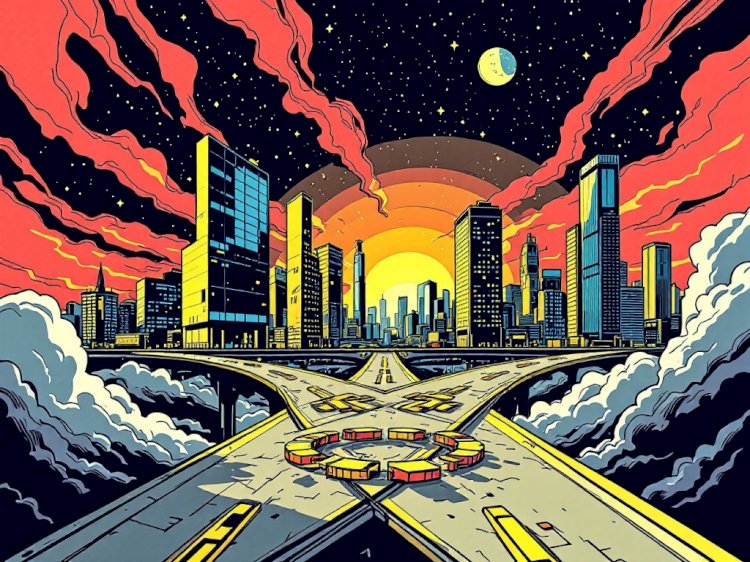
However, a growing chorus of voices now suggests that the WTO is facing an existential crisis. Concerns are mounting that this once-powerful organization is losing its grip, its influence waning in the face of evolving geopolitical realities and the resurgence of protectionist sentiments. This blog post delves into the multifaceted challenges confronting the WTO, examining the key factors contributing to its decline and pondering whether this critical institution can adapt and reclaim its lost relevance in an increasingly complex and fragmented world. Is the WTO merely experiencing a rough patch, or is it on a path towards obsolescence? Let's explore the critical juncture at which the World Trade Organization finds itself.
The WTO's Golden Age: A Pillar of Free Trade
Born from the legacy of the General Agreement on Tariffs and Trade (GATT), the WTO emerged in 1995 with ambitious goals. It aimed to create a truly global marketplace by progressively eliminating tariffs and other trade obstacles. The organization's growth in its initial years was remarkable. Starting with 76 member countries, it expanded to encompass 164 nations by 2016, representing a staggering 98% of global trade. This near-universal membership underscored the WTO's profound influence and its success in establishing a seemingly equitable global trading environment.
The WTO's framework encompassed a series of landmark agreements that fundamentally reshaped global commerce. The GATT itself had already achieved significant reductions in tariffs over decades. The WTO built upon this, adding the General Agreement on Trade in Services (GATS) to liberalize crucial sectors like finance and telecommunications, and the Agreement on Trade-Related Aspects of Intellectual Property Rights (TRIPS) to establish international standards for protecting intellectual property. These agreements provided a common rulebook for international trade, fostering predictability and reducing the risk of trade disputes escalating into damaging trade wars.
Beyond setting the rules of the game, the WTO also functioned as a "global economic court" through its robust dispute resolution system. This system was designed to impartially adjudicate trade disputes between member countries, ensuring that trade rules were enforced and providing a mechanism to resolve conflicts peacefully. From 1995 to 2014, the WTO handled over 500 cases, some of which had far-reaching implications for the global economic order. Landmark cases, such as the dispute between the US and the EU over Airbus subsidies in 2004 and the China-US case regarding steel import tariffs in 2012, demonstrated the WTO's authority and the respect major economic powers initially held for its rulings. This effective dispute resolution mechanism was instrumental in maintaining global trade stability and preventing trade wars during the WTO's first two decades.
Developing countries also reaped significant benefits from the WTO framework. Vietnam serves as a compelling example. After joining the WTO in 2007, Vietnam experienced a surge in foreign direct investment (FDI) and export growth. Key sectors like textiles, footwear, and agriculture flourished, contributing to rapid economic development and poverty reduction. The WTO seemed to be delivering on its promise of shared prosperity through trade.
Cracks in the Foundation: Inherent Weaknesses Emerge
However, the initial optimism surrounding the WTO has gradually faded. While the number of trade disputes brought to the WTO has actually increased in recent years, the organization's capacity to effectively handle them has diminished. The dispute resolution system, once lauded as a powerful international trade court, is now facing near-paralysis.
A critical blow to the WTO's dispute settlement mechanism came with the crisis of the Appellate Body. By late 2023, over 25 trade disputes remained unresolved, leading to frustration among member countries. The once-efficient system for adjudicating trade disagreements became bogged down, causing nations to lose faith in the WTO's ability to deliver timely and effective resolutions. This paralysis has driven countries to increasingly resort to unilateral trade measures, bypassing the WTO and undermining the multilateral system it was designed to uphold. Instead of patiently awaiting WTO rulings, nations are now more inclined to impose their own tariffs and trade restrictions, raising the specter of escalating trade conflicts.
One of the fundamental weaknesses of the WTO lies in its limited enforcement power. The organization operates largely on a foundation of trust and lacks robust mechanisms to compel compliance with its rulings. This deficiency became starkly evident during the US-China trade war. Despite the WTO's existence, it proved unable to prevent the imposition of tariffs by both countries, which significantly disrupted global trade flows. Even when a WTO panel ruled against the US tariffs in 2020, Washington simply ignored the ruling without facing any substantial consequences. This highlighted the WTO's inability to effectively restrain powerful nations from taking unilateral actions that undermine the multilateral trading system.
Furthermore, the WTO's dispute resolution process, while intended to be thorough and impartial, is often criticized for being excessively slow and cumbersome. Reaching a final decision in complex trade disputes can take years, a timeframe that is often too protracted to address rapidly evolving trade conflicts. This sluggishness further erodes the WTO's relevance in a fast-paced global economy where trade tensions can escalate quickly.
The United States' Role: Undermining the Multilateral System
The video points to the United States as playing a particularly significant role in undermining the WTO's ability to function effectively. Starting in 2017, the US began to block the appointment of new judges to the WTO's Appellate Body, the highest court of appeal in trade disputes. This action was taken under the argument that the Appellate Body had overreached its original mandate, but the effect was to cripple the WTO's dispute resolution system. By December 2019, the Appellate Body became paralyzed, losing its quorum and its capacity to hear new appeals in complex trade cases.
Despite a change in presidential administration, the US has not reversed its stance on the Appellate Body, and the body remains inoperative. Moreover, the US has continued to pursue protectionist trade policies that are at odds with the spirit of multilateralism championed by the WTO. The Inflation Reduction Act of 2022, while aimed at promoting green energy and domestic manufacturing, includes provisions that favor domestic industries through subsidies and tax credits, raising concerns among US allies about unfair competition and potential violations of WTO rules. These actions by the United States, a founding member and historically a key supporter of the WTO, have significantly damaged the organization's credibility and undermined its effectiveness as a guardian of the multilateral trading system.
The Global Shift Towards Protectionism and Regionalism
Beyond the challenges posed by the US, a broader global trend towards protectionism and regionalism is further marginalizing the WTO. The European Union, while often seen as a champion of multilateralism, is also increasingly leaning towards protectionist measures. The Carbon Border Adjustment Mechanism (CBAM), for example, while framed as an environmental policy to address carbon leakage, is widely viewed as a trade barrier, particularly for developing countries that may struggle to meet the EU's carbon emission standards. This shift towards "green protectionism" reflects a growing willingness among major economies to prioritize domestic concerns over global trade rules.
China, while publicly expressing support for the WTO and multilateralism, is also strategically reducing its reliance on the organization. China is actively promoting regional trade agreements, such as the Regional Comprehensive Economic Partnership (RCEP), which encompasses 15 East Asian and Pacific nations, creating the world's largest trading bloc. Furthermore, China is pushing for the greater use of its currency, the Yuan, in international trade, seeking to reduce its dependence on Western-dominated financial systems and potentially creating a parallel trading system outside of the WTO's orbit.
Developing countries, initially seen as beneficiaries of the WTO system, are also increasingly losing faith in its effectiveness. They find the WTO's mechanisms too slow, its dispute resolution system paralyzed, and its promises of development benefits unfulfilled. As a result, many developing nations are also opting for bilateral or regional Free Trade Agreements (FTAs) to secure quicker and more tangible trade advantages, further fragmenting the global trade landscape and diminishing the WTO's central role.
In response to the WTO's paralysis in multilateral negotiations, some members are exploring alternative approaches within the WTO framework, such as plurilateral agreements and Joint Statement Initiatives (JSIs). These initiatives involve agreements among subsets of WTO members on specific issues, rather than requiring consensus from all 164+ members. While JSIs offer a potential pathway to update WTO rules in certain areas like digital trade and investment facilitation, they also raise concerns about potentially marginalizing non-participating countries and further fragmenting the multilateral system.
Challenges in Reaching Consensus and Updating Rules
A fundamental challenge facing the WTO is its increasing difficulty in reaching consensus among its diverse and growing membership. The WTO operates on a consensus-based decision-making mechanism, meaning that any single member can effectively block progress if it opposes a particular agreement or reform. This "single undertaking" approach, while intended to ensure that all members are on board with new rules, has become a major obstacle to updating the WTO rulebook to reflect the realities of the 21st-century global economy.
The last major round of multilateral trade negotiations under the WTO, the Doha Development Agenda, was launched in 2001 with the aim of improving the trading prospects of developing countries. However, the Doha Round negotiations stalled and ultimately failed to produce a comprehensive agreement, after years of deadlock over issues such as agricultural subsidies and market access. This failure underscored the deep divisions and conflicting interests among WTO members, making it exceedingly difficult to achieve meaningful progress on multilateral trade liberalization.
The world economy has undergone significant transformations since the WTO's inception in 1995, driven by technological advancements, the rise of digital trade, the growing importance of global supply chains, and the urgent need to address climate change and other environmental challenges. However, the WTO's rulebook has struggled to keep pace with these changes. Updating trade rules to effectively address 21st-century issues like digital trade, e-commerce, state-owned enterprises, and climate change requires new negotiations and consensus-building, processes that have proven to be increasingly challenging within the WTO's current framework.
Recognizing the urgent need for reform, WTO members have engaged in discussions and debates about how to revitalize the organization's negotiating and dispute settlement functions. Ministerial Conferences, such as MC12 in 2022 and MC13 in 2024, have attempted to find solutions to the WTO's current challenges and chart a path forward for multilateral trade negotiations. However, achieving meaningful reform requires overcoming deep-seated disagreements among members on fundamental issues, such as the scope of negotiations, the decision-making process, and the balance between national interests and global cooperation.
Can the WTO Recover? The Path Forward
The World Trade Organization stands at a critical juncture. To regain its lost relevance and effectiveness, significant reforms are essential. These reforms may include finding ways to improve its dispute resolution system, perhaps by exploring alternative mechanisms to overcome the Appellate Body crisis or by streamlining the dispute settlement process to make it more timely and efficient. Limiting the veto power of individual members or adopting more flexible decision-making approaches could also be considered to break the deadlock in negotiations and facilitate rule updates. Furthermore, the WTO needs to modernize its trade rules to effectively address the challenges and opportunities of the 21st-century global economy, including digital trade, climate change, and the evolving role of state-owned enterprises.
However, the path to reform is fraught with challenges. Deep divisions among member countries, particularly between developed and developing nations, and rising geopolitical tensions make consensus-building even more difficult. Without substantial reforms, the WTO risks becoming increasingly symbolic, a forum for dialogue but lacking real power to shape global trade rules or resolve trade disputes effectively. In such a scenario, the future of global trade may be increasingly shaped by bilateral and regional agreements, and by the unilateral actions of powerful nations, rather than by a globally agreed-upon, multilateral framework.
The WTO faces a stark choice: radical renewal or gradual obsolescence. Whether it can adapt to the changing global landscape, overcome its internal challenges, and reassert its role as a central pillar of the international trading system remains to be seen. The coming years will be critical in determining the WTO's future and the future of multilateralism in global trade.
Conclusion
The World Trade Organization, once a symbol of global cooperation and a driving force behind unprecedented trade liberalization, is now grappling with a profound crisis of relevance. Its early successes in reducing trade barriers, fostering economic growth, and establishing a rules-based trading system are undeniable. However, inherent weaknesses in its enforcement mechanisms, the paralysis of its dispute resolution system, and the rise of protectionist policies, particularly by major powers like the United States, have significantly undermined its authority.
The global landscape is shifting, with nations increasingly prioritizing regional and bilateral agreements and resorting to unilateral measures. The WTO's consensus-based decision-making, while intended to be inclusive, has become a major impediment to progress, hindering its ability to update trade rules for the 21st century. For the WTO to remain a meaningful institution in the future, significant and potentially radical reforms are urgently needed. It must adapt to the new realities of global trade, address its systemic weaknesses, and find ways to bridge the growing divides among its members. The future of global trade, and the WTO's role within it, hangs in the balance, dependent on whether this critical organization can successfully navigate the crossroads at which it finds itself.
What's Your Reaction?