How the Global Dominance of English Shapes Cultural Diversity and Linguistic Heritage
An in-depth analysis of how the global hegemony of English impacts linguistic diversity, indigenous knowledge, educational equity, and digital culture. Explores theoretical models, economic realities, and revitalization strategies.
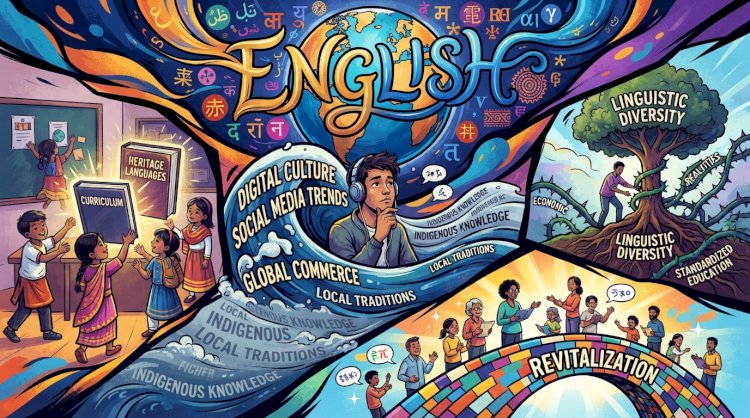
- Introduction
The expansion of English across the globe represents one of the most transformative socio-cultural phenomena in human history. Operating as the primary medium for international commerce, global governance, advanced scientific research, aviation, and digital entertainment, English has established itself as an unprecedented worldwide lingua franca. While this global language network provides undeniable benefits for cross-border collaboration and economic integration, it simultaneously exerts unprecedented pressure on local languages, traditions, and worldviews.
Linguists estimate that there are between 7,000 and 7,500 spoken human languages in existence today [1]. However, this vast linguistic wealth is distributed unevenly across the global population. A minute fraction of major global languages commands the majority of native and non-native speakers, while thousands of indigenous and regional languages are spoken by shrinking, marginalized communities [2]. The rapid spread of Global English has intensified this imbalance, accelerating language shift and reconfiguring how societies maintain, adapt, or abandon their heritage.
Understanding the impact of English dominance requires examining its historic roots, sociolinguistic mechanics, educational policies, and technological manifestations. By evaluating the tensions between global convergence and local resilience, scholars and policymakers can better navigate the delicate equilibrium between global connectivity and cultural diversity.
- Theoretical Frameworks: Imperialism, Capital, and Hegemony
To analyze how English influences global culture, sociolinguists rely on several key theoretical models that frame language as a locus of institutional power and socioeconomic stratification.
Formulated prominently by sociolinguist Robert Phillipson, Linguistic Imperialism posits that the dominance of English is systematically asserted and maintained through structural inequalities between English and other languages [3]. Within this framework, institutions—ranging from colonial administrations to modern multinational corporations—privilege English speakers while marginalizing non-English contexts. This structural bias is maintained through Linguicism, defined as institutional structures, ideologies, and practices that legitimize an unequal division of power and resources based on language [4].
Complementing Phillipson's structural critique is Pierre Bourdieu's concept of Linguistic Capital [5]. Bourdieu argued that language functions as a form of symbolic capital that can be converted into economic and social capital. In globalized markets, fluency in English acts as a gatekeeping credential. Possessing this capital yields access to prestigious educational institutions, high-paying employment, and elite social networks, whereas lacking it reinforces socio-economic exclusion.
However, contemporary sociolinguistics also recognizes the concept of Global Englishes, which challenges monolithic views of imperial control [6]. Scholars like Alastair Pennycook and Suresh Canagarajah note that as English spreads, it undergoes local reappropriation. Former colonial subjects do not merely absorb standard Anglo-American English; they modify, adapt, and hybridize it, creating distinct localized varieties such as Hinglish, Singlish, and West African Englishes. Consequently, the relationship between English dominance and local culture exists along a spectrum between institutional hegemony and local agency.
- Indigenous Language Attrition and Ecological Knowledge Loss
The most direct consequence of English dominance is the acceleration of language shift, leading to widespread attrition and extinction among indigenous and minoritized speech communities.
Currently, sociolinguists estimate that between 40% and 50% of the world's remaining languages are endangered [7]. Without intervention, a vast number of these languages could fall silent by the end of the twenty-first century. This trajectory is deeply tied to historical precedent. Colonial policies explicitly institutionalized English dominance while suppressing indigenous education. A key historical example is Thomas Babington Macaulay's 1835 Minute on Indian Education, which explicitly advocated creating an English-educated class to act as interpreters and administrators under British rule, devaluing local vernaculars [8].
The attrition of an indigenous language follows a recognizable pattern. As younger generations encounter English in formal schooling, media, and employment, they increasingly adopt English as their primary mode of communication. Over time, native vocabulary depth declines, grammatical structures simplify, and intergenerational transmission breaks down [9].
When a language vanishes, the loss extends far beyond syntax and vocabulary. Language serves as the primary repository for Traditional Ecological Knowledge (TEK)—a cumulative body of knowledge, practice, and belief regarding the relationships of living beings with their environment [10]. Indigenous languages contain specialized taxonomies for local flora, fauna, medicinal plants, and ecosystem management. When a community shifts to English, these hyper-local ecological nuances are frequently unrepresented in the target language and are permanently lost, directly impairing global biodiversity conservation efforts.
While structuralists highlight these devastating losses, pragmatic scholars such as Joseph Bisong point out that speakers in periphery nations often choose English for multilingual advantage rather than passive submission [11]. Indigenous communities frequently navigate English pragmatically to gain political visibility and protect their legal rights on the international stage, demonstrating that language shift is mediated by complex local calculations.
- Cultural Dynamics: Homogenization versus Glocalization
The global footprint of English has sparked an enduring debate in cultural sociology regarding whether the world is converging toward a uniform culture or evolving toward novel, hybrid cultural expressions.
Cultural Homogenization refers to the process by which local, distinct cultures are absorbed, transformed, or standardized due to the global diffusion of dominant cultural symbols, values, and practices [12]. Frequently criticized under terms like Americanization, Westernization, or McDonaldization, this phenomenon is driven by multinational media conglomerates, Western film and music, global advertising, and consumer capitalism. Because English serves as the foundational language for these industries, it frequently disseminates Anglo-American values, individualism, and consumer norms, threatening to flatten regional traditions and unique national identities.
Conversely, the concept of Glocalization—derived from the Japanese business practice dochaku-ka and popularized in sociology by Roland Robertson—describes how global products, ideas, and languages are adapted to fit local cultural contexts [13]. Rather than producing absolute uniformity, glocalization yields Cultural Hybridization (or syncretism), wherein global flows and local heritage merge to form new cultural expressions.
| Dimension | Cultural Homogenization | Glocalization |
|---|---|---|
| Primary Flow | One-way, top-down flow from global or Western cultures to local cultures | Two-way synergy through interaction between global and local cultures |
| Impact on Identity | Cultural uniformity and the erosion of local heritage | Preservation and reshaping of local identity through cultural synthesis |
| Market & Media Strategy | Standardized products and predominantly English-language messaging | Adapted content, translation, and localized branding |
| Theoretical Model | Convergence and cultural imperialism | Heterogeneity, hybridization, and creolization |
In linguistic terms, glocalization manifests through widespread code-switching and dialect formation [14]. In multilingual urban centers, speakers effortlessly alternate between English and their native tongues within a single sentence. These hybrid registers allow diaspora and post-colonial communities to participate in globalized commerce while asserting regional authenticity and solidarity.
Translation strategies also play a major role in this dynamic. When global English texts are translated using domestication (adapting foreign content to align with target-culture norms), local nuances can be erased. Conversely, foreignization retains original linguistic and cultural markers, preserving difference [15]. Navigating these dynamics forms the core of the Lingua Franca Dilemma: balancing the functional necessity of English for international collaboration against the imperative to protect indigenous cultural heritage from extinction.
- Educational Systems and the Socioeconomic Mobility Paradox
Education policies worldwide have increasingly embraced English as an educational medium, often under the assumption that early exposure guarantees national competitiveness and upward mobility. However, empirical research highlights a profound divide between policy ambitions and classroom realities.
English Medium Instruction (EMI)—the practice of teaching academic subjects like mathematics and science through English in non-Anglophone regions—has expanded rapidly across primary, secondary, and tertiary education [16]. This expansion creates a dichotomy between two distinct forms of bilingualism:
-
Elite Bilingualism: Wealthy students acquire English through well-resourced schools, private tutoring, and home exposure. They master English without sacrificing proficiency in their native language, adding valuable linguistic capital.
-
Subtractive Bilingualism: Low-income students are enrolled in under-resourced public EMI schools where native-language instruction is suppressed. Because teachers and students often lack sufficient English fluency, learning quality degrades rapidly.
This dynamic induces a widespread epistemic crisis in under-funded classrooms [17]. When students do not understand the language of instruction, education devolves into mechanical memorization rather than critical comprehension. Students fail to master both the academic content and the English language, transforming EMI from a mechanism of social mobility into an instrument of social reproduction that preserves elite advantage.
[ Neoliberal EMI Policy ]  --> Promises Upward Mobility & Global Access
          │
          ▼
[ Resource Inequity ]     --> Low-SES Public Schools Lack Trained Teachers
          │
          ▼
[ Comprehension Crisis ]   --> Students Fail Content & Language Mastery
          │
          ▼
[ Social Stratification ] --> Deepens Inequality & Secures Elite Hegemony
Case studies across the Global South illustrate this paradox. In Nepal, public school teachers operating under official EMI mandates frequently revert to local dialects to explain basic concepts, leaving students unprepared for standardized examinations written exclusively in English [18]. In India, marginalized Dalit students entering higher education face double burdens, struggling to master complex academic disciplines while simultaneously adapting to English-medium lecture halls dominated by urban, upper-caste peers [19]. In Sub-Saharan Africa and the Arab world, abrupt transitions to EMI at the university level disproportionately penalize public school graduates, restricting access to prestigious STEM fields [20].
Research indicates a profound mismatch in many EMI environments: while official curricula demand English, over 70% to 80% of actual classroom discourse occurs in regional languages out of pedagogical necessity [21]. UNESCO data confirms that children who learn to read and write in their mother tongue first develop stronger cognitive foundations, perform better in secondary education, and acquire second languages more effectively [22].
- The Digital Frontier: Online Diversity, AI, and Algorithmic Bias
As human interaction migrates to digital spaces, the dominance of English faces new configurations. While the internet offers unprecedented platforms for communication, the underlying technical infrastructure and algorithmic architectures often reinforce linguistic exclusion.
Internet linguistics views digital communication as a dynamic hybrid of spoken dialogue and written text [23]. Scholars like David Crystal and Gretchen McCulloch highlight how digital discourse incorporates memes, capital letters, and emojis to convey tone and emotion. However, the linguistic distribution across the World Wide Web remains starkly unrepresentative of offline human speech.
Out of more than 7,000 active languages, a tiny cluster monopolizes digital space. English accounts for approximately 45% to 55% of all top web content and indexable URLs, despite native English speakers constituting only about 4.6% to 5% of the global population, and total English speakers making up roughly 16% [24].
- Mandarin Chinese: Spoken natively by ~16.3% of the human population, yet represents only 1.4% to 5% of indexed web pages [25].
- Hindi: Spoken by over 500 million people, yet accounts for less than 0.1% of indexed web content on major tracking platforms [26].
- Digital Monopolization: Fewer than 20 languages comprise over 90% of all published web pages, leaving thousands of speech communities digitally invisible.
This imbalance exacerbates the second-level digital divide, shifting the issue from physical hardware access to information usability and linguistic accessibility [27]. For over 80% of the world's population that lacks English proficiency, essential online materials—including scientific literature, global news, health guidelines, and digital public services—remain largely inaccessible without translation.
This structural inequality is further amplified by the emergence of Artificial Intelligence and Large Language Models (LLMs). LLMs are overwhelmingly trained on English and high-resource Western web data, leaving approximately 98% of the world's languages underrepresented in modern AI developments [28].
In computational linguistics, a language is categorized as "low-resource" not by its total human speaker count, but by its scarcity of annotated, machine-readable digital text corpora [29]. Swahili, with roughly 200 million speakers, remains relatively low-resource in AI training datasets compared to languages with smaller populations but extensive digital documentation, such as Welsh.
This dataset imbalance leads to severe algorithmic biases:
- Allocative Harms: AI systems exhibit significantly higher Word Error Rates (WER) and lower task accuracy when processing non-standard dialects, non-native accents, regional English varieties (e.g., AAVE), or low-resource languages [30].
- Representational Harms: LLMs trained predominantly on Western English corpora frequently misinterpret local cultural concepts, apply Anglo-American socio-cultural norms universally, or hallucinate inaccurate answers for non-English queries [31].
- Policy Responses, Language Rights, and Revitalization Strategies
To counteract language loss, educational failure, and digital exclusion driven by English hegemony, sociolinguists, indigenous community leaders, and international agencies advocate for targeted structural interventions.
Central to these efforts is the framework of Linguistic Human Rights (LHR), which asserts that every human being has an inherent right to formal education, public services, and media representation in their native language [32]. Operationalizing LHR requires moving away from subtractive submersion models toward sustainable multilingual frameworks.
Mother-Tongue-Based Multilingual Education (MTB-MLE) represents a primary policy tool for achieving educational equity [33]. Under MTB-MLE models, primary education is conducted entirely in the child's native language. Once foundational literacy and numerical reasoning are established, national and global languages (such as English) are gradually introduced as subject courses before being integrated into secondary education. This scaffolded approach preserves mother-tongue mastery while building competence in global languages.
In the classroom, educators increasingly utilize Pedagogical Translanguaging—the intentional practice of allowing students and teachers to fluidly use their full linguistic repertoire (combining native vernaculars and English) to analyze complex content [34]. Rather than treating languages as strictly separated systems, translanguaging validates indigenous linguistic knowledge as a bridge to academic achievement.
Traditional Submersion Model:  [ Native Language Suppressed ] --> EMI Classroom --> Learning Deficit

Translanguaging Framework:     [ Native Language + English ]   --> Dual Literacy --> Epistemic Inclusion
In the digital realm, grassroots initiatives are building localized AI architectures to ensure linguistic survival. Organizations such as Masakhane across Africa, Lesan AI in Ethiopia, and GhanaNLP are curating open-source, community-owned datasets to train natural language processing models for African languages [35]. Simultaneously, lightweight Edge AI applications deployed by organizations like UNICEF allow devices to deliver educational and health content offline in regional languages like Bambara and Twi without relying on English-dominated cloud servers [36].
- Conclusion
The global dominance of English presents a fundamental dual reality. On one hand, English serves as an indispensable tool for international cooperation, scientific exchange, and economic opportunity. On the other hand, its unmediated expansion drives indigenous language attrition, exacerbates educational inequalities, flattens local cultural nuances, and perpetuates algorithmic biases in emerging technologies.
Addressing this challenge does not require rejecting English, but rather dismantling the institutional ideologies of linguistic imperialism that elevate English at the expense of all other tongues. By establishing robust Mother-Tongue-Based Multilingual Education policies, defending Linguistic Human Rights, supporting community-led digital archiving, and building inclusive AI frameworks, global society can leverage English for universal connection while preserving the diverse linguistic heritage of humanity.
References
- UNESCO Atlas of the World's Languages in Danger
- National Institutes of Health - Global Sociolinguistic Dynamics
- Phillipson, R. - Linguistic Imperialism Overview
- Harvard University - Linguistic Imperialism and Policy
- Bourdieu, P. - Language and Symbolic Power Analysis
- Pennycook, A. - Global Englishes and Cultural Politics
- Ethnologue - Languages of the World Endangerment Report
- Macaulay, T. B. - Minute on Indian Education Historical Texts
- Cultural Survival - Indigenous Language Attrition
- Anthro Seminars - Traditional Ecological Knowledge Preservation
- Bisong, J. - Sociolinguistic Agency and Global English
- Social Signs Review - Cultural Globalization and Homogenization
- Robertson, R. - Glocalization: Time-Space and Homogeneity-Heterogeneity
- UCLA Department of Linguistics - Code-Switching Dynamics
- Day Translations - Domestication vs Foreignization in Translation
- Oxford University Press - English Medium Instruction Research
- Taylor & Francis Online - Epistemic Inequality in EMI Classrooms
- UKFIET - EMI Policy and Reality in South Asia
- ResearchGate - Social Reproduction and Higher Education in India
- MDPI - EMI in Arab World Higher Education
- IAR Consortium - Classroom Discourse and Language Policy
- UNICEF - Mother-Tongue Based Multilingual Education Report
- Crystal, D. - Language and the Internet Studies
- W3Techs - Historical Usage Statistics of Content Languages for Websites
- Visual Capitalist - Most Spoken Languages vs Web Representation
- World Economic Forum - Closing the Digital Language Divide
- Digital Divide Data - Second-Level Digital Divide Analysis
- Stanford HAI - Language Bias and Inclusion in Large Language Models
- ACM FAccT - Low-Resource Natural Language Processing Evaluation
- IBM Research - Algorithmic Bias in Speech Recognition
- Observer Research Foundation - AI and Linguistic Diversity
- Skutnabb-Kangas, T. - Linguistic Human Rights Frameworks
- UNDP - Education and Language Policy Guidelines
- Syracuse University - Pedagogical Translanguaging in Practice
- Masakhane - Grassroots NLP for African Languages
- UNICEF Innovation - Edge AI and Education Inclusion
What's Your Reaction?