Leadership Catastrophes: The Blunders of History's Most Inept Generals
Military leadership stands as a cornerstone of nations and empires, its strength often dictating the very course of history. Throughout the annals of time, brilliant commanders have emerged, leading their forces to victory and etching their names into legend. Yet, for every tale of triumph, there's a shadow narrative – one of military disasters orchestrated by leaders woefully unprepared, strategically inept, or simply out of their depth. These are the commanders whose decisions, or lack thereof, led to catastrophic defeats, reshaping maps and altering destinies, often for the worse.
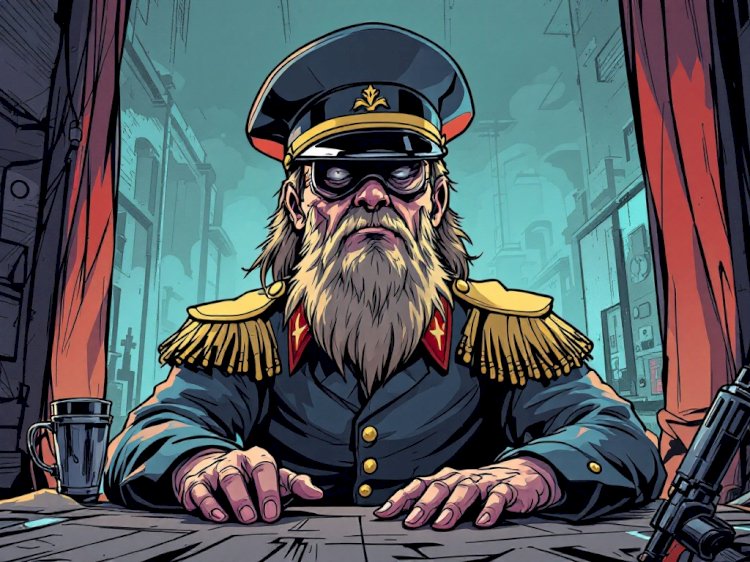
Incompetence in military leadership isn't merely about losing battles; it's about a profound failure of vision, strategy, and understanding of warfare. It's about underestimating the enemy, overestimating one's own capabilities, clinging to outdated tactics, or a sheer lack of command ability. The consequences of such ineptitude can be staggering, leading to the decimation of armies, the collapse of empires, and profound societal upheaval.
This blog post delves into the stories of eight historical figures who, through a combination of hubris, misjudgment, and strategic bankruptcy, earned the dubious distinction of being among history's most incompetent generals. By examining their failures, we aim to understand the critical elements of effective military leadership and the devastating repercussions when it is absent. These are not tales of valiant defeats against overwhelming odds, but rather cautionary narratives of leadership gone disastrously wrong.
Profiles in Military Ineptitude: Examining History's Most Incompetent Generals
We will explore the careers and calamitous campaigns of leaders who, despite holding positions of immense responsibility, demonstrated a stunning lack of military acumen. Their stories serve as stark reminders that in warfare, competence at the helm is not just desirable – it is absolutely vital.
1. Marcus Crassus: The Price of Ambition
Marcus Licinius Crassus, a name synonymous with wealth in Roman history, also carries the heavy weight of military disaster. While primarily known for his immense riches and political maneuvering, Crassus harbored military ambitions that ultimately led to his demise and a significant Roman defeat. In 53 BC, driven by a thirst for military glory to match his political and financial achievements, Crassus launched an invasion of Parthia.
His campaign culminated in the Battle of Carrhae, a debacle of epic proportions. Crassus, overconfident and underestimating the Parthian army, led his legions into the arid plains of Mesopotamia. The Roman forces, accustomed to infantry-based warfare, were met by a highly mobile Parthian army composed largely of cavalry, including heavily armored cataphracts and horse archers. Crassus made several critical errors. He ignored sound advice from his quaestor, Gaius Cassius Longinus, and failed to effectively scout the terrain or adapt his tactics to the Parthian threat.
The battle was a massacre. The Parthian cavalry decimated the Roman legions with superior mobility and archery, while the Romans, trapped in open terrain and lacking effective cavalry support, were unable to respond. Crassus himself was killed, and his army suffered devastating losses – approximately 20,000 Roman soldiers were killed and 10,000 captured. The defeat at Carrhae was one of the most humiliating and costly defeats in Roman history, significantly curtailing Rome's eastward expansion and intensifying political instability within the Republic. Crassus's ambition, unchecked by military skill or sound judgment, led to catastrophe, proving that wealth and political influence are no substitute for military competence.
2. Quintus Varus: The Forest of Slaughter
Publius Quinctilius Varus is infamous for one of Rome's most devastating military losses: the Battle of the Teutoburg Forest in 9 AD. Appointed governor of Germania, Varus was tasked with consolidating Roman control over the newly conquered territories. However, Varus, a man of legal and administrative background, severely lacked military experience and understanding of the Germanic tribes and terrain.
In September of 9 AD, Varus, relying on faulty intelligence, led three Roman legions – the XVII, XVIII, and XIX – into the dense Teutoburg Forest to quell a supposed minor uprising. He completely underestimated the simmering resentment of the Germanic tribes and the cunning of Arminius, a Roman-trained Germanic chieftain who secretly plotted against Rome. Arminius orchestrated a massive ambush, exploiting Varus's rigid and процессии-like marching formation within the dense, unfamiliar forest.
The Roman legions, stretched out in a long column, were completely vulnerable when the Germanic tribes, familiar with the terrain, launched a ferocious surprise attack. The battle raged for three days, with the Romans struggling to maneuver in the dense forest and muddy conditions, hampered by heavy rain. Varus's leadership was non-existent during the battle; he failed to adapt his tactics, maintain unit cohesion, or effectively counter the Germanic assault. The result was annihilation. All three legions were destroyed, along with auxiliary troops – a loss of approximately 20,000 men. Varus, in despair, committed suicide.
The Battle of the Teutoburg Forest sent shockwaves through Rome. Emperor Augustus was said to have repeatedly cried out, "Quintilius Varus, give me back my legions!" The defeat halted Roman expansion east of the Rhine and had a profound psychological impact, demonstrating the limits of Roman power and the catastrophic consequences of placing incompetent leaders in command. Varus's name became synonymous with military disaster, a chilling example of how underestimating an enemy and lacking strategic foresight can lead to utter ruin.
3. Edward II: A King's Military Folly
Edward II, King of England, is remembered more for his political ineptitude and personal failings than for military prowess. His reign was marked by conflict with his barons and a disastrous series of military campaigns against Scotland. Edward inherited the ongoing Wars of Scottish Independence from his father, Edward I, but lacked his father's military talent and strategic vision.
The pinnacle of Edward II's military incompetence was the Battle of Bannockburn in 1314. Edward mustered a large English army to relieve Stirling Castle, which was besieged by the Scots under Robert the Bruce. Despite outnumbering the Scottish forces significantly, Edward's leadership was plagued by strategic blunders and tactical missteps. He failed to effectively coordinate his army, chose unfavorable terrain for battle, and underestimated the tactical brilliance of Robert the Bruce.
At Bannockburn, the English army became bogged down in marshy ground, negating their numerical advantage, particularly their cavalry. Robert the Bruce skillfully deployed his schiltrons – dense formations of spearmen – to devastating effect against the encumbered English knights. Edward II displayed a complete lack of battlefield command, failing to adapt to the terrain or effectively utilize his forces. The battle turned into a rout, with the English army suffering heavy casualties and Edward himself narrowly escaping capture.
The Battle of Bannockburn was a decisive Scottish victory, securing Scottish independence for centuries. For Edward II, it was a military humiliation that further weakened his authority and contributed to the political turmoil of his reign. His failures on the battlefield underscored his broader inadequacies as a ruler, demonstrating how military incompetence at the highest level can have profound political and national ramifications.
4. The Duke of Cambridge: Resistance to Progress
Prince George, Duke of Cambridge, served as the Commander-in-Chief of the British Army for an astonishing forty years, from 1856 to 1895. However, his long tenure is now largely viewed as a period of stagnation and resistance to necessary military reforms, hindering the British Army's modernization and efficiency. While not associated with a single catastrophic battle, his overall leadership is considered a case of institutional incompetence, with long-term detrimental effects.
The Duke was a staunch traditionalist, deeply resistant to change and innovation within the military. He clung to outdated practices and vehemently opposed reforms that were being adopted by other European powers, particularly Prussia/Germany. He famously stated, "Brains? I don't believe in brains!", epitomizing his distrust of intellectualism and modern military thinking. His conservatism manifested in opposition to crucial reforms such as the establishment of a general staff, improvements in officer training, and the adoption of modern weaponry and tactics.
While other nations modernized their armies in response to evolving warfare, the Duke of Cambridge presided over a British Army that remained largely unchanged, stuck in outdated traditions. This resistance to progress had tangible consequences. By the late 19th century, the British Army was increasingly seen as less efficient and less prepared compared to its European counterparts. Critics argue that this stagnation contributed to British difficulties and setbacks in later conflicts, such as the Second Boer War.
The Duke of Cambridge's incompetence was not one of battlefield blunders, but of institutional inertia. His long reign as Commander-in-Chief, marked by a stubborn refusal to adapt and modernize, ultimately weakened the British Army and demonstrated how deeply ingrained conservatism at the top can cripple military effectiveness over time.
5. George Armstrong Custer: Hubris at Little Bighorn
George Armstrong Custer is a name forever linked with the Battle of the Little Bighorn in 1876, where he and his command were annihilated. While romanticized in some narratives, a critical examination reveals Custer as a reckless and vainglorious commander whose hubris and tactical misjudgments led to a devastating defeat.
Custer was known for his aggressive and audacious style, often bordering on recklessness. At Little Bighorn, Custer commanded a regiment of the 7th Cavalry against a large gathering of Lakota, Northern Cheyenne, and Arapaho tribes. Despite intelligence suggesting a significantly larger enemy force, Custer dismissed these warnings, convinced of his own superiority and the supposed timidity of Native American warriors. He drastically underestimated his opponents and overestimated the capabilities of his own men.
Custer divided his regiment into three battalions, a strategically unsound decision in the face of an unknown and potentially superior enemy force. He then launched a premature and poorly planned attack, charging directly into a much larger encampment than anticipated. Custer's battalion was quickly overwhelmed and completely wiped out, along with Custer himself. The other battalions under Reno and Benteen barely managed to survive, suffering heavy casualties.
The Battle of Little Bighorn was a resounding victory for the Native American tribes and a humiliating defeat for the US Army. Custer's rashness, disregard for intelligence, and flawed tactical decisions were directly responsible for the disaster. His name became a symbol of military overconfidence and the perils of underestimating one's enemy, particularly in unfamiliar terrain and against underestimated foes.
6. Nogi Maresuke: The Cost of Stubbornness at Port Arthur
General Nogi Maresuke was a celebrated figure in Japan, particularly for his role in the Russo-Japanese War (1904-1905). He led the Japanese forces in the arduous Siege of Port Arthur, a heavily fortified Russian naval base. While the siege ultimately succeeded, Nogi's methods were characterized by extreme rigidity, outdated tactics, and a staggering disregard for the lives of his soldiers, leading to immense and arguably unnecessary casualties.
Nogi was a proponent of прямой attack and frontal assaults, tactics that were brutally ineffective against modern fortifications and weaponry, particularly machine guns and artillery, which were heavily employed at Port Arthur. Despite repeated and bloody failures of these frontal assaults, Nogi stubbornly persisted in ordering them, resulting in horrific losses for the Japanese army. His leadership was marked by a lack of tactical adaptability and an apparent willingness to sacrifice his troops in relentless waves.
The Siege of Port Arthur became a мясорубка, with Japanese forces suffering tens of thousands of casualties. While Port Arthur eventually fell to the Japanese, the victory was bought at an exorbitant human cost, largely attributed to Nogi's inflexible and unimaginative command. Critics argue that a more tactically astute commander could have achieved the same objective with far fewer losses.
Despite being hailed as a hero in Japan, particularly after the war, Nogi's military competence has been heavily questioned by military historians. His unwavering adherence to outdated tactics and the staggering casualties at Port Arthur serve as a grim example of how stubbornness and a lack of adaptability can negate even ultimate victory, staining it with the blood of countless soldiers lost due to leadership failures.
7. Arthur Aitken: Amateur Hour in Africa
Major General Arthur Aitken's command during the East African Campaign of World War I is a textbook example of military incompetence born from sheer amateurism and a staggering underestimation of the enemy. Tasked with invading German East Africa in 1914, Aitken's campaign was marred by almost comical levels of poor planning, разведка failures, and a complete lack of tactical awareness.
Aitken's target was Tanga, a port city in German East Africa. His planning was woefully inadequate. He made little effort to conceal his intentions, giving the German commander, Paul von Lettow-Vorbeck, ample time to prepare defenses. Aitken's разведка was virtually nonexistent, leading to a complete underestimation of the German forces and their defensive capabilities. He also commanded primarily Indian troops who were poorly trained and unprepared for the specific conditions of East African warfare.
The Battle of Tanga was an unmitigated disaster for the British force. Aitken's troops landed unopposed but then proceeded to advance in a disorganized and hesitant manner. When they encountered German defenses, the poorly trained Indian troops panicked and routed. Despite outnumbering the German forces, Aitken's command collapsed in disarray. The Germans counter-attacked, driving the British back to their ships. The British forces suffered heavy casualties and were forced to withdraw in complete defeat.
The Tanga fiasco was a humiliating setback for the British war effort in East Africa. Aitken's leadership was characterized by a breathtaking level of incompetence, demonstrating the catastrophic results of inadequate preparation, разведка failures, and a profound underestimation of the enemy. His name became synonymous with military bungling in the early stages of World War I.
8. Constantine Hatzanestis: Bizarre Command in a Doomed War
Constantine Hatzanestis was the commander-in-chief of the Greek army during the Greco-Turkish War of 1897. His leadership, marked by strange behavior and ineffective command decisions, contributed significantly to the Greek defeat in a war that exposed deep-seated weaknesses in the Greek military.
Hatzanestis's command was plagued by a lack of clear strategy and bizarre decision-making. Reports from the time describe him issuing nonsensical orders and exhibiting erratic behavior, raising serious questions about his mental stability and fitness for command. His strategic approach was confused and lacked coherence, failing to effectively utilize Greek forces or counter Turkish maneuvers.
The Greco-Turkish War of 1897 was a short and decisive conflict, ending in a swift Greek defeat. Hatzanestis's ineffective leadership played a significant role in this outcome. His inability to formulate a coherent strategy, coupled with his questionable command decisions and erratic behavior, demoralized the Greek army and left them vulnerable to Turkish offensives. The defeat exposed the inadequacies of the Greek military leadership and highlighted the damaging impact of incompetent command on the battlefield. Hatzanestis's tenure as commander remains a stark example of how a leader's personal failings and professional incompetence can directly translate into military disaster and national humiliation.
Lessons from Leadership Failures
The stories of these eight generals, spanning centuries and continents, offer sobering lessons about the critical importance of competent military leadership. Their failures highlight recurring themes that undermine military effectiveness:
- Hubris and Overconfidence: Underestimating enemies and overestimating one's own abilities, as seen in Crassus and Custer, is a recipe for disaster.
- Lack of Adaptability: Rigidity in tactics and strategy, exemplified by Nogi and the Duke of Cambridge, renders forces ineffective against evolving threats and modern warfare.
- Poor Planning and разведка: Inadequate preparation and разведка failures, as demonstrated by Aitken and Varus, lead to armies blundering into traps and unprepared for the realities of the battlefield.
- Incompetence at the Helm: Sheer lack of command ability, whether due to inexperience, personal failings, or institutional inertia, as seen in Edward II and Hatzanestis, can cripple an army's effectiveness and morale.
These historical examples serve as stark reminders that military leadership is not merely a position of authority, but a profound responsibility demanding strategic acumen, adaptability, sound judgment, and a deep understanding of warfare. The consequences of placing incompetent individuals in command are not just military defeats, but potentially far-reaching historical repercussions that can reshape nations and alter the course of civilizations. Understanding these leadership failures is crucial, not just for historians, but for anyone seeking to learn about leadership in any field, and the devastating cost of incompetence when the stakes are at their highest.
What's Your Reaction?