Surviving in the Dark: How Deep-Sea Ecosystems Thrive Without Sunlight
The vast majority of Earth's ocean exists in perpetual darkness, where sunlight never reaches and conditions would be lethal to most surface-dwelling organisms. Yet these deep-sea environments, far from being barren wastelands, harbor some of the most extraordinary and diverse ecosystems on our planet. Through remarkable biological and chemical adaptations, life in the deep ocean has evolved sophisticated mechanisms to survive and thrive without the fundamental energy source that powers most terrestrial ecosystems: sunlight.
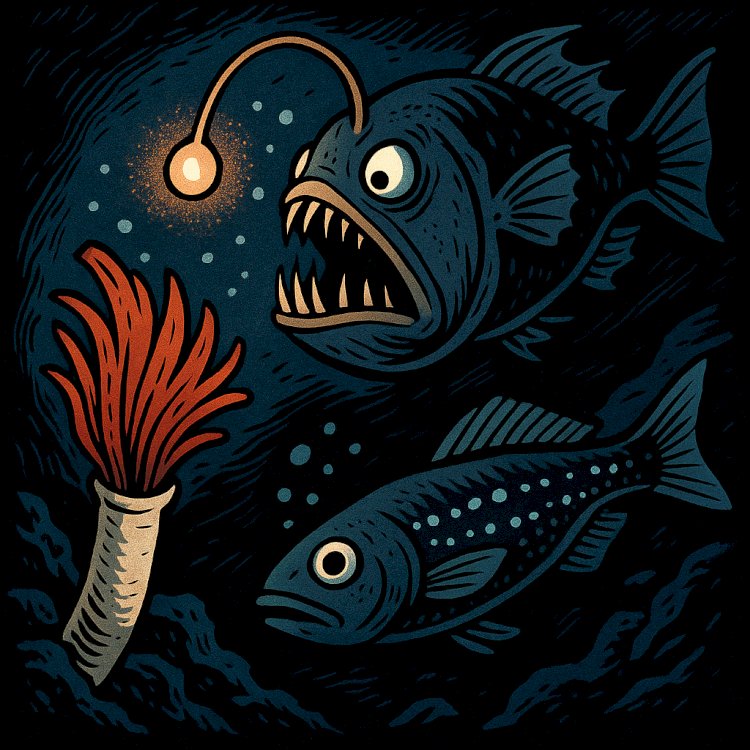
From chemosynthetic bacteria that transform toxic chemicals into food, to bioluminescent creatures that create their own light shows, deep-sea ecosystems demonstrate the incredible adaptability of life and play crucial roles in global ocean health and climate regulation.
Defining Deep-Sea Ecosystems and Environmental Conditions
The deep sea represents Earth's largest habitat, encompassing the ocean depths where sunlight cannot penetrate and where environmental conditions create some of the most extreme living environments on the planet. The deep sea is broadly defined as beginning at approximately 200 meters (660 feet) below the surface, where light begins to fade significantly, marking the transition from the photic zone to the aphotic zone[1][2]. This boundary represents more than just a change in illumination; it marks the beginning of a fundamentally different world where the basic principles governing life on Earth's surface no longer apply.
The environmental conditions within deep-sea ecosystems are characterized by a combination of extreme factors that would be instantly lethal to most surface organisms. As one descends through the water column, pressure increases dramatically by one atmosphere (14 pounds per square inch) for every 10 meters of depth[1]. At depths of 1,000 meters, organisms experience pressures that would crush most gas-filled spaces found in surface-dwelling creatures[1]. At the deepest point in the ocean, the Mariana Trench's Challenger Deep at approximately 11,000 meters, the pressure reaches an astounding 1,086 bars, equivalent to having 100 adult elephants standing on one's head[3].
Temperature conditions in the deep sea remain consistently cold, with most deep ocean waters maintaining temperatures of only 4°C (39°F), just a few degrees above freezing[1][4]. These frigid temperatures are maintained by the absence of solar heating and the circulation of cold, dense water masses from polar regions. The combination of darkness, crushing pressure, and near-freezing temperatures creates an environment that challenges every aspect of biological function, from basic cellular processes to complex ecological interactions[5].
The darkness of the deep sea is perhaps its most defining characteristic, as it fundamentally alters the energy basis for life. Below approximately 200 meters, natural light becomes virtually absent, with humans barely able to detect light below 1,600 feet at about one-millionth of surface intensity[4]. This perpetual darkness eliminates the possibility of photosynthesis, the process that forms the foundation of most Earth ecosystems, forcing deep-sea life to develop entirely alternative strategies for energy acquisition and survival[2].
Primary Energy Sources in Absence of Sunlight
In the absence of sunlight, deep-sea ecosystems have evolved to exploit alternative energy sources that would be toxic or unavailable to surface-dwelling organisms. The most significant of these alternative energy pathways is chemosynthesis, a process that transforms chemical compounds into usable energy and forms the foundation of many deep-sea food webs. Chemosynthesis was first discovered as the basis of a major ecosystem in 1977 during ocean research expeditions near the Galápagos Islands, where scientists observed thriving communities of giant tubeworms and other organisms surrounding hydrothermal vents in complete darkness[6][7].
Chemosynthetic microorganisms, including bacteria and archaea, represent the primary producers in deep-sea ecosystems, filling the ecological role that plants and phytoplankton serve in sunlit environments. These remarkable microbes harness energy released from chemical reactions involving compounds such as hydrogen sulfide, methane, hydrogen gas, ferrous iron, and ammonia[8][9]. Unlike photosynthesis, which follows a relatively standardized biochemical pathway, chemosynthesis encompasses multiple different chemical pathways, with different microbial species specialized for different chemical substrates and environmental conditions[6].
Hydrothermal vents represent the most spectacular examples of chemosynthesis-based ecosystems in the deep sea. These underwater hot springs occur where tectonic plates meet, creating mineral-laden fluid emissions that range from warm diffuse flows to superheated plumes reaching temperatures of 250-400°C[8]. The extreme temperature gradients around these vents create unique microenvironments where chemosynthetic microbes can thrive just outside the lethal hot zones, converting the chemical-rich vent fluids into organic compounds that support entire ecosystems[8]. The bacteria involved in this process oxidize hydrogen sulfide and combine it with carbon dioxide and oxygen to produce sugar, sulfur, and water, creating the fundamental energy currency that supports all higher levels of the food web[10].
The significance of chemosynthesis extends beyond individual vent sites to encompass vast areas of the deep ocean through cold seep communities and symbiotic relationships. Many deep-sea organisms, including tubeworms, mussels, and shrimp, have evolved intimate partnerships with chemosynthetic bacteria, housing these microbes within specialized tissues where they can perform chemosynthesis while providing nutrients directly to their host organisms[10][6]. These symbiotic relationships represent one of the most elegant solutions to survival in nutrient-poor environments, allowing large animals to thrive in areas where traditional food sources are virtually nonexistent.
Unique Adaptations of Deep-Sea Organisms
The extreme conditions of the deep sea have driven the evolution of extraordinary adaptations that enable organisms to not only survive but flourish in environments that would quickly prove fatal to surface-dwelling species. These adaptations span multiple biological systems, from cellular-level modifications that allow function under crushing pressure to complex behavioral strategies that maximize energy efficiency in food-scarce environments. Recent research has revealed that deep-sea organisms employ sophisticated bioenergetic strategies focusing on three key areas: energy input optimization, enhanced digestive and absorptive efficiency, and carefully managed energy consumption patterns[11].
Bioluminescence represents perhaps the most visually striking adaptation to deep-sea life, with an estimated two-thirds of all squid genera including bioluminescent species and the phenomenon being extremely common throughout all ocean depths[12][13]. Deep-sea organisms produce light through chemical reactions involving luciferin compounds and specialized light-emitting cells called photophores, which can range from simple cell clusters to complex organs complete with reflectors, lenses, color filters, and muscles[13]. This biological light production serves multiple survival functions: predators like anglerfish use bioluminescent lures to attract prey within striking distance, while other fish employ lights on their undersides to break up their silhouettes and avoid detection from below[13].
The ability to function under extreme pressure has required fundamental modifications to basic biological processes. Deep-sea organisms have evolved specialized enzymes and cellular structures that maintain function under conditions that would denature proteins and disrupt cellular membranes in surface-adapted species[11]. These pressure-resistant adaptations often involve modifications to protein structure and the incorporation of specific molecules that help maintain cellular integrity under extreme compression. Additionally, many deep-sea species have eliminated or modified gas-filled organs that would be crushed at depth, instead developing alternative solutions for buoyancy and internal pressure regulation[1].
Energy management represents a critical adaptation strategy in the deep sea, where food is often scarce and unpredictable. Many deep-sea species exhibit behavioral adaptations such as diurnal vertical migration, where organisms move up and down in the water column to optimize feeding opportunities while minimizing energy expenditure[11]. This behavior allows animals to access food sources in upper waters during certain times while returning to deeper, safer waters to avoid predation. Deep-sea organisms also demonstrate remarkable efficiency in their digestive systems, often possessing enlarged stomachs and highly efficient enzyme systems that allow them to make maximum use of rare feeding opportunities[11].
Food Web Structure and Nutrient Cycles
Deep-sea food webs operate on fundamentally different principles than their surface counterparts, relying on a complex network of energy transfer mechanisms that compensate for the absence of primary photosynthetic production. The foundation of most deep-sea nutrition comes from marine snow, a continuous shower of organic material that drifts down from the productive surface waters above[14]. This marine snow consists of phytoplankton, fecal material, dead and decaying animals, suspended sediments, and other organic debris that aggregates as it sinks, creating a steady but sparse food supply for deep-sea communities[14].
The journey of marine snow from surface to seafloor can take weeks, during which the particles grow larger and sink faster, but also undergo continuous decomposition that reduces their nutritional value[14]. Despite this degradation, scientific measurements have confirmed that marine snow contains sufficient carbon and nitrogen to support the scavenging communities of the deep ocean[14]. The density and composition of this organic snowfall varies significantly based on surface productivity, seasonal changes, and ocean currents, creating temporal and spatial variations in food availability that deep-sea organisms must navigate[14].
Filter feeders and scavengers form a crucial component of deep-sea food webs, efficiently extracting nutrients from marine snow and transferring energy to higher trophic levels. Many deep-sea animals have evolved specialized feeding appendages and filtering mechanisms that allow them to capture the sparse but continuous supply of organic particles[15]. Scavenging plays an particularly important role in deep-sea ecosystems, with organisms ranging from small crustaceans to large fish specializing in locating and consuming larger pieces of organic matter that sink from above[15].
Whale-fall ecosystems represent spectacular examples of how deep-sea communities can exploit rare but massive inputs of organic matter. When a whale carcass sinks to the seafloor, it can support a complex biological community for up to 50 years, creating temporary islands of intense biological activity on the otherwise sparse ocean floor[15]. These whale-fall communities demonstrate the opportunistic nature of deep-sea organisms and their ability to rapidly colonize and exploit concentrated food sources when they become available.
The role of nutrient regeneration in deep-sea ecosystems cannot be overstated, as organisms at all size scales contribute to recycling essential elements that eventually return to support surface productivity and global fisheries[16]. Microbial processes in the deep sea also serve crucial detoxification functions, breaking down various compounds and maintaining the chemical balance necessary for ocean health[16]. This nutrient cycling occurs on small spatial scales but integrates over the vast area of the deep ocean to become globally significant for ocean function[16].
Importance of Deep-Sea Ecosystems in Global Ecology
Deep-sea ecosystems play crucial roles in global ecological processes that extend far beyond their dark, remote boundaries, serving as massive carbon sinks and contributing to climate regulation on a planetary scale. The deep ocean and its associated ecosystems may represent the largest carbon sink on Earth, concentrating an estimated 50 times more carbon than the atmosphere through both biological and physical pump mechanisms[17]. The biological pump operates through the food web itself, transferring surface carbon to the seabed where it can be stored for extended periods, while the physical pump results from ocean circulation patterns that carry dissolved carbon to deep waters in polar regions[17].
The deep sea's role in carbon cycling operates on geological timescales that make it fundamentally important for long-term climate stability. Unlike terrestrial carbon sinks that can be disrupted relatively quickly, the deep ocean's carbon storage occurs over centuries to millennia, providing a crucial buffer against atmospheric carbon dioxide increases[17]. However, this same long-term nature makes deep-sea carbon cycling vulnerable to large-scale environmental changes, and ocean acidification threatens to reduce the efficiency of these processes by limiting the availability of carbonates necessary for the biological pump to function effectively[17].
Microbial processes in the deep sea contribute significantly to global biogeochemical cycles beyond carbon storage. Deep-sea microbes play essential roles in oxidizing methane, preventing this potent greenhouse gas from reaching the atmosphere while simultaneously trapping carbon in authigenic carbonates[16]. These microbial communities also detoxify various compounds and maintain the chemical balance necessary for ocean health, processes that occur on microscopic scales but integrate across the vast deep ocean to become globally significant[16].
The biodiversity contained within deep-sea ecosystems represents an enormous reservoir of genetic and biochemical resources, much of which remains unexplored and undocumented. Deep-sea organisms have evolved unique solutions to survival challenges that offer tremendous potential for biotechnology applications, from pressure-resistant enzymes to novel compounds produced through chemosynthesis[16]. The deep sea also provides important fisheries resources and contains significant reserves of elements and energy that are increasingly important for human society[16].
The supporting services provided by deep-sea ecosystems extend to maintaining the overall functioning of ocean systems that support surface productivity and global fisheries. Nutrient regeneration by deep-sea organisms provides essential elements that eventually return to surface waters to fuel primary productivity[16]. The vast scale over which these processes operate means that even small-scale disruptions to deep-sea ecosystems could have far-reaching consequences for ocean productivity and global food security[16].
Conclusion
The remarkable ecosystems of the deep sea demonstrate that life can not only survive but thrive in conditions that seem utterly hostile to surface-dwelling organisms. Through ingenious adaptations including chemosynthesis, bioluminescence, and sophisticated energy management strategies, deep-sea organisms have colonized the largest habitat on Earth and created complex, functioning ecosystems in perpetual darkness. These ecosystems operate on principles fundamentally different from those governing surface environments, relying on chemical energy sources, efficient scavenging networks, and innovative biological solutions to overcome extreme environmental challenges.
The global significance of deep-sea ecosystems extends far beyond their remote locations, as they serve crucial roles in climate regulation, carbon storage, and maintaining the biogeochemical cycles that support all ocean life. As we face increasing environmental pressures from climate change and human activities, understanding and protecting these remarkable ecosystems becomes ever more critical. The deep sea represents not only a frontier for scientific discovery but also a crucial component of Earth's life support systems.
Future research into deep-sea ecosystems promises to reveal new insights into the limits of life, novel biotechnologies, and fundamental ecological processes. As technological advances enable deeper exploration of these remote environments, we continue to discover that the dark depths of our oceans hold keys to understanding both the resilience of life and the functioning of our planet's most important regulatory systems. The survival strategies perfected in the deep sea over millions of years of evolution offer both scientific wonder and practical insights for addressing the challenges facing our changing world.
- https://oceanexplorer.noaa.gov/facts/deep-habitat.html
- https://en.wikipedia.org/wiki/Deep_sea
- https://www.ucl.ac.uk/culture-online/case-studies/2021/apr/how-much-pressure-builds-deepest-point-ocean
- https://seawifs.gsfc.nasa.gov/OCEAN_PLANET/HTML/oceanography_conditions_1.html
- https://www.coastalwiki.org/wiki/Deep_sea_habitat
- https://deepoceaneducation.org/resources/chemosynthesis/
- https://www.youtube.com/watch?v=C0YzFLV_fVs
- https://ocean.si.edu/ecosystems/deep-sea/microbes-keep-hydrothermal-vents-pumping
- https://oceanexplorer.noaa.gov/edu/materials/chemosynthesis-fact-sheet.pdf
- https://oceanexplorer.noaa.gov/edu/materials/vent-food-web.pdf
- https://bioone.org/journals/zoological-science/volume-42/issue-1/zs240061/Dive-Deep-Bioenergetic-Adaptation-of-Deep-Sea-Animals/10.2108/zs240061.full
- https://www.youtube.com/watch?v=aPUF40j47-o
- https://www.tepapa.govt.nz/discover-collections/read-watch-play/colossal-squid/life-and-habits-colossal-squid/bioluminescence
- https://oceanexplorer.noaa.gov/facts/marinesnow.html
- https://www.naturalworldfacts.com/deep-sea-food-web
- https://bg.copernicus.org/articles/11/3941/2014/bg-11-3941-2014.html
- https://ocean-climate.org/en/awareness/the-ocean-a-carbon-sink/
What's Your Reaction?