The Unseen Battleground: Why Machine Tools Are the New Global Chess Pieces
In an era defined by rapid technological advancement, the spotlight often shines on glamorous innovations like artificial intelligence, electric vehicles, and the latest consumer gadgets. Yet, beneath the surface of these headline-grabbing technologies lies a less visible, but equally critical industry: machine tools. These unsung heroes of manufacturing are the bedrock of modern economies, enabling the production of everything from smartphones to spacecraft. But why are they so important, and why is there a growing global race to dominate this sector?
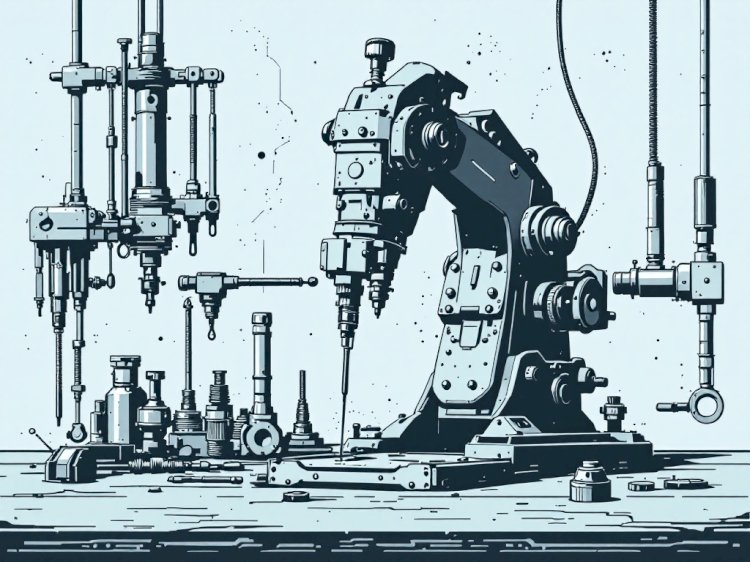
Imagine a world without precision. No perfectly fitted engine parts, no intricate circuit boards, no precisely molded plastics. This is the world without advanced machine tools. These sophisticated machines, often computer-controlled, are used to shape metal and other materials with incredible accuracy and repeatability. They are the foundational technology for nearly every manufacturing process, and control over their production and development is becoming a crucial element of geopolitical and economic strategy.
The Silent Giants of Manufacturing: Understanding Machine Tools
Machine tools are not your average workshop equipment. We're talking about highly specialized, complex machinery capable of performing intricate operations with micrometer precision. Think of them as the master builders of the industrial world. They fall into several broad categories, each with unique capabilities:
- Metal Cutting Machines: These are the workhorses of the industry, including lathes, milling machines, and grinders. They remove material to create desired shapes and forms. Computer Numerical Control (CNC) technology has revolutionized these machines, allowing for automated, highly precise, and complex cuts based on digital designs.
- Metal Forming Machines: Instead of cutting away material, these machines shape metal through pressure and force. Examples include presses, forging machines, and rolling machines. They are essential for creating components ranging from car body panels to aircraft wings.
- Special Purpose Machines: These are designed for very specific tasks in high-volume production. They are often custom-built for particular industries and processes, offering optimized efficiency and precision for niche applications.
The sophistication of modern machine tools extends beyond just their mechanical capabilities. They are increasingly integrated with advanced software, sensors, and automation systems. This allows for real-time monitoring, adaptive machining, and seamless integration into smart factories. The cutting edge of machine tool technology is pushing towards even greater precision, speed, and adaptability, driven by the ever-increasing demands of industries like aerospace, automotive, and, most critically, semiconductors.
The Semiconductor Linchpin: Why Machine Tools Matter More Than Ever
While machine tools are vital across a wide spectrum of industries, their role in semiconductor manufacturing has catapulted them into the geopolitical spotlight. Semiconductors, or chips, are the brains of modern electronics. They power our computers, smartphones, cars, and virtually every piece of technology we rely on. And the production of these incredibly complex chips is impossible without highly advanced machine tools, particularly lithography machines.
Lithography machines are arguably the most complex and expensive pieces of industrial equipment ever created. These machines use light to "print" incredibly intricate patterns onto silicon wafers, layer by layer, to build up the microscopic circuits of a chip. The precision required is mind-boggling, operating at nanometer scales – a billionth of a meter. Only a handful of companies in the world possess the technology to manufacture these cutting-edge lithography systems, with ASML, a Dutch company, currently leading the pack in EUV (Extreme Ultraviolet) lithography, the most advanced technology for producing the most powerful chips.
This extreme specialization and concentration of technology have created a bottleneck. Access to advanced lithography and other specialized machine tools is now a critical determinant of a nation's ability to produce leading-edge semiconductors. And in a world increasingly reliant on these chips, control over this technology translates to significant economic and strategic power.
China's Machine Tool Ambition: A Nation Determined to Build Self-Sufficiency
For China, the quest to master machine tool technology is not just an industrial upgrade; it's a matter of national strategic importance. Recognizing the critical role of semiconductors and the machine tools that enable their production, China has embarked on a massive, state-led effort to build a self-sufficient and globally competitive machine tool industry.
This ambition is driven by several key factors:
- Reducing Reliance on Foreign Technology: China is heavily reliant on foreign imports for high-end machine tools, particularly from Europe, Japan, and the United States. This dependence is seen as a vulnerability, especially in the context of increasing geopolitical tensions and export controls on advanced technologies. The desire to break free from this dependence and ensure supply chain security is a primary driver of China's machine tool push.
- Boosting Domestic Semiconductor Industry: A strong domestic machine tool industry is essential for China to achieve its goal of becoming a leader in semiconductor manufacturing. Without the ability to produce or acquire cutting-edge machine tools, China's chipmakers will struggle to compete with global leaders and meet the growing demand for advanced semiconductors in its massive domestic market.
- Economic Growth and Industrial Upgrading: Developing a world-class machine tool industry is also seen as a crucial step in China's broader industrial upgrading strategy. Mastering advanced manufacturing technologies is essential for moving up the value chain, fostering innovation, and achieving sustained economic growth in the long term.
China's approach to achieving these goals is multifaceted and involves significant state intervention:
- Massive Investment and Subsidies: The Chinese government is pouring billions of dollars into research and development, infrastructure, and financial incentives to support domestic machine tool companies. This includes direct subsidies, tax breaks, and preferential loans to encourage innovation and expansion.
- Talent Acquisition and Development: Recognizing the need for skilled engineers and researchers, China is investing heavily in education and vocational training programs related to machine tool technology. It is also actively recruiting talent from overseas through attractive incentives and programs.
- Strategic Partnerships and Acquisitions: While focusing on indigenous innovation, China is also pursuing strategic partnerships with foreign companies and, where possible, acquisitions of overseas machine tool firms to gain access to advanced technologies and expertise. However, this strategy faces increasing scrutiny and restrictions from Western governments concerned about technology transfer.
- Focus on Key Technological Breakthroughs: China is prioritizing research and development in critical areas of machine tool technology, such as high-precision CNC systems, advanced materials, and, crucially, components for lithography machines. The goal is not just to produce basic machine tools, but to leapfrog to the cutting edge and compete in the most demanding segments of the market.
The Global Implications: A New Era of Industrial Competition
China's determined push in machine tools is sending ripples across the global industrial landscape. It is intensifying competition in the sector and raising concerns in established machine tool manufacturing nations.
- Increased Competition and Market Share Shifts: As China's domestic machine tool industry grows in sophistication and capacity, it is poised to capture a larger share of the global market. This will put pressure on existing players in Europe, Japan, and other regions, forcing them to innovate faster and compete more aggressively on price and technology.
- Supply Chain Restructuring and Regionalization: The focus on machine tool self-sufficiency is part of a broader trend towards supply chain regionalization and diversification. Nations are increasingly seeking to reduce their reliance on geographically concentrated supply chains, particularly for critical technologies. This could lead to a reshaping of global manufacturing networks, with regional hubs emerging to serve specific markets.
- Geopolitical Tensions and Technology Controls: The strategic importance of machine tools, especially in semiconductor manufacturing, is exacerbating geopolitical tensions. Export controls and restrictions on technology transfer are becoming more common, as nations seek to protect their domestic industries and limit the technological advancement of potential rivals. The machine tool sector is now firmly at the center of this technology race.
- Innovation and Technological Advancement: While competition can be disruptive, it also serves as a powerful driver of innovation. The global race in machine tools is likely to accelerate technological progress, leading to even more advanced, efficient, and versatile manufacturing solutions. This could benefit industries worldwide, even as it intensifies competitive pressures.
Navigating the New Machine Tool Landscape
The rise of China's machine tool industry and the intensifying global competition in this sector present both challenges and opportunities. For businesses and policymakers alike, understanding this evolving landscape is crucial.
- For Businesses: Companies that rely on machine tools need to carefully assess their supply chains, diversify sources where possible, and stay informed about the latest technological advancements. Building strong relationships with machine tool suppliers and investing in advanced manufacturing technologies will be essential for maintaining competitiveness.
- For Policymakers: Governments in established industrial nations need to consider policies that support domestic machine tool innovation, workforce development, and supply chain resilience. This could include increased R&D funding, incentives for domestic manufacturing, and strategic trade policies that protect critical industries while fostering healthy competition. International cooperation and dialogue will also be essential to manage geopolitical tensions and ensure a level playing field in the global machine tool market.
Conclusion: The Future is Forged with Precision
Machine tools may not be the most glamorous technology, but they are undeniably the backbone of modern manufacturing and increasingly, a critical lever of geopolitical power. As nations compete for technological leadership in the 21st century, the ability to design, produce, and control advanced machine tools will be a defining factor in economic prosperity and strategic autonomy. The unseen battleground of machine tools is shaping the future of industries and nations, and understanding its dynamics is essential for navigating the complexities of the modern world. The race for machine tool supremacy is a marathon, not a sprint, and the nations that invest strategically, innovate relentlessly, and build robust ecosystems will be best positioned to thrive in this new era of industrial competition.
What's Your Reaction?