The Evolution of Sound: How AI-Generated Music Will Transform the Traditional Music Industry by 2035
The music industry is no stranger to disruption. From vinyl to streaming, each technological leap has redefined how music is created, distributed, and consumed. Now, a new force is rising: artificial intelligence (AI). With advancements in AI-generated music, the traditional music industry faces a new frontier of possibilities and challenges.
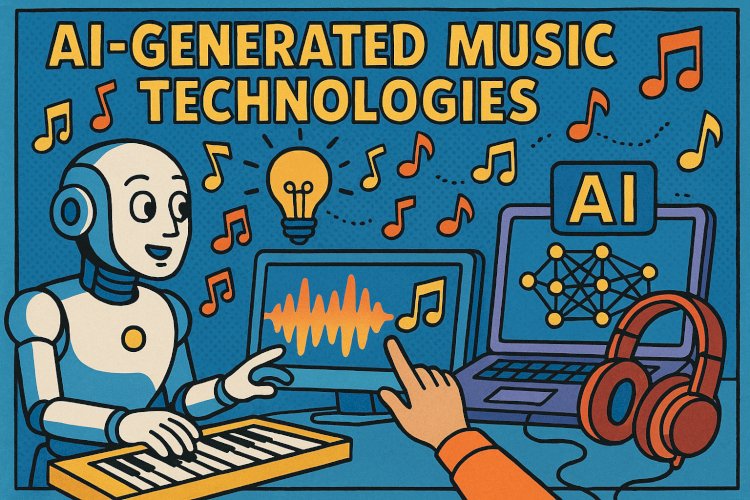
This article explores the unfolding impact of AI music technologies, traditional industry structures, disruptions and opportunities, legal challenges, audience dynamics, and emerging collaboration models that will shape the industry by 2035.
Understanding AI-Generated Music Technologies
AI-generated music is not merely a futuristic fantasy - it’s already here. Today’s AI algorithms, powered by neural networks and deep learning, can compose symphonies, generate pop songs, and even improvise jazz solos. Tools like OpenAI’s MuseNet and Google’s Magenta project have showcased AI’s ability to create complex musical pieces across diverse genres.
AI music generation typically involves training models on vast datasets of existing music. These models learn patterns, styles, and structures, enabling them to compose original pieces that emulate human creativity. Emerging platforms now offer user-friendly interfaces where musicians and hobbyists alike can co-create music with AI, blurring the line between programmer and performer.
Traditional Music Industry Overview
The traditional music industry is a complex ecosystem comprising artists, record labels, producers, distributors, and concert promoters. Revenue streams span physical sales, digital downloads, streaming royalties, live performances, merchandising, and licensing.
At the heart of this system lies the artist-label dynamic, often characterized by labels providing financial backing, marketing muscle, and distribution networks in exchange for significant shares of creative and economic rights. Despite its evolution, the industry's creative process remains deeply human, driven by emotional expression, storytelling, and cultural influence.
Disruption and Opportunities Introduced by AI
AI-generated music introduces profound disruptions. Firstly, production costs could plummet as AI tools automate composition, arrangement, and even mastering processes. Independent artists could access production capabilities once reserved for major studios, democratizing music creation.
However, this democratization comes with risks. A surge of AI-generated content could saturate markets, making it harder for human artists to stand out. Furthermore, AI compositions could displace human musicians in certain commercial sectors, like background scores for advertisements or video games.
On the flip side, AI also presents new opportunities. Musicians can collaborate with AI to experiment with novel sounds, push genre boundaries, and enhance productivity. AI can serve as a creative partner, offering suggestions, harmonizations, or even entire backing tracks, freeing artists to focus on higher-order artistic expression.
Legal and Ethical Challenges
The rise of AI in music creation raises thorny legal and ethical questions. Chief among them: who owns AI-generated music? Traditional copyright law assumes a human creator, leaving a gray area for compositions generated with minimal human input.
If a machine creates a song, does the programmer own it? The user? The AI company? Or is it public domain? Additionally, ethical concerns arise over originality and authenticity - will audiences value a song less if it’s known to be machine-made?
Governments and legal bodies are beginning to grapple with these issues. In the U.S., for example, the Copyright Office currently maintains that works must be created by a human to qualify for protection. However, with AI increasingly embedded in creative processes, definitions and regulations may soon evolve.
Audience Reception and Market Dynamics
How will listeners respond to AI-generated music? Early studies suggest a split. Some audiences embrace AI music for its novelty, technical virtuosity, and endless variability. Others, however, value human touch, emotional authenticity, and the lived experiences behind traditional songwriting.
Streaming platforms like Spotify and YouTube are already experimenting with AI-curated playlists and compositions, suggesting a future where AI music becomes seamlessly integrated into everyday listening.
Market dynamics could shift as well. AI-generated music, requiring fewer human resources, could drive down costs, making it an attractive option for commercial licensing, background scores, and personalized playlists. Yet, mainstream success for AI-only artists remains uncertain, as cultural narratives and fan connections still heavily favor human creators.
Future Collaboration Models Between Humans and AI
Rather than replacing musicians, AI is more likely to become a collaborative partner. Already, artists like Taryn Southern have co-created albums with AI tools, while experimental bands use AI to generate melodies, lyrics, and arrangements.
Future collaboration models could see AI acting as an intelligent studio assistant, offering creative prompts, optimizing arrangements for emotional impact, or adapting live performances in real time based on audience reactions.
Business models may evolve too. Labels and production companies might offer hybrid services, combining human creativity with AI efficiencies. New roles, such as "AI music programmers" or "creative technologists," could emerge to bridge artistry and technology.
Conclusion
The next decade promises an exhilarating - and tumultuous - evolution for the music industry. AI-generated music will not simply be a technological novelty; it will fundamentally reshape how music is made, owned, marketed, and experienced.
Artists and industry leaders who embrace AI’s possibilities while safeguarding human artistry will thrive. Those who resist or ignore these changes risk being left behind. As we journey toward 2035, the future of music will be a complex symphony of human emotion and machine intelligence - a new harmony waiting to be composed.
What's Your Reaction?