The Olympic Legacy: Golden Opportunity or Gilded Cage for Host Cities?
An in-depth analysis of whether mega-events like the Olympics deliver on their promises of long-term economic, social, and infrastructural benefits. This post weighs the staggering costs and social displacement against the potential for urban regeneration and global prestige.
1. Introduction: The Billion-Dollar Question
Every two years, the world turns its attention to a single city, captivated by the spectacle of the Olympic Games. For the host city, it’s a moment of unparalleled global prestige, a chance to showcase its culture, and a promise of transformative long-term benefits. The narrative is alluring: a surge in tourism, accelerated urban development, new world-class infrastructure, and a lasting legacy of prosperity and community pride. But beneath the fireworks and cheering crowds lies a complex and often troubling reality.
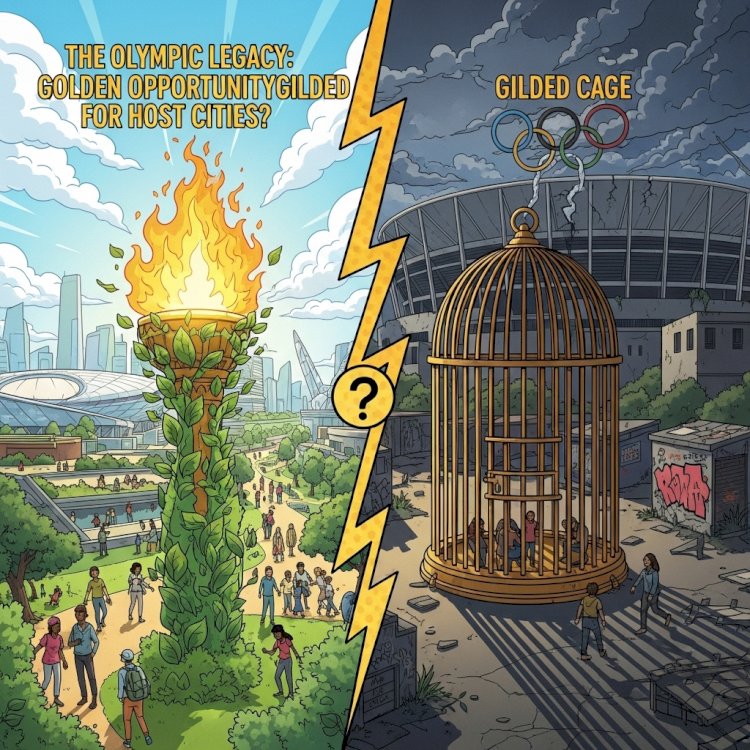
For decades, a fierce debate has raged over the true value of hosting such a mega-event. As costs spiral into the tens of billions and cautionary tales of debt and decay emerge from former host cities, a critical question demands an answer: Do mega-events like the Olympics actually provide tangible, long-term benefits to the cities and their residents? Or do they represent a gilded cage - an expensive, short-lived party that leaves behind a legacy of financial strain, social disruption, and environmental degradation?
This article delves into the multifaceted legacy of the Olympic Games, examining the evidence across economic, socio-cultural, and infrastructural domains. By analyzing decades of data from host cities around the globe, we will dissect the promises, confront the pitfalls, and explore whether a sustainable and equitable model for hosting is truly possible.
2. The Economic Rollercoaster: Promises vs. Reality
The most powerful argument for hosting the Olympics has always been economic. Proponents, including the International Olympic Committee (IOC), point to the potential for stimulating national economies, boosting tourism, developing workforce skills, and expanding business sectors [1]. On the surface, the numbers can seem impressive. The Paris 2024 Olympics, for instance, was predicted to boost France’s GDP by 0.3 percentage points in the third quarter, mirroring the temporary lift the London 2012 Games gave the UK [2, 3]. Similarly, the 2010 World Cup added 0.5% to South Africa's GDP and created thousands of jobs [4].
However, a closer look reveals that these economic benefits are often fleeting. Many economists argue that mega-events provide little to no lasting economic advantage, with key indicators like employment and GDP showing no significant long-term uplift [5]. The initial surge in construction and hospitality often dissipates once the closing ceremony ends, leaving cities to grapple with the immense costs.
Perhaps the most daunting economic legacy is the accumulation of staggering public debt. The history of the Olympics is littered with financial disasters. The 1976 Montreal Games, with a projected budget of $124 million, ended up costing $2.8 billion and took the city three decades to repay [6]. The Athens 2004 Games left Greece with a reported debt of $14.5 billion, a burden that many observers link to the country's subsequent financial crisis [5]. From Barcelona's $6.1 billion debt in 1992 to Rio's $20 billion-plus price tag in 2016, the story is remarkably consistent. In fact, every Olympic Games since 1960 has gone over budget, a trend that places an enormous strain on public finances [6].
Even the promised tourism boom is a double-edged sword. While an event like the Paris Olympics can attract over 15 million spectators and generate billions in tourism revenue, this effect is often temporary [7]. Research indicates that the long-term tourism benefits tend to diminish quickly after the games. Furthermore, mega-events can create a “crowding out” effect, where regular tourists avoid the host city due to inflated prices, security measures, and massive crowds, offsetting some of the gains from event-specific visitors [8].
3. Urban Transformation: Regeneration or Gentrification?
One of the most celebrated legacies of the Olympic Games is its potential to catalyze urban regeneration. Cities often use the event as a once-in-a-generation opportunity to fast-track ambitious development projects that might otherwise take decades to complete. The 1992 Barcelona Games is the quintessential example, where the event was used to completely reimagine the city’s industrial waterfront, creating new beaches, parks, and residential areas that integrated the city with the sea [9].
Similarly, London 2012 was strategically leveraged to regenerate the historically deprived area of East London, and Paris 2024 has aligned its projects with the long-term Grand Paris urban development plan [10]. The Olympic Village for the Paris Games, for example, is designed to be converted into a new neighborhood with 2,800 apartments, a quarter of which will be public housing, demonstrating a clear focus on a tangible, positive legacy [1].
However, this narrative of urban renewal conceals a darker, more painful consequence: widespread community displacement and gentrification. This process is defined as the economic and cultural transformation of low-income neighborhoods that results in an influx of wealthier residents, rising property values, and the displacement of the original community. A landmark 2007 study reported that over two million people were displaced by the Olympics in the preceding two decades [11].
The statistics are staggering and paint a grim picture of the human cost. In the lead-up to the Seoul 1988 Games, an estimated 720,000 people were displaced as 48,000 homes were destroyed [12]. For Beijing 2008, the number of displaced citizens exceeded 1.5 million [12]. More recently, the Rio 2016 Games saw around 6,600 families evicted or threatened with eviction from favelas to make way for Olympic infrastructure [13]. For the Paris 2024 Games, community groups reported that nearly 20,000 people were forcibly displaced from informal housing in a process they described as “social cleansing” [14].
This displacement happens through direct evictions for venue construction, but also more subtly as landlords push out long-term tenants to capitalize on high tourist rents and as gentrification accelerates, pricing local residents out of their own neighborhoods. All too often, the promise of renewal for a city comes at the expense of its most vulnerable populations.
4. The Built Environment: Lasting Landmarks or White Elephants?
The most visible legacy of any Olympic Games is the vast collection of stadiums, arenas, and villages built for the two-week event. The challenge lies in what happens to these structures afterward. In many cases, they become white elephants: costly, underutilized facilities that drain public funds for maintenance with no clear purpose. The decaying, abandoned venues from the 2004 Athens Olympics serve as a haunting reminder of poor legacy planning [15]. Brazil’s Estádio Nacional Mané Garrincha, built for the 2014 World Cup for $900 million, the second-most expensive soccer stadium ever, now sits largely empty, having been used as a bus parking lot [16].
Fortunately, this fate is not inevitable. The IOC reports that 86% of all permanent Olympic venues are still in use, and thoughtful planning can turn sporting arenas into valuable community assets [1]. London successfully converted its Olympic Stadium into a multi-use home for a Premier League football club and its Olympic Village into a new residential neighborhood [17]. Beijing’s iconic “Bird’s Nest” stadium remains an active venue, while its “Water Cube” aquatics center was transformed into a popular public water park [18]. The key is designing for adaptive reuse from the very beginning.
A growing focus on sustainability is now fundamentally reshaping this aspect of the Games. The environmental impact of mega-events is significant, from the massive carbon footprint of international travel - the Rio 2016 Games generated an estimated 3.6 million tonnes of carbon emissions - to increased air pollution, resource strain, and immense waste generation [19]. In response, the IOC’s Olympic Agenda 2020 encourages hosts to maximize the use of existing and temporary venues. Paris 2024 has become a standard-bearer for this new model, with 95% of its venues being either pre-existing or temporary structures [20]. New constructions, like its Aquatics Centre, were built with low-carbon methods, powered by solar panels, and feature seats made from recycled plastic [21].
One of the most consistent and positive infrastructure legacies is in transportation. To manage the influx of millions of people, host cities must make significant investments in their public transit systems. When aligned with long-term urban goals, these projects provide lasting benefits for residents. Barcelona and London are prime examples where the Games were used to fund and accelerate major expansions and modernizations of their metro and rail networks, improving connectivity and daily commutes for millions long after the athletes went home [22].
5. The Intangible "Soft Legacy"
Beyond the concrete and steel, mega-events leave behind a soft legacy - the intangible impacts on a city’s culture, social fabric, and human capital. This includes changes in attitudes, increased participation in sports, and the promotion of civic values like volunteerism and inclusion [23].
The IOC has increasingly emphasized this social legacy. For example, the Paris 2024 Games successfully advocated for the implementation of a daily 30-minute physical activity period in French primary schools [1]. Before Tokyo 2020, Japan made enormous strides in accessibility, installing alternatives to stairs in 97% of its railway stations and dramatically increasing the number of wheelchair-accessible hotel rooms [1]. These events can also spark important conversations; Tokyo 2020 was credited with influencing public debate on gender issues, which corresponded with Japan moving up in the Global Gender Gap Index [1].
However, like their economic counterparts, these benefits can be difficult to quantify and sustain. A study of youth BMX projects associated with a major sporting event in Manchester found positive benefits for participants but limited evidence of long-term impact [24]. While the Olympic ideals of peace, friendship, and respect can inspire a community, translating that inspiration into lasting, systemic social change remains a significant challenge.
6. A Blueprint for the Future: Policy and Best Practices
The immense challenges associated with hosting have led to critical reforms and the development of new best practices. The bidding process, long criticized for its opacity and potential for corruption, is undergoing change through the IOC’s Olympic Agenda 2020. This roadmap prioritizes sustainability, credibility, and youth, encouraging bids that align with a city’s long-term development goals rather than bids based on sheer ambition [25]. Cities are now selected further in advance, allowing for more meticulous planning.
Successful hosting in the 21st century requires a new model. The most crucial shift is toward minimizing new construction. The Los Angeles 2028 Games plans a radical “no new permanent venue” strategy, relying entirely on existing stadiums and facilities [26]. This approach dramatically reduces costs, environmental impact, and the risk of creating white elephants.
Furthermore, modern best practices demand a holistic approach to legacy planning, integrated from day one. This involves:
- Clear and Measurable Objectives: Defining what success looks like beyond the two-week event, with clear metrics for social, economic, and environmental outcomes [27].
- Comprehensive Risk Management: Planning for everything from security threats and cyber-attacks to public health crises and extreme weather events [28].
- Deep Community Involvement: Ensuring that citizens and community groups are active participants in the planning process to build broad support and ensure the legacy serves local needs [29].
- Knowledge Transfer: Creating robust systems for past host cities to share lessons and best practices with future hosts to avoid repeating costly mistakes [25].
7. Conclusion: Recalibrating the Olympic Dream
So, do mega-events like the Olympics provide long-term benefits? The answer is a resounding and complex “it depends.” The romantic notion of an automatic, positive legacy has been shattered by decades of debt, displacement, and decay. The evidence overwhelmingly shows that the benefits are not guaranteed and, if left to chance, the negative consequences can far outweigh the positive.
However, a negative legacy is not inevitable. The modern Olympic movement is at a crossroads, with a growing recognition that the old model of extravagance is no longer sustainable - fiscally, socially, or environmentally. The future of the Games depends on a fundamental shift in priorities. Instead of asking cities to reshape themselves to fit the Olympics, the Olympics must adapt to fit the long-term, sustainable vision of the host city.
For cities like Paris, Los Angeles, and Brisbane, the path forward involves leveraging the event as a catalyst for pre-existing development goals, prioritizing reuse over new construction, and placing community well-being and environmental stewardship at the heart of their planning. The Olympic dream is not dead, but it is being recalibrated. The real victory will not be measured in medals, but in the creation of more equitable, resilient, and livable cities for generations to come.
References
- Olympics.com - Olympic legacy
- insee.fr - The French economy in 2024
- bruegel.org - The limited economic benefits of hosting the Olympics
- worldfinance.com - The high price of hosting the World Cup
- manning-napier.com - The Economics of the Olympics
- investopedia.com - The Economics of Hosting the Olympic Games
- connexionfrance.com - How many visitors are really expected for the Paris 2024 Olympics?
- harvard.edu - The Olympic boon?
- unibocconi.it - The urban and social legacy of the Olympic Games
- planning.org - The Olympic Legacy
- refworld.org - Forced Evictions and the 2007 Olympics
- citydetect.com - Gentrification and the Olympics
- washingtonpost.com - For Rio’s favelas, the Olympics have been a curse
- apnews.com - Thousands of people have been displaced from Paris-area slums ahead of the Olympics, groups say
- scmp.com - Athens’ abandoned 2004 Olympic venues a warning for post-Games planning
- si.com - Brazil's World Cup stadiums are becoming cautionary tales
- london.gov.uk - Olympic Legacy
- columbia.edu - After the Olympics: The Future of Host City Venues
- mdpi.com - Environmental Impacts of Mega-Sport Events
- olympics.com - Paris 2024, the most sustainable Games ever?
- weareinnovation.global - How Sustainable Are the 2024 Paris Olympics?
- smartcitiesdive.com - How hosting the Olympics can create a legacy of better transit
- tandfonline.com - A systematic review of the soft legacy of mega-sporting events
- nih.gov - A realistic evaluation of a sport-for-development initiative
- unil.ch - Olympic Agenda 2020
- glica.org - What LA’s ‘No Build’ Olympics Means For The Future Of The Games
- turnerandtownsend.com - How to run a successful mega-event
- corporatecomplianceinsights.com - Risk Management for Mega-Events
- burohappold.com - What is the legacy of mega events?
What's Your Reaction?